
Yemen’s Planning Minister and UN Coordinator Discuss Climate Adaptation and Aid in Aden
 Yemen Herald News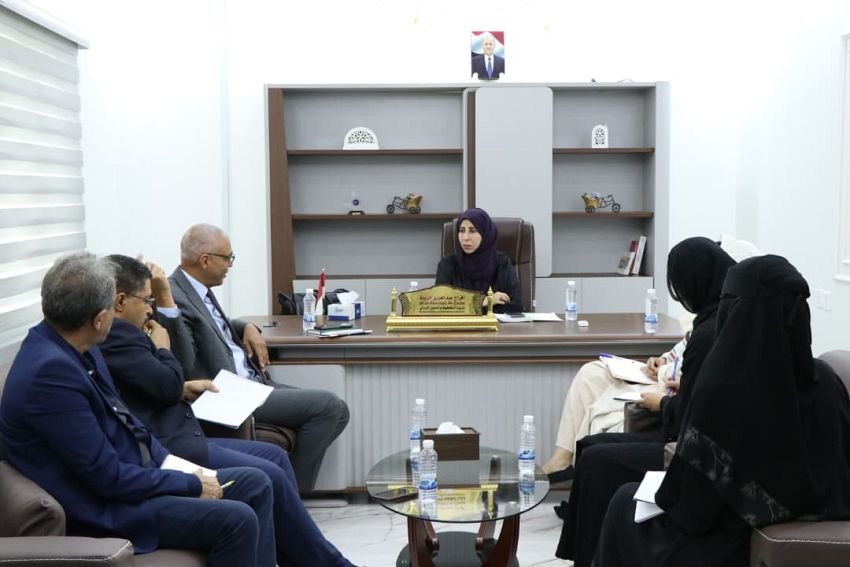
Yemen’s Minister of Planning and International Cooperation, Dr Afrah al-Zouba, met on Tuesday in the interim capital, Aden, with Laurent Bukera, the acting United Nations Resident Coordinator and Humanitarian Coordinator for Yemen, for talks centred on aligning the country’s development priorities with its humanitarian response in the period ahead. Both sides described the meeting as part of a continuing effort to synchronise the work of the internationally recognised government with that of the United Nations and its partner agencies at a moment when Yemen’s needs continue to outstrip the resources available to meet them.
According to an official account of the discussions, al-Zouba and Bukera reviewed the basic requirements of Yemen’s national sectors and explored how planned interventions could be matched more closely to those needs. Both stressed the value of pooling efforts between government institutions and the relevant UN organisations, arguing that stronger coordination would help direct limited funding toward the areas where it can do the most good rather than allowing it to be spread thinly across overlapping programmes.
A central theme of the meeting was climate change adaptation. The minister and the coordinator discussed deepening cooperation on early warning systems and agreed on the importance of preparing a joint action plan to help communities anticipate and withstand environmental shocks. Both framed climate resilience as inseparable from recovery, cautioning that without integrated planning the risks to lives and livelihoods across the country would only grow more severe.
Yemen ranks among the nations most exposed to a warming climate, despite contributing little to the emissions driving it. Years of conflict have degraded infrastructure and weakened the institutions that would ordinarily manage water, agriculture and disaster response, leaving communities acutely vulnerable to flooding, drought and storms. Seasonal floods have repeatedly destroyed homes, farmland and roads in a country already reeling from the effects of war.
Bukera took up the role of United Nations Resident and Humanitarian Coordinator in Yemen on an acting basis, succeeding Julien Harneis and bringing more than three decades of experience in emergency response and humanitarian leadership. He previously served as country director and representative for the World Food Programme in Yemen, as well as in Somalia and Sudan, and has held senior positions at the agency’s headquarters in Rome. In his current post he oversees the coordination of the UN development system and the humanitarian operation in what aid officials describe as one of the world’s most demanding environments.
For al-Zouba, the talks formed part of a wider diplomatic drive by the Ministry of Planning and International Cooperation to mobilise support and link immediate relief with longer-term, sustainable development. In recent months the ministry has held a succession of meetings with international donors, development banks and aid organisations, working to improve the coherence and efficiency of both humanitarian and development projects. The engagement with the United Nations sits at the centre of that effort, given the organisation’s leading role in coordinating aid inside the country.
The backdrop to the meeting is a humanitarian emergency that ranks among the gravest anywhere. United Nations agencies estimate that more than 18 million Yemenis need some form of assistance, while over four million people have been displaced from their homes by fighting that escalated in 2015, when the Iran-aligned Houthi movement seized Sana’a and a Saudi-led coalition intervened to restore the recognised government. Recurrent outbreaks of cholera and measles, a battered health system and a collapsing economy have deepened the suffering of a population heavily dependent on imported food, fuel and medicine.
Those efforts come against a backdrop of persistent funding shortfalls. Humanitarian appeals for Yemen have repeatedly fallen well short of their targets in recent years, forcing aid agencies to cut rations and scale back programmes and lending urgency to calls for better coordination and a more strategic use of the money that is available. Officials on both sides indicated that squeezing greater impact from constrained budgets was a shared priority.
Aden has served as the temporary seat of the internationally recognised government since the Houthis took control of the capital, and it hosts many of the ministries and international offices coordinating the response. That fractured geography, with rival authorities holding sway in different regions, complicates the delivery of aid and the planning of development projects, and officials acknowledge that reaching consensus on national priorities requires engaging a range of stakeholders beyond the government and the United Nations alone.
Both participants stressed that development strategies carry implications well beyond meeting immediate needs. Investment in resilient infrastructure, functioning services and climate preparedness, they argued, can help lay the groundwork for stability, while neglecting long-term problems such as poverty, disease and the decay of basic services would undermine any durable recovery.
As the two sides move to translate their discussions into a concrete plan, the coordination between the Yemeni government and UN agencies is likely to shape how humanitarian assistance and development investment are directed in the coming period. Officials say that ensuring the needs and voices of local communities are reflected in these frameworks will be crucial to their success, and both al-Zouba and Bukera signalled that sustained, flexible cooperation would be needed to keep pace with the shifting demands of a population still living through crisis.
About the Author




