Al-Amaliqa Brigades Seize Boat Carrying Houthi Weapons-Making Equipment in Bab al-Mandab
 Yemen Herald News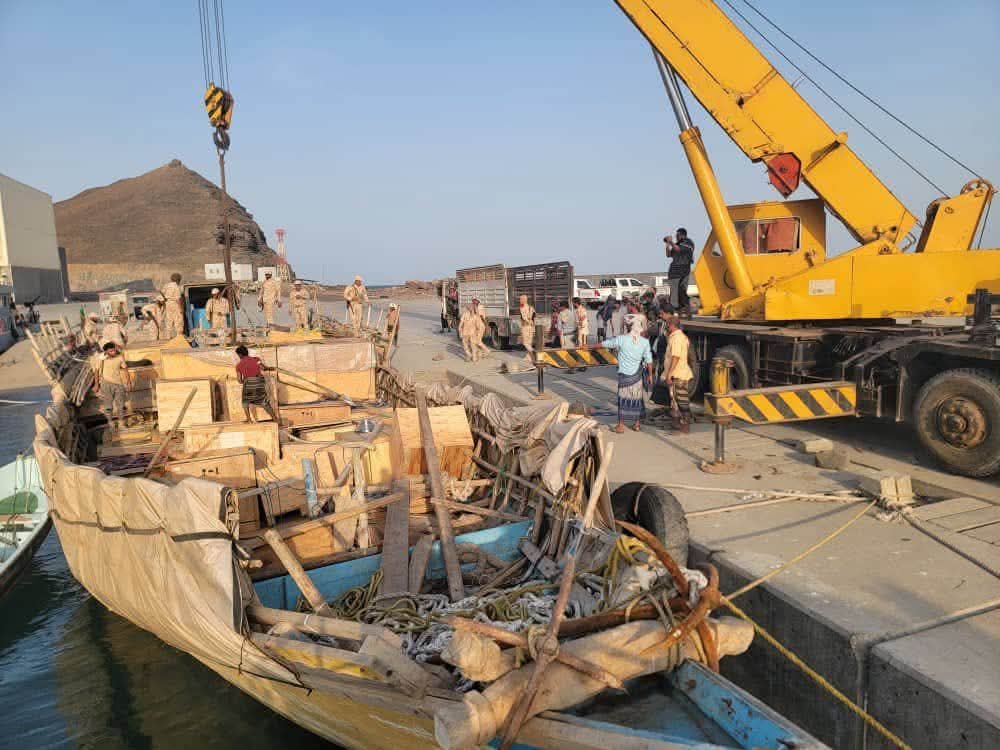
The Al-Amaliqa Brigades, one of the most prominent military formations aligned with Yemen’s internationally recognised government, said its naval units had intercepted a boat carrying equipment used to manufacture weapons in the strategic Bab al-Mandab Strait. The force announced that the vessel was stopped on Tuesday as part of a broader campaign to sever the maritime supply lines that sustain the Iran-aligned Houthi movement, which has held the Yemeni capital and much of the north since 2015.
According to the brigades, the intercepted boat was carrying specialised components used in military production, including material the force linked to the assembly of drones and explosive-laden boats bound for Houthi-held areas in Hodeidah Governorate. The group said the cargo included hydraulic drilling equipment, computer servers, electronic chips used to operate drones, GPS navigation systems and engines. Footage the brigades released showed speedboats encircling a larger cargo vessel before armed men climbed aboard and took control.
The operation, the force said, followed a period of surveillance and intelligence-gathering aimed at a smuggling network it described as linked to the Houthis. The brigades said their patrols arrested the crew, whom they identified as smugglers, and seized the cargo, which investigators were still examining. Independent verification of the precise contents was not immediately available, and the account rests largely on the brigades’ own statements and the video they distributed.
Regional and international outlets, including Al Jazeera and The National, reported the interception, noting that it was at least the third seizure of a Houthi-bound shipment of military or dual-use equipment announced in less than a year. The recurrence of such operations has become a feature of the war along Yemen’s west coast. In earlier incidents, government-aligned forces reported intercepting boats said to be carrying drone parts and other unmanned-vessel technology, items that have grown central to the Houthis’ expanding arsenal. Analysts note that dual-use components are especially difficult to track, because much of the equipment has legitimate civilian applications and can be dispersed across several shipments before reaching its destination.
The Bab al-Mandab Strait, which links the Red Sea to the Gulf of Aden, ranks among the most important maritime corridors in the world. A large share of global trade between Europe and Asia passes through the narrow channel, and any disruption there reverberates through international shipping and energy markets. For the warring parties in Yemen, control of the waterway and its approaches carries strategic weight far beyond the country’s borders, and the strait has repeatedly featured in the wider contest for influence among regional powers.
The Al-Amaliqa Brigades, also known as the Giants Brigades, are a predominantly southern force drawn largely from tribesmen in the Lahej, Abyan and Dhale governorates and backed militarily and financially by the United Arab Emirates. Formed during the earlier phases of the war, the group took part in coalition operations that pushed the Houthis back across parts of the south before leading a campaign along the Red Sea coast toward the port city of Hodeidah, a corridor the brigades have sought to keep out of Houthi hands.
The Houthi movement seized Sana’a in 2015, prompting a Saudi-led coalition to intervene in support of the recognised government. Yemeni officials and their coalition partners accuse Iran of arming and financing the group, a charge that Tehran and the Houthis deny even as the movement has displayed increasingly sophisticated missile, drone and naval capabilities. Government-aligned forces present the interception of shipments such as this week’s as evidence of continued external resupply and as a means of blunting the movement’s ability to enlarge its arsenal.
Maritime security in the Red Sea has drawn heightened attention since the Houthis began attacking commercial shipping in the corridor in late 2023, a campaign the group said it launched in solidarity with Palestinians in Gaza. Those attacks forced many carriers to reroute around southern Africa and drew retaliatory strikes from the United States and other governments. The brigades framed the latest seizure as part of an effort to protect both national waters and international navigation, while warning that smuggling networks continue to test the coastline.
The conflict has produced one of the world’s gravest humanitarian emergencies. United Nations agencies estimate that more than 18 million Yemenis need some form of assistance, and millions have been driven from their homes by years of fighting. Aid organisations have repeatedly warned that further military escalation risks deepening a crisis already marked by hunger, displacement and a collapsed economy, complicating any calculation about the benefits of expanded operations.
Whether the latest interception meaningfully shifts the balance on the ground is difficult to judge. Supporters of the government say sustained pressure on Houthi supply routes could gradually erode the movement’s military strength and hand the initiative back to forces aligned with Aden. Yet peace efforts remain stalled, front lines have largely hardened, and the competing interests of outside powers continue to weigh on prospects for a settlement. The brigades, for their part, pledged to keep patrolling the coast and to publicise future seizures. For now, the operation in Bab al-Mandab stands as another marker of a war increasingly fought at sea as much as on land, with a vital global waterway caught in the middle.
About the Author