Yemen’s Ambassador to Russia and Deputy Foreign Minister Borisenko Discuss Bilateral Ties
 Yemen Herald News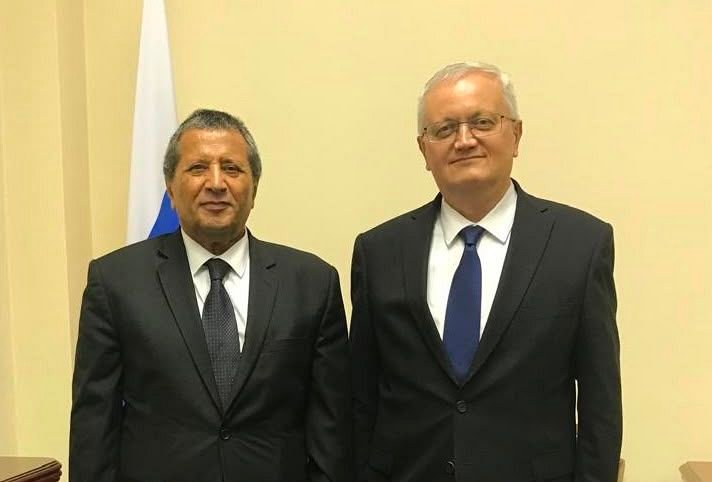
The Yemeni ambassador to Russia, Dr Ahmed Salem al-Wahishi, has held talks in Moscow with Russian Deputy Foreign Minister Georgy Borisenko, reviewing the state of relations between the two countries and recent developments in Yemen. The meeting centred on the long-running civil war that has gripped Yemen for more than a decade and on its implications for stability across the region.
Borisenko, who was appointed a deputy foreign minister in early 2026 with responsibility for Arab and African affairs after serving as Russia’s ambassador to Egypt, is among the officials now steering Moscow’s engagement with the Middle East. Al-Wahishi, a veteran diplomat who has represented Yemen in Moscow since 2017 and previously served as the Arab League’s envoy to India, has used his posting to keep the recognised government’s concerns before Russian policymakers.
According to the Yemeni account of the discussions, a central theme was the government’s campaign against terrorism, which it says it is pursuing in cooperation with regional and international partners, Russia among them. The two sides also turned to what the internationally recognised government describes as a fresh escalation by the Houthi movement. Yemen has long grappled with the presence of armed extremist groups, including a local branch of al-Qaeda, and the government has framed counter-terrorism cooperation as an area where its interests and those of major powers converge.
Prominent in that discussion was the Houthis’ reported operation of direct flights between Tehran and Sana’a without authorisation from the Yemeni government. Al-Wahishi argued that the flights represent a serious violation of Yemeni sovereignty and of international law, echoing complaints the government has taken to the United Nations Security Council. The Houthis have not publicly accepted that characterisation of the flights.
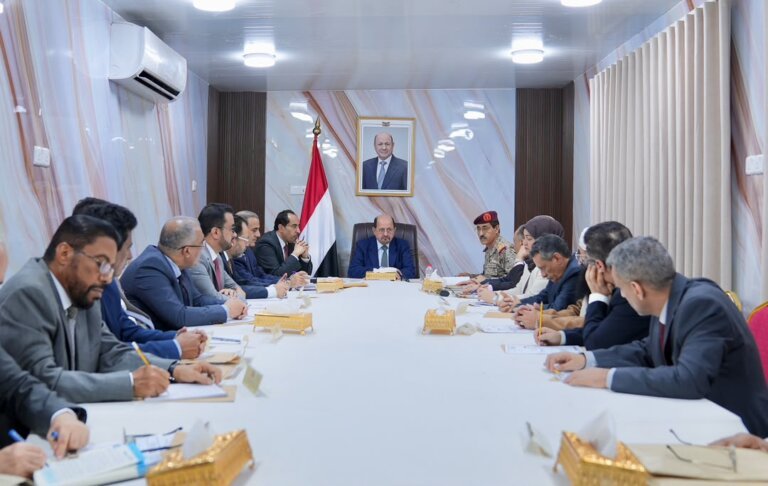
He set those security concerns against the country’s humanitarian plight, describing a population worn down by shortages, displacement and the disruption of aid. Al-Wahishi described the government, headed by the Presidential Leadership Council and based in the southern city of Aden, as working to restore order and governance amid those conditions. Partnerships with countries such as Russia, he said, matter as the leadership seeks to broaden international support for its bid to counter militancy and stabilise the country.
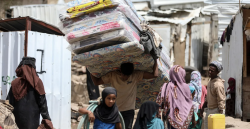
The humanitarian dimension lent urgency to that appeal. The United Nations estimates that around 19.5 million Yemenis, more than half the population, needed assistance in 2025, with some 4.8 million displaced and much of the country’s infrastructure in ruins. Recurring outbreaks of cholera and measles and a chronically underfunded relief operation have compounded the suffering, and Yemeni diplomats routinely fold those conditions into their case for broader international engagement.
The meeting also took up a Russian proposal to convene the Yemeni-Russian Joint Governmental Committee in Moscow, a standing forum for bilateral cooperation. The invitation, Yemeni officials suggested, reflects Moscow’s interest in remaining engaged in Yemen’s political affairs and in maintaining channels to the internationally recognised government. Such committees have historically covered trade, education and technical cooperation, and reviving the mechanism would give both governments a formal venue to discuss reconstruction once conditions allow.
For his part, Borisenko reaffirmed Russia’s continued support for United Nations-led efforts in Yemen, emphasising de-escalation as a step toward ending the war and achieving security and stability. Moscow has generally favoured dialogue over pressure in the conflict and has been careful to preserve ties across Yemen’s fractured political landscape.
Russia’s relationship with Yemen stretches back decades. During the Cold War the Soviet Union was the principal patron of the People’s Democratic Republic of Yemen, the Marxist state in the south, arming and training its forces and building close political bonds. Those legacy relationships have given Moscow a degree of standing across the country’s political spectrum that few other outside powers enjoy.
Moscow’s approach to the war has been one of careful balance. While it deals with the internationally recognised government, Russia has also kept lines open to the Houthis and to Gulf capitals, declining to align itself fully with any single camp. That even-handedness has at times frustrated the government in Aden, but it is also what makes Russian mediation potentially valuable, since few other major powers retain credible access to all sides.
That history gives the Kremlin a measure of influence the Yemeni government hopes to draw on, both to reinforce its own legitimacy and to encourage a diplomatic track that does not sideline its concerns about outside interference. For the recognised government, keeping the focus on counter-terrorism and the defence of sovereignty has become a central diplomatic message.
As a permanent member of the Security Council, Russia holds particular weight in any diplomatic process on Yemen. Moscow has often urged restraint and dialogue rather than coercive measures, and its engagement with the recognised government sits alongside longstanding contacts with other regional actors, leaving it positioned to shape how the council handles the latest flare-up over the Iranian flights.
Whether these contacts translate into tangible movement remains uncertain. The vision al-Wahishi outlined, of a Yemen stabilised through international partnership and respect for legal norms, depends heavily on cooperation among major powers whose interests do not always align. For now, the meeting in Moscow stood as another instance of the quiet diplomacy that continues alongside the fighting, with Yemeni officials expressing hope that sustained multilateral cooperation could eventually help chart a path toward lasting peace.
About the Author