Yemen Condemns Iranian Missile and Drone Attacks on Kuwait, Bahrain, Qatar and Jordan
 Yemen Herald News
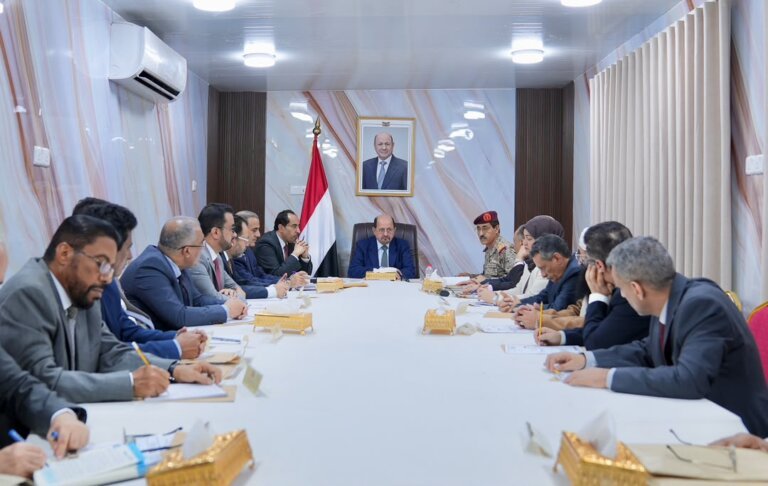
Yemen has voiced deep concern over a wave of missile and drone attacks it attributes to Iran, saying the strikes have targeted the neighbouring states of Kuwait, Bahrain, Qatar and Jordan. In a statement from its Ministry of Foreign Affairs, the internationally recognised government described the assaults as an alarming infringement of the sovereignty and territorial integrity of those countries and a serious threat to the stability of the wider region.
The ministry characterised the attacks as a direct challenge to international law, the principles of the United Nations Charter and commitments made under the Organization of Islamic Cooperation. Yemen affirmed its solidarity with the affected states, backing their right to defend themselves and pledging support for measures they might take to protect their security and territory. Iran has not been shown to have acknowledged responsibility for the reported strikes, and the details of the incidents could not be independently verified.
Yemen’s stance is coloured by its own long war. Since 2014 the country has been convulsed by a conflict pitting the Houthi movement, which Tehran has backed with weapons and training, against the internationally recognised government supported by a Saudi-led coalition. That struggle has come to be seen as one front in a broader regional contest between Iran and the Gulf monarchies, and Yemeni officials frequently frame Houthi actions as an extension of Iranian policy.
The Organization of Islamic Cooperation, which Yemen also invoked, is the second-largest intergovernmental body after the United Nations, grouping 57 member states across four continents. Appeals to its charter, alongside those to the UN Charter, are a familiar feature of Gulf diplomacy, lending a collective Islamic dimension to condemnations that governments in the region issue against perceived aggression.
Iran has consistently denied arming the Houthis, though UN experts and Western governments have documented the transfer of weapons components and technical expertise to the group over several years. For the Yemeni government, linking the reported Gulf attacks to the same network reinforces its argument that Houthi and Iranian conduct are two aspects of a single threat rather than separate problems.
The condemnation aligns Yemen closely with the Gulf Cooperation Council, the bloc of six Gulf states that has been central both to the war effort against the Houthis and to regional diplomacy. Analysts expect the reported strikes to harden attitudes within the council and to sharpen calls for coordinated air and missile defence, an area where member states have moved slowly despite years of discussion.
Formed in 1981, the Gulf Cooperation Council brings together Saudi Arabia, the United Arab Emirates, Kuwait, Qatar, Bahrain and Oman, and maintains a joint military component known as the Peninsula Shield Force. Its members have invested heavily in layered air and missile defences, including US-supplied Patriot batteries and, in some cases, the longer-range THAAD system, yet integrating those national systems into a single shared network has remained an elusive goal.
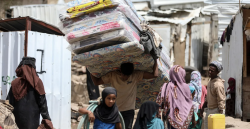
The diplomatic drama plays out over a country still mired in one of the world’s worst humanitarian emergencies. The United Nations estimated that around 19.5 million Yemenis, more than half the population, needed humanitarian assistance in 2025, while some 4.8 million people remain displaced within the country’s borders. Damaged infrastructure and a collapsing economy have left communities vulnerable to recurring outbreaks of cholera and measles and dependent on aid that is repeatedly interrupted by funding shortfalls.
The pattern of attacks Yemen describes would, if sustained, complicate United States and European efforts to contain Iranian influence and steady the Gulf. Washington and its partners have long sought to reassure allies through arms sales, joint exercises and a naval presence, but repeated strikes on Gulf territory would test the credibility of those commitments and could prompt a reassessment of strategy.
The wider risk, officials and analysts caution, is of a widening confrontation. A cycle of attack and retaliation involving Iran, the Houthis and Gulf states could draw in outside powers and spill across borders, with consequences reaching well beyond the immediate flashpoints. Calls for de-escalation have accompanied nearly every recent flare-up, but the underlying rivalries have proved difficult to defuse.
For the Gulf states, the episode may accelerate a longer-term shift toward collective security. The alignment of Yemen with its Gulf neighbours points to a broadening coalition organised around a shared perception of the Iranian threat, and regional diplomacy is likely to lean further toward joint defence arrangements rather than piecemeal national responses.
The developments could also intensify international scrutiny of Iranian military activity, particularly its missile and drone programmes, which have featured prominently in Security Council debates and in the work of UN sanctions monitors. Yemen’s decision to speak out ties its own grievances to that wider agenda, casting the Houthi insurgency as part of a regional problem rather than a purely domestic one.
Yemen’s condemnation, then, is as much a statement of alignment as of principle. By standing with Kuwait, Bahrain, Qatar and Jordan, the government signals where it sees its interests in a fracturing region and frames its own war as inseparable from the security of the Gulf. Whether that solidarity translates into concrete cooperation, on defence or on Yemen’s own conflict, will depend on decisions taken in capitals far from Sana’a.
About the Author