Yemen’s Prime Minister Calls New Tenders Committee a Pillar of Government Reform and Transparency
 Yemen Herald News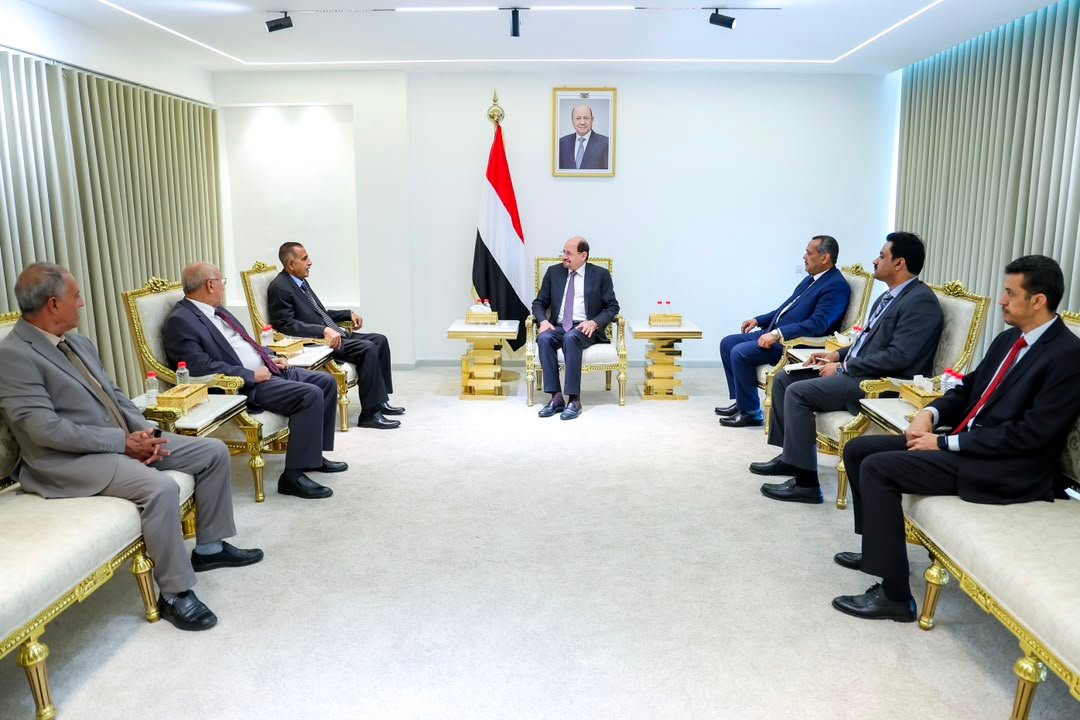
Yemen’s Prime Minister Dr. Shaya Zindani has described the newly formed High Committee for Tenders and Bids as an essential pillar of the government’s reform programme, using a meeting with the committee’s chairman and members in the temporary capital Aden to set out what he expects from the body. The prime minister said the committee must uphold the highest standards of professionalism, independence and integrity so that government tendering procedures are sound, competition among bidders is fair, and public confidence in state contracting can be rebuilt.
The committee was established to oversee the award of government contracts, a function that sits at the heart of the internationally recognized government’s efforts to demonstrate financial and administrative discipline. By vetting tenders and auctions for public projects, the body is meant to guarantee equal opportunities for domestic and international bidders, close off avenues for favoritism, and ensure that scarce public funds are spent on the purposes for which they were allocated.
Zindani told the committee’s leadership that its work bears directly on the efficiency of public spending and the prevention of waste, two commitments the government has repeatedly made to its citizens and to the foreign partners whose financial support keeps the state functioning. Officials presented the committee’s creation not as a stand-alone measure but as part of a wider package of financial and managerial reforms the cabinet has pursued since taking office.
The prime minister’s engagement with the issue carries personal weight. Zindani, who also retains the foreign affairs portfolio, was appointed prime minister in January 2026 after the resignation of his predecessor, and he formed a new government in early February with a mandate centred on economic stabilization and institutional reform. Meetings of this kind are one way the new cabinet signals that its reform agenda extends beyond announcements into the machinery of day-to-day administration.
The backdrop to these efforts is a conflict that has torn Yemen apart for more than a decade. Since the Houthi movement seized the capital Sana’a in 2014 and a Saudi-led coalition intervened the following year, the internationally recognized government has operated from Aden and, for many senior officials, from Riyadh. The war has split state institutions between rival authorities, gutted the economy and left the government dependent on external support to pay salaries and keep basic services running.
The humanitarian consequences remain staggering. United Nations agencies estimate that more than eighteen million Yemenis need urgent assistance and that around four and a half million people are displaced within the country. In these circumstances, the transparent management of public resources is not an abstract good-governance concern: every rial lost to corruption or mismanagement is money unavailable for hospitals, schools, water networks and the reconstruction that displaced families are waiting for.
Transparent procurement also matters for Yemen’s standing with donors and lenders. International partners have long conditioned budget support and development finance on evidence that funds are properly managed, and reform of public financial management has featured prominently in the government’s discussions with institutions such as the International Monetary Fund and the World Bank. A credible tenders committee gives the government something concrete to point to when it asks for continued assistance.
There is an economic argument as well. Yemeni business figures and foreign investors have historically been wary of bidding for government work in an environment where contract awards could be opaque and disputes hard to resolve. A predictable, rules-based tendering system lowers those barriers, and officials hope it will draw more competitors into public projects, improving quality and driving down costs at a time when the state must stretch every unit of revenue.
The committee’s remit extends across the government’s capital spending, from infrastructure repairs and port equipment to supplies for public utilities. As reconstruction needs accumulate in areas under government control, the volume and value of contracts passing through the committee are likely to grow, and with them the scrutiny the body will face from the public, the press and the government’s own auditors.
Delivering on the mandate will not be simple. The government’s institutions have been weakened by years of war, qualified staff have emigrated in large numbers, and revenue collection remains under strain, particularly since the halt of crude oil exports in late 2022 deprived the treasury of its largest source of foreign currency. The committee will have to build procedures and enforce standards in an administrative environment where shortcuts have often been the norm.
Still, officials argue that precisely because conditions are so difficult, the discipline the committee represents is indispensable. Restoring citizens’ trust in the state, they say, begins with demonstrating that public money is handled honestly, and that contracts go to the most capable bidder rather than the best connected one. That message is aimed as much at Yemen’s international partners as at its own population.
How much difference the High Committee for Tenders and Bids ultimately makes will depend on whether its decisions are respected across ministries and whether it is shielded from political interference. If it succeeds, the government will have created one of the building blocks of a functioning post-war state; if it fails, another reform announcement will have joined a long list. For now, the prime minister has publicly tied his government’s credibility to its performance, which is itself a measure of how central procurement reform has become to Yemen’s recovery agenda.
About the Author