Bahrain Condemns Houthi Threats Against Saudi Arabia and Urges Protection of Red Sea Shipping
 Yemen Herald News
The Kingdom of Bahrain has strongly condemned recent threats made by the Iran-aligned Houthi movement against Saudi Arabia, reaffirming its full solidarity with Riyadh as tensions along the Red Sea corridor continue to climb. In a statement carried by the Bahrain News Agency on 21 July, the Foreign Ministry said the group’s declarations and continued provocations endanger regional stability, international maritime safety, global trade and the lives of civilians.
The ministry described the Houthi statements as a direct threat to the security and stability of the region, saying they target international shipping and trade and violate international law, including the United Nations Convention on the Law of the Sea and relevant resolutions of the UN Security Council. Manama stressed that such rhetoric cannot be separated from the group’s record at sea, where attacks on commercial vessels have repeatedly disrupted navigation through some of the world’s busiest waterways.
Bahrain issued its condemnation a day after the Houthis declared what they called a maritime blockade of Saudi Arabia. On 20 July the group’s military spokesman, Yahya Sarea, announced that vessels serving Saudi ports would no longer be allowed safe passage through the Bab al-Mandab Strait. The group presented the measure as retaliation for what it described as Saudi restrictions on Yemeni ports and for an airstrike on Sanaa International Airport that it attributed to the kingdom, accusations that Riyadh rejects. Saudi Arabia has condemned the declared blockade as a dangerous escalation.
The threat became concrete within days. On 22 July the Houthis claimed missile and drone attacks on two Saudi oil tankers, which they identified as the Encelia and the Layla, saying the vessels had violated the blockade decision. The United Kingdom Maritime Trade Operations agency reported that a tanker was struck by a projectile about 70 nautical miles southwest of the Saudi coastal city of Al Shuqaiq. Saudi state media confirmed that the Encelia had been hit, reporting that all crew members were safe. The claimed strikes were the first maritime action carried out under the new embargo, and they immediately alarmed energy markets and maritime security agencies, with several vessels reported to have altered course away from the southern Red Sea in the hours that followed.
In its statement, Bahrain emphasized that the security of Saudi Arabia is an integral part of its own security, language that reflects the deep political and defence ties binding the two Gulf neighbours. Manama expressed full support for the measures Riyadh takes to protect its sovereignty, security and territorial integrity, a position echoed across the Gulf Cooperation Council, whose members have repeatedly condemned Houthi attacks on the kingdom since the earliest years of the war.
The ministry also called for coordinated international efforts to protect navigation in the Red Sea and the Bab al-Mandab Strait. These waterways carry a substantial share of the trade and energy shipments moving between Asia and Europe, and when security there deteriorates, shipping companies divert vessels around the Cape of Good Hope. That detour adds roughly ten days to two weeks and significant cost to each voyage, pressures that ultimately feed through to freight rates, insurance premiums and consumer prices worldwide.
Bahrain further expressed appreciation for Saudi Arabia’s continuing diplomatic and humanitarian efforts to resolve the conflict in Yemen. Those efforts are anchored in the Gulf Initiative, the outcomes of Yemen’s National Dialogue Conference and the relevant Security Council resolutions, the agreed reference points for a political settlement that would preserve Yemen’s unity and sovereignty. Riyadh has hosted repeated rounds of consultations among Yemeni factions, although the formal peace process has largely stalled in recent years.
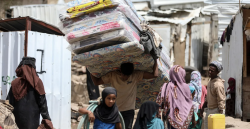
The human cost of the war remains immense. According to the United Nations 2026 Humanitarian Needs and Response Plan, more than 22 million people in Yemen require humanitarian assistance and protection this year, including 5.2 million internally displaced people. Some 18.3 million Yemenis face acute food insecurity, and more than 2.2 million children under the age of five are acutely malnourished. Aid agencies have appealed for 2.16 billion dollars to fund this year’s response, and they warn that funding shortfalls have already forced cuts to life-saving programmes.
The conflict has deep roots. The Houthis seized the capital, Sanaa, in late 2014, and a Saudi-led coalition intervened in March 2015 in support of Yemen’s internationally recognized government. More than a decade of fighting has fragmented the country and devastated its economy. Over that period the group’s arsenal of drones, ballistic missiles and cruise missiles has grown markedly, and Saudi Arabia, the United States and United Nations experts have documented Iranian support for the Houthis’ weapons programmes, assistance that Tehran denies providing.
Bahrain’s intervention reflects a broader Gulf assessment that maritime threats emanating from Yemen have entered a more dangerous phase, one that now touches Saudi Arabia’s own export lifelines rather than international shipping alone. With commercial traffic through the region’s chokepoints falling and insurers repricing risk, Gulf governments are pressing for a unified international response that combines deterrence at sea with renewed diplomatic engagement.
Much now depends on whether the declared blockade is actively enforced and how Saudi Arabia and its partners choose to respond. For Bahrain, the immediate priorities are containing the escalation, keeping the region’s sea lanes open and preserving space for the diplomacy that remains the only realistic path toward ending Yemen’s war and easing the suffering of its people.
About the Author