Guterres Urges De-escalation After Renewed Houthi Attacks on Red Sea Shipping
 Yemen Herald News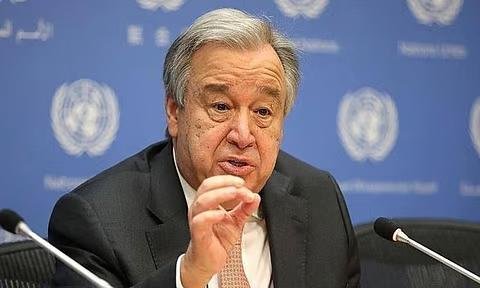
United Nations Secretary-General Antonio Guterres has said he is deeply alarmed by the resumption of Houthi attacks on commercial vessels in the Red Sea, warning in a statement issued through his spokesperson that the strikes risk drawing Yemen deeper into a widening regional confrontation.
The Houthi movement claimed responsibility for the attacks, which came days after it declared a maritime blockade of Saudi Arabia and warned that shipping bound for Saudi ports would be treated as a target in the Bab al-Mandab Strait. Vessels have been rerouting to avoid the southern Red Sea since the announcement.
Guterres called for immediate de-escalation and urged the Houthis to refrain from further attacks or other escalatory steps, citing Security Council resolutions on assaults against commercial vessels and on freedom of navigation. International navigational rights in and around Bab al-Mandab, his office said, must be fully restored.
The warning went beyond maritime safety. Further hostilities in Yemen, the Secretary-General said, would undermine what remains of the prospects for peace and cause serious economic, humanitarian and environmental consequences across the region and beyond it. The environmental point is not abstract: previous strikes on shipping in these waters have sunk vessels carrying fuel and fertiliser, raising the possibility of contamination along coastlines that support fishing communities in Yemen, Djibouti and Eritrea.
Bab al-Mandab is one of the world’s critical maritime chokepoints. The strait is roughly thirty-two kilometres wide at its narrowest and normally carries about twelve per cent of global trade, including a large share of container traffic and energy cargoes moving between Asia and Europe. Ships avoiding it must sail around the Cape of Good Hope, a diversion that adds thousands of nautical miles, roughly ten days of sailing, and substantial fuel and charter costs to each voyage.
Those costs do not stay at sea. Insurance premiums for the region rise when attacks resume, carriers add surcharges, and the expense is passed along supply chains. For Yemen, which imports most of its food and nearly all of its fuel, the effect arrives quickly in the form of higher prices in local markets and slower deliveries to ports the population depends on.
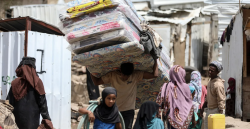
The humanitarian baseline is already severe. The United Nations estimates that more than 22 million Yemenis will need assistance and protection during 2026, including some 5.2 million people displaced within the country. About 18.3 million are acutely food insecure, and more than 2.2 million children under five are acutely malnourished. Cholera and measles outbreaks have recurred in areas where water systems and health facilities have collapsed.
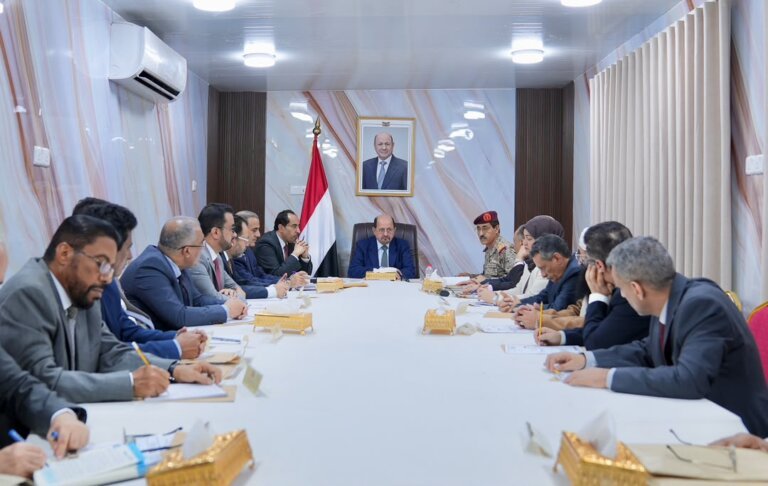
The conflict that produced these conditions escalated in 2015, when a Saudi-led coalition intervened after the Houthis seized Sanaa and forced the recognised government south to Aden. Fighting has since drawn in a range of outside actors, and front lines have shifted only marginally in recent years while the political process has stalled.
Maritime attacks have proved to be the Houthis’ most effective instrument for projecting force well beyond Yemeni territory. A relatively small arsenal of drones, anti-ship missiles and small craft can impose costs on global commerce far out of proportion to its price, and defending against it requires warships from multiple navies to remain on station indefinitely. That asymmetry is why the renewed campaign has drawn attention in capitals with no direct stake in Yemen’s internal politics.
The Houthis have justified the blockade as a response to the air and sea restrictions imposed on areas under their control by the Saudi-led coalition over roughly a decade of war. Saudi officials describe those measures as necessary to interdict weapons shipments. Neither framing has altered the practical outcome, which is that civilian shipping and Yemeni consumers absorb the cost of a dispute between armed parties.
Naval deployments have not eliminated the threat in the past. Warships can escort convoys and intercept incoming projectiles, but they cannot patrol every mile of a long and narrow waterway, and commercial operators have generally judged rerouting to be cheaper than accepting the risk. The decision effectively rests with shipowners and their insurers rather than with governments.
The United Nations has pressed for a negotiated settlement in Yemen for years, and a roadmap brokered with Saudi and Omani involvement had appeared to offer a route towards a nationwide ceasefire and talks on political arrangements. Each round of maritime escalation has pushed that process further out of reach by hardening positions and diverting diplomatic energy towards crisis management.
Governments in Washington and European capitals are watching the situation closely, given the exposure of their shipping industries and the precedent that unchecked attacks would set for other chokepoints. The difficulty is that military responses have so far failed to deter the Houthis, while diplomatic pressure depends on channels through Tehran and Muscat that are limited in what they can deliver.
For Yemenis, the calculation is narrower and more immediate. Every escalation at sea makes imported goods more expensive, complicates the delivery of aid through Hodeidah and other ports, and postpones the settlement that would allow reconstruction to begin. The Secretary-General’s statement reflects a concern shared well beyond the United Nations: that a conflict fought over Yemen is again being exported to the waters around it, with consequences that no party involved appears able to contain.
About the Author