Yemen’s Prime Minister Says Aden Remains the Government’s Top Priority
 Yemen Herald News
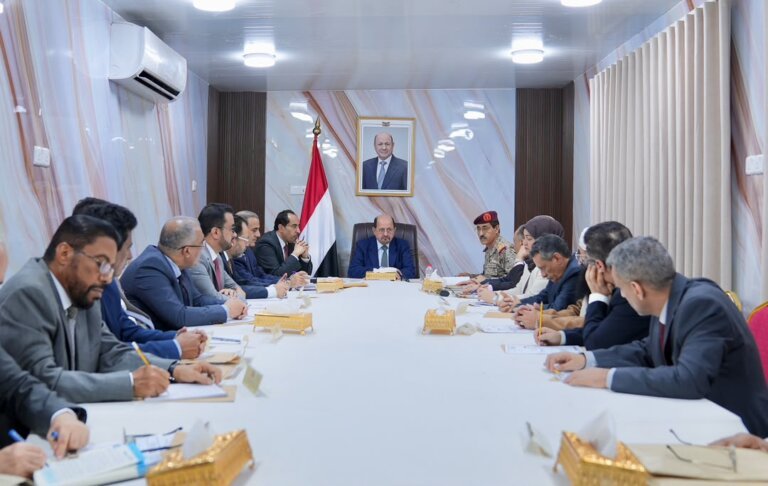
Yemen’s Prime Minister, Dr Shaya Zindani, has told officials in Aden that the southern port city remains the government’s foremost priority, calling it the centre of state administration and of the wider effort to rebuild national institutions. The state news agency SABA reported that Zindani made the remarks during a meeting with Aden Governor and Minister of State Abdulrahman Sheikh and a group of local officials, who reviewed service delivery, security and the administrative problems that have accumulated in the city over more than a decade of war.
Zindani said the government is working with the local authority to improve basic services, strengthen security and tackle longstanding challenges, and he called for closer coordination between central ministries and the governorate administration. He argued that institutional reform grounded in transparency and accountability is the precondition for restoring public confidence, and asked officials to prepare a joint plan covering urgent service and development needs, upgrades to infrastructure, a larger role for the private sector, and the restoration of Aden’s historical and cultural standing. Local officials briefed the meeting on projects already under way, with electricity singled out as the most pressing.
The emphasis on Aden reflects both its formal status and the government’s own recent history. Zindani became prime minister in January 2026, moving from the foreign ministry after the Presidential Leadership Council accepted the resignation of Salem Saleh bin Braik’s cabinet. Bin Braik, a former finance minister who had held the premiership since May 2025, left Aden for Riyadh in December 2025 during an offensive by the Southern Transitional Council. That sequence left the government under pressure to show that it can govern from Aden rather than administer Yemen at a distance.
Electricity is the clearest test. Aden’s grid has deteriorated sharply since the start of 2026, with repeated interruptions and reduced output from key generating stations. Residents have described blackouts of up to roughly twenty hours a day during the summer, and night-time protests over the cuts have recurred in several districts as temperatures approached 40 degrees Celsius. Water and cooking gas shortages have compounded the problem, and local reporting has linked the combination of heat and power failure to a rise in fever, viral infection and skin complaints, particularly among children.
Fuel supply sits at the centre of the problem, because most of Aden’s generating capacity is diesel-fired and the government must buy imported fuel with revenues that the war has severely eroded. At the end of May, Saudi Arabia announced an urgent support package worth 150 million dollars, made up of petroleum products intended to cover operating needs at diesel-powered stations across the governorates. Grants of that kind have kept the network running through previous summers, but they treat the symptom rather than the underlying shortage of generating capacity and the losses in the distribution network.
Zindani’s schedule in July underlined where the government is looking for help. On 21 July he received Ahmed Madkhali, director of the Aden office of the Saudi Development and Reconstruction Programme for Yemen, and described the programme as a strategic partner in delivering development priorities and supporting economic recovery. Two days later he visited the Prince Mohammed bin Salman Hospital in Aden, toured several specialised departments and was briefed on the services the facility provides. Both engagements pointed to the government’s dependence on external financing for even routine public services.
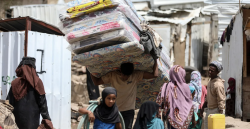
The backdrop is a humanitarian emergency that has not eased. The United Nations Office for the Coordination of Humanitarian Affairs estimates that more than 22 million people across Yemen will need humanitarian assistance and protection during 2026, including 5.2 million internally displaced people. Some 18.3 million are acutely food insecure, and more than 2.2 million children under five are acutely malnourished, of whom about 516,000 suffer from severe acute malnutrition. Aid agencies have appealed for 2.16 billion dollars to fund this year’s response and aim to reach 12 million people, but funding has run at critically low levels, forcing agencies to prioritise the most severe cases.
Aden’s importance is also geographic. The city sits on the shipping lanes approaching the Bab al-Mandab Strait, one of the world’s narrowest and busiest maritime chokepoints, which gives its stability an international dimension. Renewed Houthi attacks on Red Sea shipping have drawn condemnation from the United Nations Secretary-General and the International Maritime Organization in recent weeks, and the government argues that a functioning administration on the Gulf of Aden coast is part of any answer to insecurity at sea.
Those ambitions run against a difficult political reality. Authority in Aden is contested between the internationally recognised government and the Southern Transitional Council, and analysts have long described the city’s security landscape as shaped by competing armed formations and by the priorities of regional backers, chiefly Saudi Arabia and the United Arab Emirates. No date, budget or funding source was announced for the joint plan Zindani requested, and the government has made similar commitments before without a visible improvement in services.
What the meeting does signal is where the cabinet intends to concentrate its limited administrative capacity. If power supply, water and basic security improve measurably in Aden, the government gains an argument for its own legitimacy that no diplomatic initiative can substitute. If they do not, the protests seen this summer are likely to return with the next one.
About the Author