Yemeni Ambassador and Russian Agency Chief Discuss Expanding Education and Scholarship Links
 Yemen Herald News
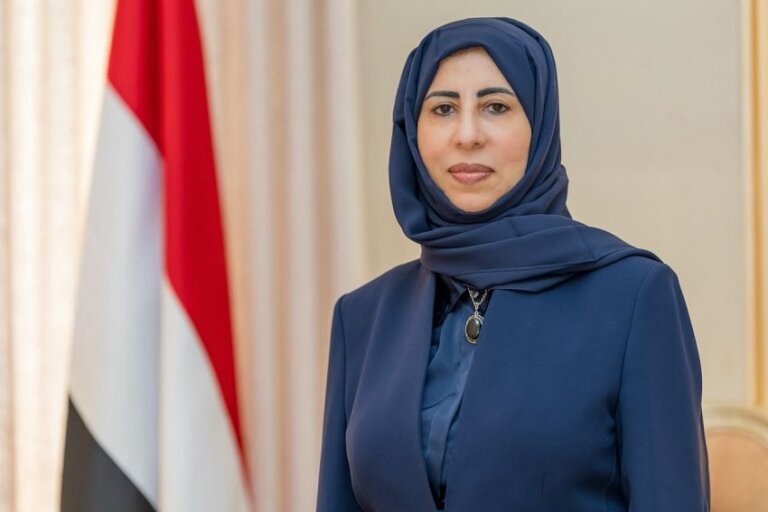
Yemen’s ambassador to Russia, Dr. Ahmed al-Wuhayshi, met the head of Russia’s federal agency for cultural and humanitarian cooperation, Igor Chaika, in Moscow this week for talks on education, scientific research and cultural exchange between the two countries. The state news agency Saba, which reported the meeting on Tuesday, said the two sides examined ways to widen joint humanitarian and cultural programmes and to increase the number of Russian scholarships available to Yemeni students.
Scholarships dominated the practical part of the agenda. Russian universities have taken Yemeni students for decades, and Moscow’s state-funded quota places remain one of the few affordable routes to a foreign degree for young Yemenis whose own universities have been battered by more than a decade of war, unpaid salaries and interrupted academic terms. Neither side announced how many additional places might be offered, or when a decision would come.
Chaika, according to Saba, pointed to the length of the relationship, saying Russia was among the first countries to establish formal ties with Yemen. The historical record broadly supports that description. The Soviet Union and the Mutawakkilite Kingdom of Yemen signed a treaty of friendship and trade in Sanaa on 1 November 1928, in which Moscow recognised Yemeni independence, making it one of the earliest major powers to do so, although Italy had concluded a comparable agreement two years earlier.
Soviet involvement deepened from the 1960s onwards, above all in the south. Moscow became the principal backer of the People’s Democratic Republic of Yemen, supplying arms, advisers and development projects, and a generation of Yemeni doctors, engineers and officers trained in Soviet institutions. Chaika proposed reviving those connections by establishing a forum for graduates of Soviet and Russian universities, a networking body of the kind Moscow has set up elsewhere to keep alumni engaged, and suggested joint cultural events alongside it.
Chaika is new to the role. President Vladimir Putin appointed him to lead the agency, known as Rossotrudnichestvo, in late April 2026, dismissing his predecessor, Yevgeny Primakov, in the same set of decrees. A businessman and the son of Yuri Chaika, Russia’s former prosecutor general, he had served as the agency’s deputy head since March 2025. Rossotrudnichestvo runs Russian cultural centres abroad, administers scholarship programmes and conducts outreach to Russian speakers overseas, and Western analysts routinely describe it as an instrument of Russian soft power.
Al-Wuhayshi has represented Yemen in Moscow since 2017, when he filled a post that had stood vacant for several years, and he has been among the more visible envoys of the internationally recognised government in its dealings with Russia. That relationship is a delicate one. Russia holds a veto on the United Nations Security Council, which oversees the sanctions regime and targeted arms embargo attached to the Yemeni conflict, and Moscow has kept channels open to rival Yemeni actors rather than committing itself to one camp.
The talks unfolded against a humanitarian emergency that shows little sign of easing. In its 2026 humanitarian needs and response plan, the United Nations Office for the Coordination of Humanitarian Affairs estimated that 22.3 million Yemenis require humanitarian assistance and protection, among them 5.2 million internally displaced people, while roughly 18.3 million face acute food insecurity. Aid agencies appealed for 2.16 billion dollars for the year and expect to reach far fewer people than need help.
Education has been one of the war’s quieter casualties. Years of fighting have damaged school buildings, left many public teachers without regular pay and pushed large numbers of children out of classrooms altogether. Higher education has suffered from currency collapse, the departure of qualified staff and the growing isolation of Yemeni institutions from international research networks. Yemeni officials frequently describe rebuilding human capital as a precondition for any eventual recovery, which is the argument that sits behind meetings such as this one.
Cultural and educational diplomacy also has practical appeal for a government with limited resources. Scholarships and exchange programmes cost comparatively little, carry few visible political conditions and can be arranged without waiting for a settlement of the war. Their effect, however, is slow and difficult to measure, and much of it depends on whether graduates return home and find work in which their training is useful rather than joining the wider exodus of educated Yemenis to the Gulf and beyond.
Russia’s own circumstances add complications. Its universities remain open to students from the Middle East and Africa, and Moscow has expanded scholarship offers across both regions in recent years as it seeks partners outside the West. Sanctions imposed since the invasion of Ukraine have nonetheless complicated payments, travel routes and the international recognition of Russian qualifications. Yemeni applicants face difficulties of their own with travel documents and money transfers from a country whose banking system is divided between rival central banks in Aden and Sanaa.
No agreement was signed at the meeting, and Saba gave no timetable for any of the proposals discussed. The forum for graduates of Soviet and Russian universities, the joint cultural events and any increase in scholarship places would each require follow-up work by the embassy and the agency, and each would need funding decisions on the Russian side. For now the encounter stands as a statement of intent between two governments with a long, uneven history of cooperation and a shared interest in keeping the channel open.
About the Author