Al-Arada Asks China to Press Iran Over Houthi Support as Red Sea Embargo Bites
 Yemen Herald News
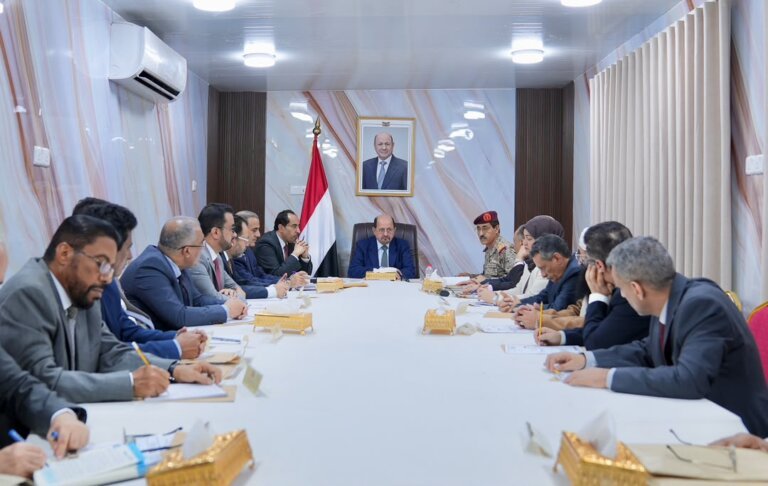
Lieutenant General Sultan al-Arada, a member of Yemen’s Presidential Leadership Council, has asked China to use its influence in Tehran to curb Iranian support for the Houthi movement, warning that the group’s campaign against shipping now reaches far beyond Yemen’s coastline. Al-Arada made the request in a virtual meeting with the chargé d’affaires at the Chinese embassy to Yemen, according to the state news agency SABA.
In the government’s account of the discussion, al-Arada said Iranian backing had allowed the Houthis to threaten regional stability, maritime navigation and international trade through the Red Sea and Bab al-Mandab, and he called for stronger measures to interrupt the flow of weapons and technical expertise. The Chinese diplomat restated Beijing’s support for Yemen’s unity and sovereignty. Tehran acknowledges political sympathy with the Houthis but denies arming or directing them, and the extent of that support remains contested.
The war has run since March 2015, when a Saudi-led coalition intervened after the Houthis seized Sana’a and forced the government from the capital. The Presidential Leadership Council was created in April 2022 to unify the anti-Houthi camp, and al-Arada, long the governor of Marib, is one of its members. Ground front lines have moved little since the UN-brokered truce of that year; the maritime front is now the war’s most active theatre.
The appeal comes at a moment of unusual pressure on the waterway. On 20 July the Houthis declared a maritime embargo on Saudi Arabia, saying vessels calling at Saudi ports would no longer be granted safe passage through Bab al-Mandab, the strait between Yemen and Djibouti that funnels traffic between the Suez Canal and the Indian Ocean. Military spokesman Yahya Sarea described the measure as an eye for an eye and a response to what the Houthis call Saudi sieges of Yemeni ports and to airstrikes that included a strike on Sana’a International Airport.
The declaration changed traffic patterns almost immediately. The Singapore-registered very large crude carrier Xin Long Yang and the Liberia-flagged Rodos, which between them had loaded roughly 2.8 million barrels at the Saudi terminal of Yanbu, turned north on 21 July after initially steering towards the strait. Maritime intelligence firms counted more tankers carrying Saudi cargo reversing course in the following days.
The Houthis did not confine themselves to a warning. On 22 July Sarea said the group had struck two tankers, the Encelia and the Layla, for breaching the embargo, and a multinational naval task force reported missile and drone activity against ships in the southern Red Sea. Saudi crude has not stopped moving, but it has split between routes: loadings at Yanbu fell sharply while volumes through Egypt rose, consistent with heavier use of the SUMED pipeline, and some cargoes have gone the long way around the Cape of Good Hope.
For Saudi Arabia the exposure is concentrated at Yanbu, its principal Red Sea oil terminal. The kingdom suspended shipments through the strait in July 2018 after Houthi attacks on two tankers and resumed them a month later once security assurances were in place, a precedent both sides will have in mind.
That exposure is one reason the message went to Beijing rather than only to Western capitals. China is among the largest buyers of Gulf crude moving through the strait, and the Xin Long Yang was bound for a Chinese port. Reuters and Al-Monitor reported on 28 July that Beijing had opened direct contacts with the Houthis seeking safe-passage guarantees for Chinese tankers, clearing vessels individually, a channel that bypasses the government al-Arada represents.
China has been rebuilding its presence in Yemen since December 2022, when embassy staff returned to Aden. Chinese officials publicly back the internationally recognised government while keeping channels open to the Houthis and opposing attacks on Red Sea shipping. As a permanent Security Council member, Beijing holds standing in both Tehran and Sana’a.
The Iranian dimension has been visible in other ways this month. A Mahan Air aircraft landed at Sana’a International Airport on 3 July and left carrying a Houthi delegation to Tehran, which the Yemeni government treated as a breach of its sovereignty. After the Houthis rejected a proposal for the delegation to return aboard a non-Iranian aircraft under government supervision, government forces struck the runway on 13 July and the returning flight put down at Hodeidah.
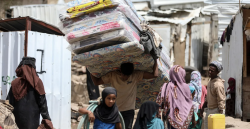
Whatever happens at sea, the war’s cost on land keeps rising. The United Nations humanitarian plan for Yemen this year estimates that more than 22 million people need assistance or protection, among them 5.2 million internally displaced. Some 18.3 million are acutely food insecure and more than 2.2 million children under five are acutely malnourished, about 516,000 of them severely. Agencies have appealed for 2.16 billion dollars to reach 12 million people.
The government has signalled it may answer militarily. On 27 July Yemen’s newly appointed foreign minister, Afrah al-Zouba, told reporters in Riyadh that the government was prepared for any escalation, language pointing towards renewed ground operations rather than the containment of recent years.
Al-Arada’s request is unlikely to produce a quick shift. China has consistently preferred quiet bilateral contact to public pressure on Iran, and its outreach to the Houthis suggests it will use whichever channel secures its cargoes fastest. The sharper question is whether the embargo endures. If it does, the coalition al-Arada is trying to assemble may form without him, driven by the cost of a contested strait.
About the Author