Yemen’s Oil Minister and Germany’s Ambassador Discuss Gas Investment Prospects in Riyadh
 Yemen Herald News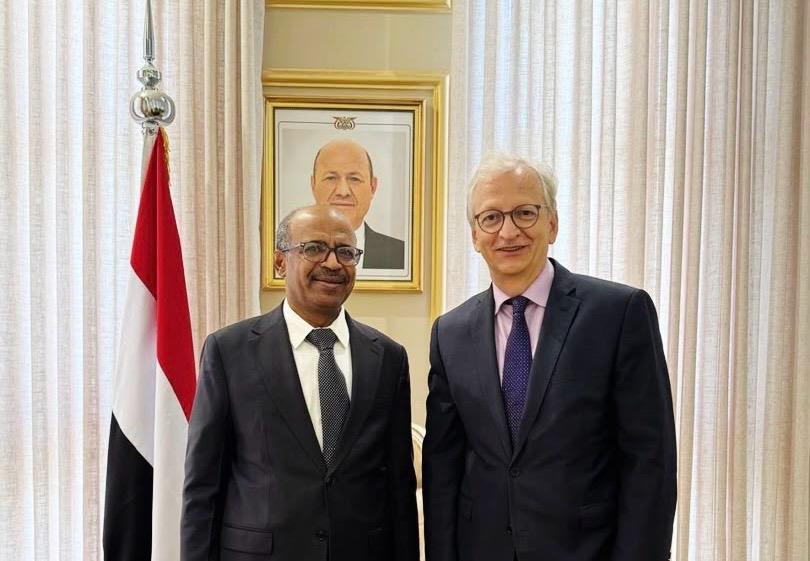
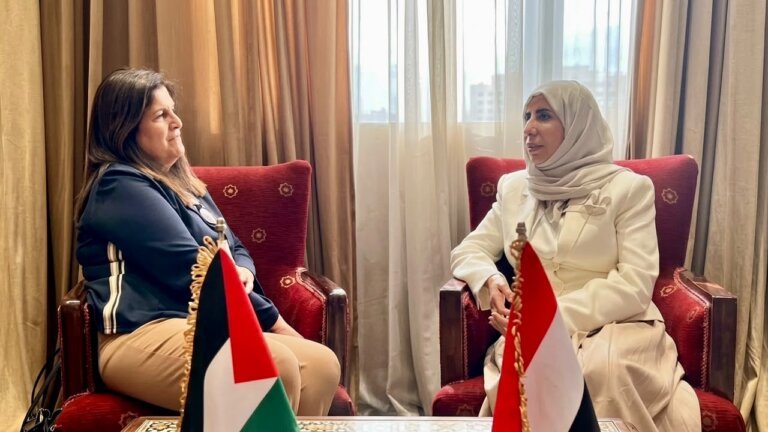
Yemen’s Minister of Oil and Minerals, Dr Mohammed Bamqa, met Germany’s ambassador to Yemen, Thomas Schneider, in Riyadh to discuss ways of expanding energy cooperation between the two countries. The talks centred on investment opportunities in Yemen’s oil and gas sector and on the wider economic relationship, at a point when the internationally recognised government is trying to draw foreign capital back into an industry that has been largely dormant for a decade.
Bamqa walked the ambassador through what the ministry describes as a map of promising investment opportunities across upstream and downstream operations, and said his department was prepared to provide the necessary facilities to German companies and other international investors. Schneider expressed Germany’s interest in developing economic partnerships with Yemen and reaffirmed Berlin’s support for government efforts to revive key productive sectors.
The meeting took place in the Saudi capital because that is where both sides currently work. Germany’s mission to Yemen has operated out of Riyadh since security conditions forced the closure of its Sanaa embassy, and Schneider, who took up the post in 2025, has conducted most of his diplomacy from there. Yemen’s own cabinet is similarly split between Aden and the Saudi capital.
Energy is the most consequential file the minister handles. Before the war, oil and gas accounted for the overwhelming majority of Yemen’s export earnings and a large share of the state budget. That revenue stream has effectively disappeared. Crude exports from government-held fields were halted in late 2022 after Houthi drone and missile attacks on the loading terminals in Hadramawt and Shabwa, and they have not meaningfully resumed since.
Yemen’s proven oil reserves are modest by regional standards, at around three billion barrels, and production peaked at roughly 450,000 barrels a day in the early 2000s before entering a long decline. The gas endowment concentrated in the Marib basin, fed to the coast by a pipeline running some 320 kilometres, is the asset officials most often cite when they discuss recovery.
The gas side of the ledger is equally stalled. Yemen LNG, the export venture built around the liquefaction plant at Balhaf on the southern coast, declared force majeure and shut down in April 2015, evacuating its foreign staff as the conflict spread. TotalEnergies, the operator and largest shareholder, has said the site cannot restart safely given the security and political situation at both national and local level, and a section of the feed pipeline was damaged in 2019. The foreign shareholders have continued to fund the facility at a loss in order to preserve it and to keep supplying power and water to nearby communities.
That is the context in which the ministry’s investment pitch has to be read. The plant at Balhaf is reported to have been kept in good condition, which means the technical barrier to a restart is lower than the political one. What is missing is a security guarantee credible enough for international operators and their insurers, and that depends on the trajectory of the war rather than on the terms of any commercial agreement.
Geography keeps foreign governments interested regardless. Yemen sits alongside the Bab al-Mandab strait, the entrance to the Red Sea through which a substantial share of Europe-Asia trade passes. Attacks on commercial shipping in the corridor have pushed many operators onto the longer route around the Cape of Good Hope, raising freight costs and insurance premiums for European importers. Germany, as one of the largest trading economies dependent on those lanes, has direct reasons to care about how Yemen’s conflict resolves.
Berlin has also been among the more consistent European contributors to humanitarian and stabilisation work in Yemen, including support for mine clearance. Schneider has publicly praised the Saudi-funded MASAM demining project for its role in reducing the risk posed by landmines and unexploded ordnance, a hazard that also constrains any future reconstruction of energy infrastructure.
The conflict itself dates to September 2014, when Houthi forces took control of Sanaa, and widened in March 2015 with the intervention of a Saudi-led coalition. More than a decade on, the country remains divided between the Houthi authorities in the north-west and the internationally recognised government, with the economy split into two currency zones and public salaries in arrears across much of the territory.
Bamqa has argued publicly that the government has a security plan in place to protect oil and gas facilities from further attack, presenting it as a precondition for restarting exports. Whether that reassurance is enough to move international companies from exploratory meetings to signed commitments remains an open question, and nothing announced at this meeting changes it.
For now the practical value of encounters like this one is diplomatic rather than commercial. They keep Yemen’s energy file on the agenda in European capitals, give the ministry a channel to present technical data to potential partners, and signal that Berlin remains engaged. Any actual German investment would require a level of stability that does not currently exist, and both sides framed the discussion as preparatory rather than transactional.
The broader calculation for the government is that restored hydrocarbon revenue would do more than any single aid programme to stabilise public finances, pay salaries and support the rial. That makes the energy portfolio central to its case for international backing, even while the fields, pipelines and terminals that would generate the money remain out of service.
About the Author