Yemen’s New Foreign Minister Meets Kuwait’s Ambassador to Discuss Aid and Cooperation
 Yemen Herald News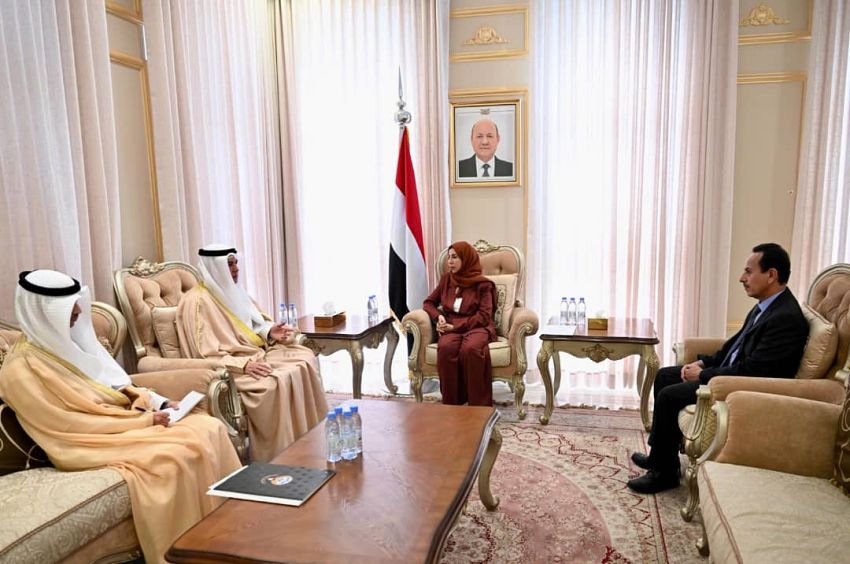
Yemen’s Minister of Foreign Affairs and Expatriates, Dr Afrah Abdulaziz al-Zouba, received Kuwait’s ambassador to Yemen, Falah Fahd al-Mutairi, for talks on deepening relations between the two countries. According to the state news agency Saba, the two reviewed ways to widen cooperation across political, humanitarian, relief and development files, and agreed that closer coordination is needed to meet the pressures Yemen faces after more than a decade of conflict. The meeting was among the first bilateral engagements al-Zouba has held since taking charge of the ministry.
Al-Zouba’s appointment is itself a marker of change in Yemeni politics. She was named foreign minister on 23 July in a cabinet reshuffle, becoming the first woman to hold the portfolio — or any of the government’s most senior posts — and took the constitutional oath on Wednesday 29 July before Rashad al-Alimi, chairman of the Presidential Leadership Council, in Riyadh. She had served since February as minister of planning and international cooperation. Before entering government she spent more than 25 years working in development and peacebuilding, and between 2016 and 2017 she was among a small group of Yemeni women invited by the United Nations to join consultations tied to the peace process — talks that were held, as it happens, in Kuwait.
Her counterpart in the meeting is also relatively new to his posting. Al-Mutairi was sworn in before Kuwait’s Amir, Sheikh Mishal al-Ahmad al-Jaber al-Sabah, in April 2026, and Yemen’s prime minister received a copy of his credentials the following month.
Al-Zouba briefed the ambassador on conditions inside the country. The government describes the Houthi movement, which controls Sanaa and much of Yemen’s north-west, as an Iran-backed terrorist militia, and the minister said its actions had compounded the political, humanitarian and economic difficulties confronting the state. The Houthis reject that characterisation and present themselves as a national movement. She framed the relationship with Kuwait as one of the partnerships Yemen relies on while it works to restore state institutions and rebuild security.
She also thanked Kuwait for what she called its steady support, pointing to the long-standing ties between the two countries and to Kuwaiti humanitarian and development work carried out in Yemen over successive years. Al-Mutairi, for his part, reaffirmed Kuwait’s backing for Yemen’s unity and stability and said his government intended to strengthen cooperation across a range of fields, with humanitarian and development assistance a priority.
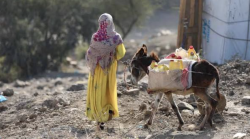
The humanitarian backdrop to those assurances is severe, and larger than is often reported. The United Nations Humanitarian Needs and Response Plan for 2026, published in March, estimates that 22.3 million people in Yemen require humanitarian assistance and protection — a figure that includes 5.2 million people displaced inside the country, along with migrants and refugees. Acute food insecurity affects 18.3 million people. More than 2.2 million children under five are acutely malnourished, over half a million of them severely. Close to 40 per cent of health facilities are only partly functional or not working at all, and 14.4 million people need water, sanitation and hygiene support.
Funding has not kept pace. Aid agencies asked for $2.16 billion for 2026 to reach 12 million people, prioritising the 9.4 million living in areas of highest severity — a deliberately narrowed target that already leaves millions outside the response. That gap is part of what makes bilateral donors such as Kuwait consequential.
Kuwaiti assistance has tended to arrive through both state channels and multilateral partners. Kuwait has provided $10 million to the International Organization for Migration for its operations in Yemen, and the Kuwait Fund for Arab Economic Development has given UNICEF a $2 million grant aimed at reducing maternal and child mortality by strengthening basic health services and training midwives at hospitals across five governorates. Kuwaiti charitable societies run separate food and health programmes in the country.
The meeting also carried a regional charge that neither side had to spell out. Yemen’s foreign ministry has issued repeated statements this month condemning Iranian missile and drone attacks on Kuwait, Bahrain, Qatar and Jordan, including on 9, 17 and 18 July, and again on 31 July after fresh strikes on Kuwait and Jordan. Al-Zouba told the ambassador that Yemen stands with Kuwait against what she described as unjust Iranian threats, and supports its sovereignty and security. For the Yemeni government, the argument that Iran is a shared problem rather than a narrowly Yemeni one is a central plank of its diplomacy.
That case is easier to make now than it was a year ago. The war that began with the Houthi seizure of the capital in 2014 has widened well beyond Yemen’s borders, with attacks on shipping in the Red Sea and around the Bab al-Mandab strait drawing in navies and insurers far from the region. Kuwait, meanwhile, has found itself directly targeted, which gives the two governments a more immediate common interest than the older language of fraternal ties suggests.
Little of that is resolved by a single ambassadorial call, and readouts of this kind rarely commit either party to anything specific. What the meeting does signal is continuity: a new minister, in office barely a week, moving quickly to reassure a Gulf donor that the relationship, and the assistance attached to it, will carry on. Whether it produces more than reassurance will depend on funding decisions taken elsewhere.
About the Author