Yemen’s Prime Minister Orders a National Social Policy as Institutional Reform Drive Widens
 Yemen Herald News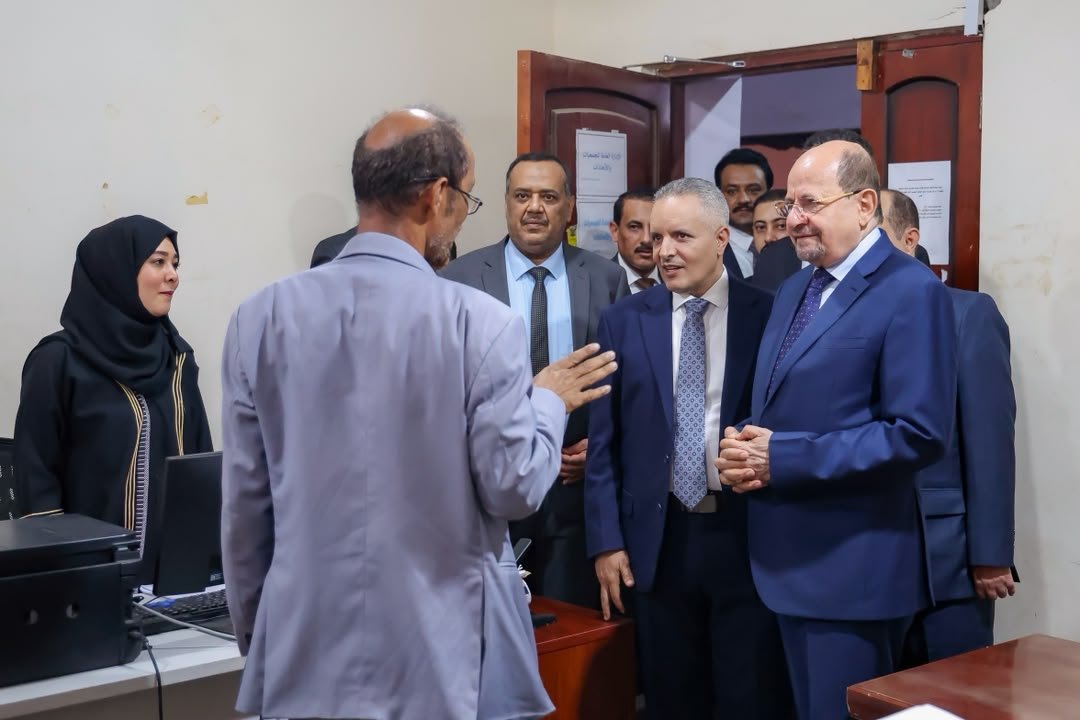
Yemen’s Prime Minister, Dr Shaya Mohsen al-Zindani, has used a visit to the Ministry of Social Affairs and Labour in Aden to press the case for an extensive programme of institutional reform, telling officials that the government intends to rebuild state bodies weakened by years of inefficiency, weak oversight and misconduct. Speaking at the ministry in the interim capital, he set out a vision for overhauling how government works that rests on integrity, transparency and enforcement of the law, and argued that Yemen needs an administrative structure capable of responding to the demands now placed on it.
Al-Zindani has led the government since February 2026, when he was sworn in after the Presidential Leadership Council accepted the resignation of his predecessor, Salem Saleh bin Braik, in mid-January. A career diplomat who was born in 1954 and who served as an ambassador in London, Rome, Athens, Amman and Riyadh, he had been Minister of Foreign Affairs and Expatriates since March 2024 and retained that portfolio alongside the premiership when the new cabinet of 34 ministers was formed. He has said publicly that he kept the foreign ministry in order to see through reforms already under way there.
At the ministry, the Prime Minister said the government had entered what he described as a phase of institutional building, in which the priority is to repair the machinery of the state rather than simply keep it running. That framing matches a decision taken earlier by his cabinet in Aden, which approved the formation of a Higher Committee for Comprehensive Institutional Reform charged with raising the efficiency of the civil apparatus and putting public finances on a more sustainable footing. The committee is intended to give the reform effort a single point of coordination instead of leaving each ministry to act alone.
His specific instruction to the Ministry of Social Affairs and Labour was to draw up a comprehensive national social policy. Officials were told the policy should reflect the economic and social conditions Yemenis actually face rather than the assumptions of an earlier era, and that the legislative changes needed to modernise the ministry’s work should be prepared alongside it. Al-Zindani also stressed that the ministry’s own procedures require updating so that assistance reaches people through systems that can be audited.
The visit fits a wider pattern in the government’s public messaging. Al-Zindani has repeatedly described Aden as the centre of state administration and the government’s foremost priority, promising corrective measures on basic services, security and the institutional problems that have accumulated over several years. In meetings with the governor of Aden and local authority officials, he has reviewed the state of public services in the city and the practical steps available to improve them.
Alongside the social policy directive, the government has taken a series of administrative and financial measures. It has presented a budget for 2026 and a formal work programme approved by the Council of Ministers, with priorities that include the regular payment of public-sector salaries, restraint on spending, protection of the currency and improved revenue collection. A Supreme Tenders Committee has been established to reform public procurement, and al-Zindani has told its members that professionalism, independence and integrity are what will determine whether it succeeds in preventing the waste of public funds. Customs procedures have also been revised.
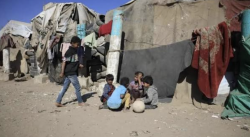
The reform agenda is being pursued against a humanitarian emergency of considerable scale. According to the United Nations Office for the Coordination of Humanitarian Affairs, 22.3 million people in Yemen — more than two-thirds of the population — need humanitarian assistance and protection in 2026, among them 5.2 million internally displaced people, about 329,000 migrants and some 63,000 refugees and asylum seekers. Some 18.3 million people are acutely food insecure, more than 2.2 million children under five are acutely malnourished, and close to 40 per cent of health facilities are only partially functional or not functioning at all. The UN and its partners have appealed for 2.16 billion US dollars to reach 12 million people this year.
Those figures explain why the Ministry of Social Affairs and Labour matters more than its budget suggests. It is the government body responsible for social protection, labour regulation and the welfare programmes that sit between emergency relief and ordinary public services, and a functioning national social policy would give donors and aid agencies a government counterpart to plan against rather than a gap to work around.
The obstacles remain substantial. The internationally recognised government, headed by the Presidential Leadership Council under Rashad al-Alimi, does not control the whole country: the Houthi movement holds Sanaa and much of the densely populated north, and administrative authority in the south is contested by other actors, including the Southern Transitional Council, which has publicly challenged aspects of the cabinet’s composition. Reform decisions taken in Aden therefore reach only part of the territory and population they nominally cover.
How much of the programme is delivered will depend on whether the Higher Committee is given real authority over ministries, whether salary payments and revenue collection stabilise enough to make planning possible, and whether the promised legislation is drafted and passed rather than announced. The government has now set out its intentions in some detail; the test is the record it accumulates over the coming months.
About the Author