Iran Strikes Israeli Embassy Complex in Bahrain as Saudi Arabia and Qatar Intercept Missile and Drone
 Yemen Herald News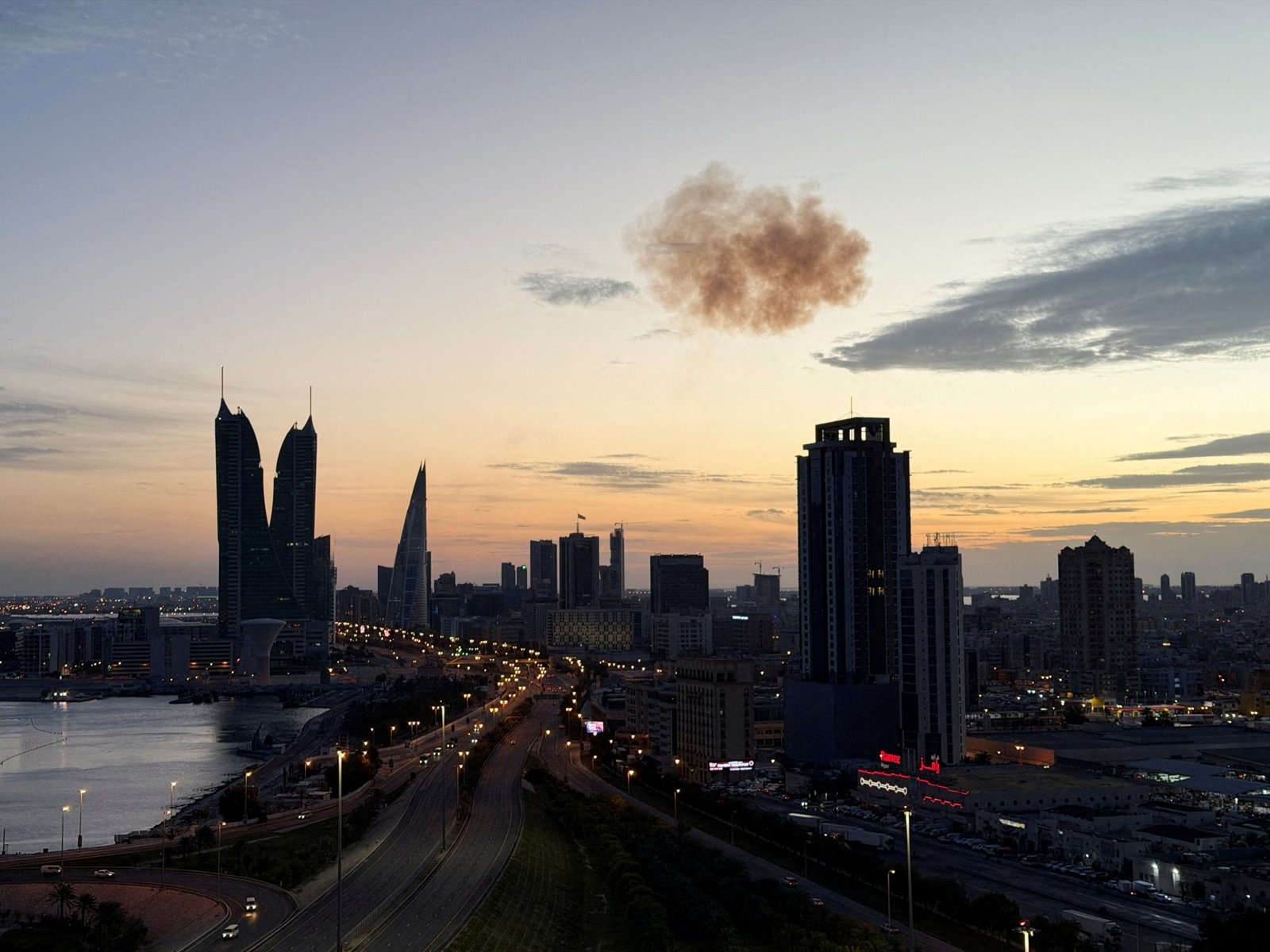
Iran struck the commercial complex housing Israel’s embassy in Bahrain’s capital in early March 2026, according to reporting at the time by the semi-official Fars News Agency, in an escalation that pulled a sixth Gulf state deeper into the widening confrontation between Iran on one side and the United States and Israel on the other. Fars reported that overnight attacks on Manama were directed at the Bahrain Financial Harbour towers, the waterfront office complex where the Israeli mission is located. An Iranian drone was intercepted and destroyed in the vicinity of the complex.
The strike was one strand of a broader campaign that Iran began on 28 February 2026, when it started firing missiles and drones at Gulf Cooperation Council states hosting United States forces, bases and assets. Tehran has framed those attacks as retaliation for the American and Israeli air campaign against Iranian territory. Gulf governments have rejected that framing, arguing that they are not parties to the war and that striking their cities and civilian infrastructure cannot be justified by a conflict between other powers.
Bahrain has been among the most heavily targeted. The General Command of the Bahrain Defence Force said it had destroyed 78 missiles and 143 drones aimed at Bahraini territory, describing the assault as treacherous. By 11 March 2026, Bahraini authorities had recorded two deaths and more than 50 injuries since the campaign began. Earlier strikes hit several buildings in Manama, including in the district of Juffair, which is home to Naval Support Activity Bahrain and the headquarters of the United States Navy’s Fifth Fleet. The concentration of impacts in and around the capital, a dense island city of roughly 1.5 million people nationwide, left little margin between military targets and civilian streets.
On the same day as the embassy strike, Saudi Arabia’s Ministry of Defence announced that its forces had intercepted and destroyed a cruise missile east of al-Kharj governorate, south of Riyadh. The ministry did not say where the missile had been launched from, whether any debris caused damage on the ground, or what the intended target had been. Al-Kharj hosts significant Saudi military infrastructure, and the interception indicated that the range of the campaign extended well beyond the Gulf littoral into the Saudi interior.
Qatar’s Ministry of Defence separately confirmed that its air defences had intercepted a drone attack directed at Al Udeid Air Base outside Doha, the largest United States military installation in the Middle East and the forward headquarters of US Central Command. Qatari authorities had already raised the national threat level and advised residents to stay indoors and away from windows after explosions were heard in the capital. Those advisories, unusual for a country that has spent two decades marketing itself as a safe hub for aviation, finance and international sport, signalled how far the war had reached into everyday life in the Gulf.
The pattern across the three incidents was consistent: Iranian missiles and drones aimed at sites associated with the American or Israeli presence, and Gulf air defences claiming interceptions rather than reporting successful strikes on military targets. Gulf states have invested heavily in layered air and missile defence over the past decade, and the March 2026 exchanges became an unplanned test of those systems. The Bahraini figures, if accurate, suggest that the volume of incoming fire was high enough to saturate defences over a sustained period rather than in a single wave.
The attacks drew a rapid diplomatic response. Foreign ministers of the Gulf Cooperation Council and the European Union met in an extraordinary session in Brussels on 5 March 2026, co-chaired by the EU High Representative for Foreign Affairs and Security Policy, Kaja Kallas. In a joint statement, the ministers strongly condemned what they called unjustifiable Iranian attacks against GCC countries, said the strikes threatened regional and global security, and called on Iran to cease them immediately. The statement listed the United Arab Emirates, Bahrain, Saudi Arabia, Oman, Qatar and Kuwait as targets of missile and drone attacks that began on 28 February.
The GCC’s own ministerial council had already convened an extraordinary meeting at the start of March and issued a statement condemning what it described as Iranian aggression against the bloc. Turkey and Azerbaijan were among the other states drawn into the diplomatic fallout, while European leaders publicly expressed solidarity with the Gulf capitals. That alignment was notable given that several GCC members had spent the preceding years rebuilding working relations with Tehran, and it left Iran facing a broader coalition of critics than at the outset of the war.
For Yemen, the escalation carried direct consequences. The country sits at the southern end of the same maritime corridor, and any widening of hostilities involving Iran raises the risk of renewed disruption to shipping through the Bab al-Mandab strait and the Red Sea, the route on which Yemen’s imports of food, fuel and medicine depend. Higher regional insurance and freight costs feed quickly into prices in Aden and Sanaa, and a Gulf region absorbed by its own air defence has less diplomatic and financial bandwidth for Yemen’s humanitarian response.
No party announced a change of course after the March exchanges. Iran did not publicly acknowledge responsibility for individual strikes beyond accounts carried by its semi-official media, Gulf governments continued to report interceptions rather than damage, and the war between Iran, Israel and the United States continued into the following months.
About the Author