Yemen’s Prime Minister and British Ambassador Discuss Cooperation After Attacks on al-Mokha
 Yemen Herald News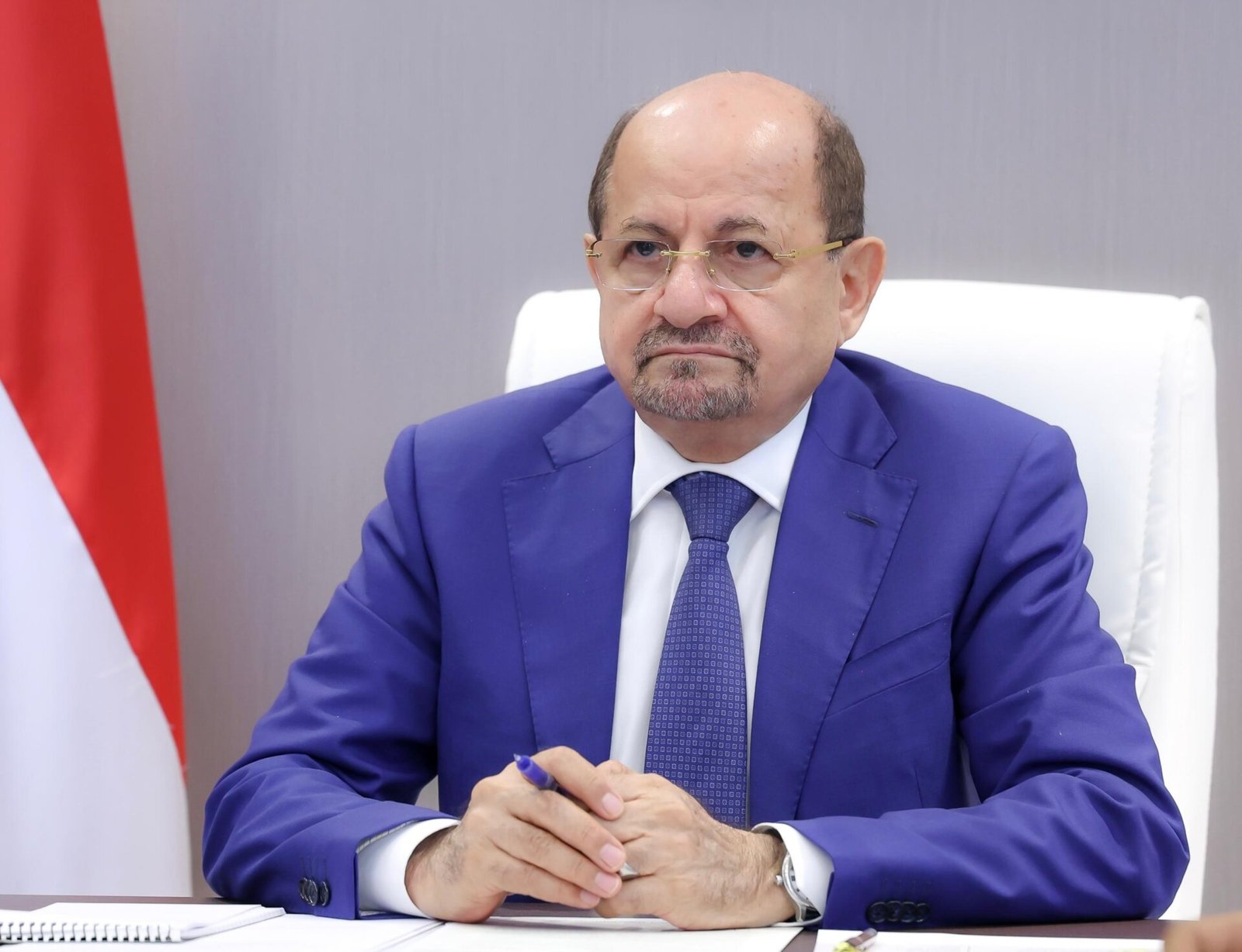
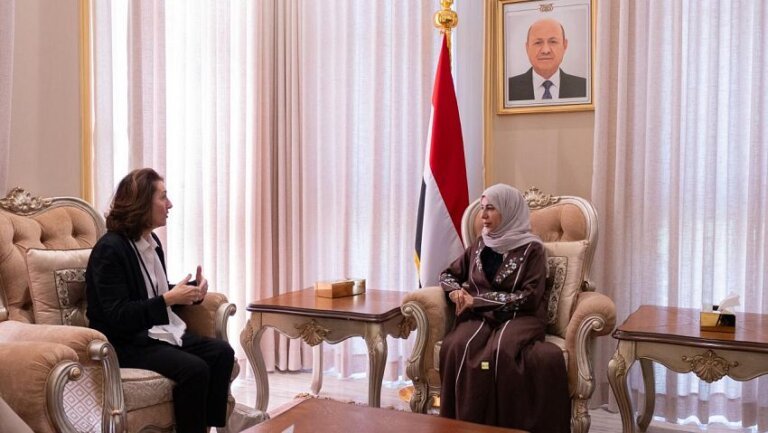
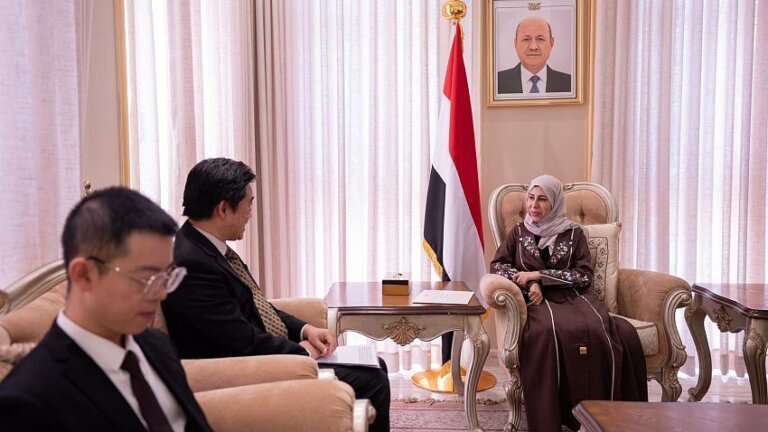
ADEN — Yemeni Prime Minister Shaya Mohsen al-Zindani held a video call on Wednesday with Abda Sharif, the British ambassador to Yemen, to review bilateral relations and cooperation between the two countries, the official Yemeni news agency Saba reported. The conversation ranged across the latest developments on the national scene and the government’s appeal for sustained British backing of its economic programme.
According to the readout, the two discussed what the government describes as a military escalation by the Houthi movement, including attacks on the Red Sea port of al-Mokha, on commercial ships and civilian facilities, and assaults on civilians and displaced people in several governorates. Saba said the continued threat to international navigation also featured in the exchange. The Houthi leadership disputes the way the government characterises its operations, and the account of the call comes from the government’s own agency.
Al-Zindani praised British support for the Yemeni government and people, and underlined the need for that support to extend to the cabinet’s efforts to carry out economic reforms, drive a recovery process and improve public services. The ambassador, Saba said, reaffirmed her country’s support for the government and for its efforts to strengthen stability and protect international navigation.
Britain occupies an unusual position in Yemeni diplomacy. It holds the pen on Yemen at the United Nations Security Council, meaning it drafts the resolutions and statements the council considers on the conflict, and it has remained one of the more consistent Western interlocutors with the administration in Aden. That role gives London influence over the framing of international action even where its material footprint is modest.
British assistance has recently been channelled in part through a Technical Assistance Facility for Yemen, announced by the United Kingdom to help rebuild the capacity of state institutions. Yemeni officials have said the mechanism carries annual funding of no less than 2.2 million pounds over three years and is directed at governance, institutional reform and capacity building. The facility is aimed less at emergency relief than at the machinery of government itself, an area donors have often been reluctant to fund. A British minister has also travelled to Aden to deliver that message in person, meeting council chairman Rashad al-Alimi and the then prime minister, Salem Saleh bin Braik.
The attacks on al-Mokha referenced in the readout underline why the maritime file dominates these conversations. The town sits on Yemen’s Red Sea coast a short distance north of the Bab al-Mandab strait, the narrow passage between the Arabian Peninsula and the Horn of Africa through which traffic bound for the Suez Canal must pass. Saba reported in the same period that Pakistan had condemned an attack on a commercial vessel in the strait, and that government forces in Shabwa had repelled an assault on their positions.
Sustained attacks on merchant shipping since late 2023 have already reshaped the corridor. Many operators now route vessels around southern Africa rather than through the Red Sea, adding days and considerable cost to voyages between Asia and Europe, with knock-on effects for Suez Canal revenues and for the ports along the route. For Yemen itself the consequences are more immediate: the country imports the overwhelming majority of its food and fuel, and disruption to shipping feeds directly into prices in local markets.
Al-Zindani’s emphasis on economic reform reflects the pressure his government faces at home. He was appointed prime minister in January 2026 after the Presidential Leadership Council accepted the resignation of Salem Saleh bin Braik, who had led the cabinet since May 2025 and was afterwards made an adviser to council chairman Rashad al-Alimi on financial and economic affairs. Al-Zindani came to the post from the foreign ministry, and his premiership has leaned heavily on external engagement.
The needs those reforms are meant to address are formidable. The United Nations Office for the Coordination of Humanitarian Affairs estimates that 22.3 million people in Yemen require humanitarian assistance and protection in 2026, including 5.2 million internally displaced people alongside migrants and refugees. Some 18.3 million people face acute food insecurity and more than 2.2 million children under five are acutely malnourished, over half a million of them severely. Close to 40 per cent of health facilities are partly functional or not functioning at all, and 14.4 million people need water, sanitation and hygiene support.
Money to meet those needs is short. The United Nations and its partners have sought 2.16 billion dollars for 2026 to reach 12 million people, 9.4 million of whom have been prioritised on the basis of severity. Where appeals fall short, agencies cut rations, close clinics and suspend water trucking, and the reductions land first on displaced households. That is the backdrop against which the government presses donors to fund institutions rather than only emergency relief.
Wednesday’s call produced no announcement of new funding and no shift in the political picture. Efforts led by the United Nations to convert a fragile truce into a lasting settlement have been stalled for a considerable period, and the Presidential Leadership Council, created in April 2022 to bring the anti-Houthi factions under one structure, still administers a country divided between rival authorities in Aden and Sanaa. What the exchange did register was continuity: London remains engaged, and Aden continues to argue that stability and reconstruction depend on it.
About the Author