Yemen’s Cabinet Approves 2026 Work Program With Six Strategic Priorities
 Yemen Herald News
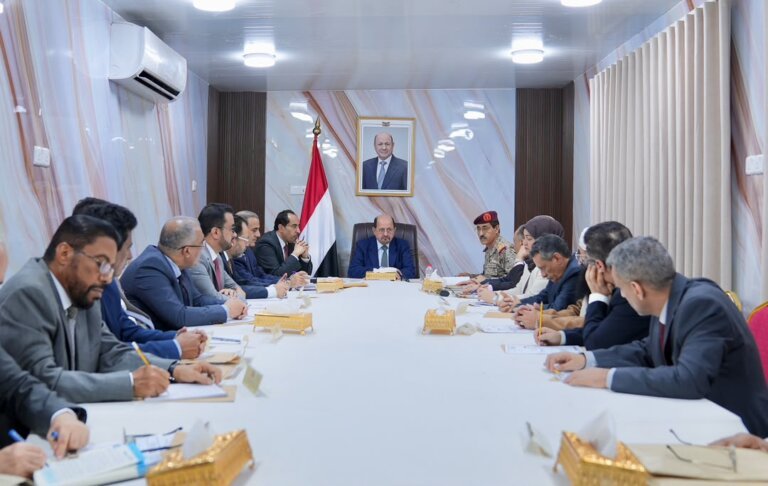
Yemen’s Council of Ministers has convened in Aden to approve the government’s work programme and strategic priorities for 2026. The meeting was chaired by Prime Minister Dr. Shaya Zindani, who set out the government’s commitment to addressing the pressing economic and social challenges facing the country as it contends with the effects of prolonged conflict.
The approved programme aims to achieve economic and social stability, alleviate the hardships facing citizens, ensure the timely payment of salaries and protect the national currency. It emphasises the need for rationalised spending and seeks to provide a minimum level of economic certainty in order to foster stability across various sectors of the economy and society.
The programme identifies six strategic priorities. These include enhancing political and security stability, extending the sovereignty of the state and achieving economic recovery. It also focuses on maintaining the sustainability and quality of basic services, ensuring equitable access to them, and improving institutional governance through digital transformation and adherence to sound standards.
The approval of a work programme and strategic priorities reflects an effort by the government to set out a clear agenda and framework for its actions. Articulating priorities can help guide the work of ministries and institutions, coordinate efforts and provide a basis for measuring progress, particularly important in a context where resources must be carefully allocated.
The emphasis on economic and social stability reflects the centrality of these goals to the government’s agenda. Years of conflict have destabilised the economy and society, and restoring a measure of stability is a prerequisite for recovery and for relieving the hardships that the crisis has imposed on the population.
The commitment to ensuring the timely payment of salaries addresses a matter of great importance to many Yemenis. The payment of public sector salaries has been a persistent challenge during the conflict, with significant consequences for the livelihoods of large numbers of people, and prioritising it reflects an awareness of its impact on citizens’ welfare.
Protecting the national currency is another priority with far-reaching implications. The depreciation of the currency in areas under government control has fuelled inflation and eroded purchasing power, driving up the cost of basic goods. Stabilising the currency is essential to easing these pressures and to fostering broader economic stability.
The emphasis on rationalised spending reflects the fiscal constraints under which the government operates. With resources severely limited, ensuring that spending is prudent and directed toward priorities is essential to maintaining fiscal stability and to making the most of the funds available, a consideration central to responsible economic management.
The goal of extending the sovereignty of the state speaks to the fundamental challenge of the government’s authority. With large parts of the country outside its control and its reach constrained even in areas it administers, strengthening the presence and authority of the state is central to the government’s objectives and to the restoration of order.
Enhancing political and security stability, another of the six priorities, addresses the foundations on which recovery depends. Stability is a prerequisite for governance, service delivery and economic activity, and efforts to strengthen it are central to creating the conditions in which the government’s broader agenda can be pursued.
The focus on the sustainability and quality of basic services reflects the importance of services to citizens and to the legitimacy of the state. Ensuring that services such as water, electricity, health and education are maintained and improved is central to relieving hardship and to demonstrating the government’s capacity to serve the population.
The emphasis on equitable access to services adds an important dimension. Ensuring that services reach all segments of the population, rather than being concentrated among some, is central to fairness and to social cohesion, and its inclusion among the priorities reflects an awareness of the importance of equity in the delivery of services.
The commitment to improving institutional governance through digital transformation points to a forward-looking element of the programme. Digital tools can enhance the efficiency, transparency and accountability of institutions, and their adoption reflects an effort to modernise governance and to strengthen the functioning of the state.
The breadth of the six priorities reflects the interconnected nature of Yemen’s challenges. Stability, sovereignty, economic recovery, services, equity and governance are bound together, and progress in each supports progress in the others, underscoring the comprehensive approach the programme seeks to embody in addressing the crisis.
The programme’s approval also carried a symbolic weight for a government that has faced questions about its cohesion and effectiveness. Presenting a unified agenda, endorsed collectively by the Council of Ministers, offered a signal of common purpose at a moment when the administration is seeking to demonstrate that it can govern coherently despite the strains of conflict and the competing pressures within the anti-Houthi camp.
Much, however, will hinge on delivery. Yemenis have grown accustomed to ambitious programmes and declarations of intent, and their assessment of the government will rest less on the documents it approves than on the tangible improvements they experience, in salaries paid on time, prices held in check and services restored. International partners, too, are likely to weigh their support against evidence that the priorities are being implemented in practice, making the coming year a test of whether the 2026 programme can move from a statement of intent to a record of results.
For now, the approval of the 2026 work programme sets out the government’s agenda and priorities for the year. Whether the ambitions it embodies are realised will depend on implementation, resources and the evolving situation, but the programme provides a framework for the government’s efforts to advance stability, recovery and improved governance.
About the Author