Former Rapper Balendra Shah Wins Landslide as RSP Sweeps Nepal’s Election
 Yemen Herald News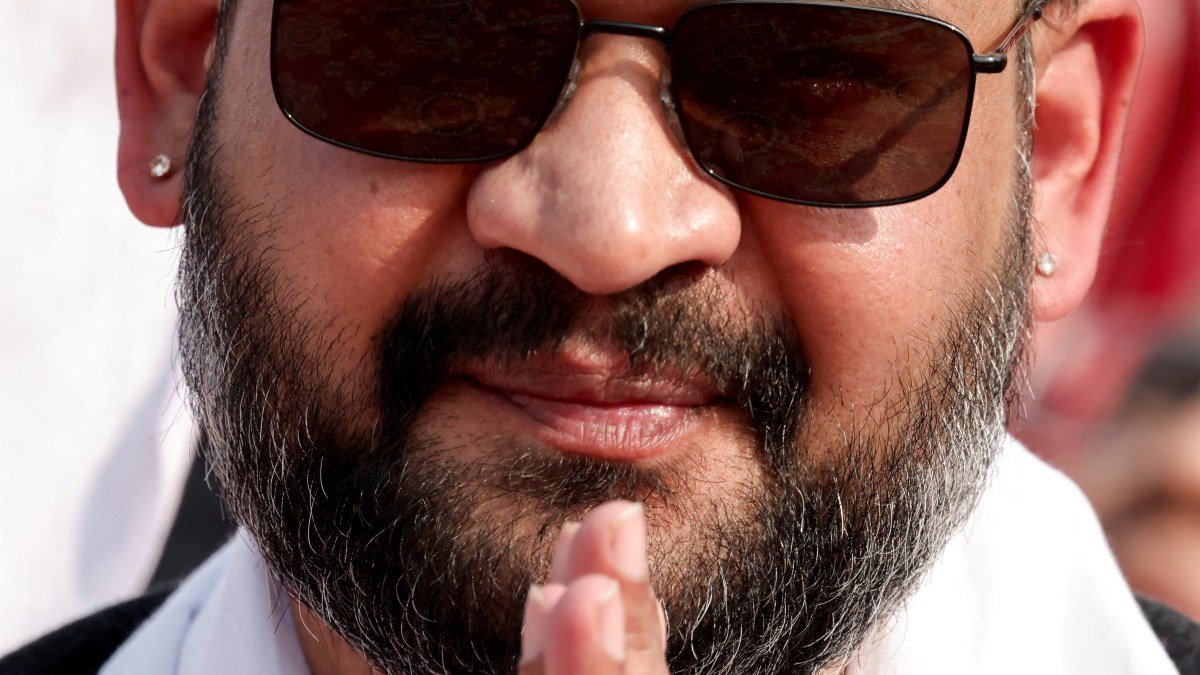
Nepal’s Rastriya Swatantra Party has swept the country’s parliamentary election, taking 182 of the 275 seats in the House of Representatives and handing its leader, the former rapper and civil engineer Balendra Shah, a mandate on a scale without precedent in Nepal’s democratic era.
Voting took place on 5 March 2026 under Nepal’s mixed electoral system, which fills 165 seats through first-past-the-post constituency contests and the remaining 110 through proportional representation. The RSP won 125 constituencies outright and added 57 seats from the proportional list. The Nepali Congress, the party that has dominated Nepali politics since the restoration of multiparty democracy, took 18 constituency seats. The CPN-UML won 10 and the Nepali Communist Party eight.
The most symbolically charged result came in Jhapa-5, where Shah stood against KP Sharma Oli, the veteran communist leader who had served four separate terms as prime minister. Shah took the seat by a margin of 49,614 votes. Oli congratulated him publicly afterwards and wished him a smooth and successful term, an unusually gracious exit for a politician who had spent three decades at the centre of Nepali public life.
Shah was 35 at the time of the vote. Trained as a civil engineer, he built a national profile as a hip-hop artist performing under the name Balen, and moved into electoral politics in 2022 when he won the mayoralty of Kathmandu as an independent candidate. His term at the city was defined by demolition drives against unauthorised construction and a combative posture towards the established parties, which made him both popular and divisive. He resigned the mayoralty to contest the parliamentary election, a gamble that would have ended his political career had the party underperformed.
The election followed one of the most turbulent periods in Nepal’s recent history. In September 2025, protests led largely by young Nepalis broke out over official corruption, nepotism and a government ban on major social media platforms. The demonstrations ran from 8 to 13 September and escalated sharply, and Oli resigned as prime minister on 9 September, bringing down his coalition. An interim administration led by the former chief justice Sushila Karki was installed to steer the country to fresh elections.
The RSP had been founded only four years before the vote, positioning itself as a centrist, anti-establishment alternative to the Congress and communist blocs that had alternated in power for decades. It entered parliament for the first time in 2022 with a modest bloc of seats. The 2026 result converted that foothold into a supermajority, and did so largely by absorbing the political energy generated by the previous year’s protests.
The scale of the mandate is what makes the outcome unusual. Nepal has cycled through a long series of short-lived coalition governments since the abolition of the monarchy in 2008, with prime ministers frequently unseated by shifting parliamentary arithmetic rather than by voters. A single party holding well over a two-thirds share of the lower house can legislate without negotiating with partners, and is insulated from the horse-trading that has repeatedly cut governments short.
That freedom cuts both ways. With no coalition partners to blame, the incoming government owns whatever follows. The in-tray it inherited was heavy: persistent youth unemployment, an economy heavily dependent on remittances sent home by Nepalis working abroad, a large informal sector, and public services strained by years of underinvestment and administrative churn. Nepal’s programme with the International Monetary Fund also imposed a schedule of fiscal and financial-sector reforms that the incoming government had little room to renegotiate.
Corruption was the issue that drove the protests and the issue on which the new government has invited itself to be judged. Campaign commitments centred on cleaning up public procurement, opening up government contracting and creating enough domestic economic opportunity to slow the outflow of young workers to the Gulf, Malaysia and beyond. Those are structural problems that have defeated better-resourced administrations, and delivering visible progress inside a single term is a demanding test.
Nepal’s external position adds a further complication. Kathmandu sits between India and China, both of which court it with infrastructure financing and trade arrangements, and successive Nepali governments have tried to hold a balance between the two without becoming dependent on either. A new administration with limited experience in office has to manage that relationship while its attention is fixed on domestic delivery.
For the parties that lost, the result was a rupture rather than a setback. The Nepali Congress and the communist parties between them had shaped almost every government of the past thirty years. Being reduced to a combined constituency tally in the low tens leaves them with limited leverage in parliament and forces a reckoning with a younger electorate that has plainly stopped regarding them as the natural parties of government. Oli’s own defeat in a constituency he had long treated as safe underlined how comprehensive the shift was.
Attention after the count turned to the formation of a cabinet and the speed with which the new majority would translate campaign language into legislation. The mandate removed the usual excuses about coalition constraints, which sharpened expectations rather than easing them. Voters who had been on the streets months earlier had shown they were willing to act when they judged that the political class had stopped listening.
About the Author