
Yemen’s Culture Minister Asks the Goethe-Institut to Reopen Programmes in Aden
 Yemen Herald News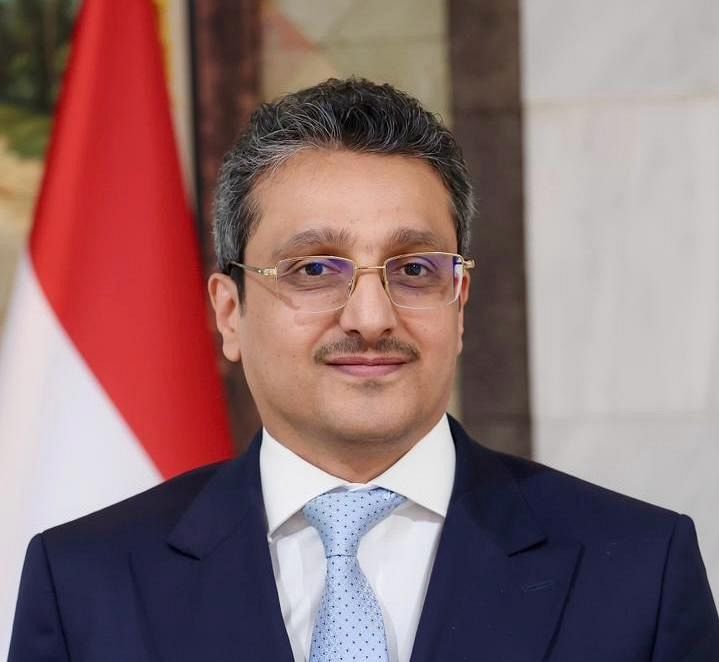
Yemen’s Minister of Culture and Tourism, Mute’a Dammaj, discussed cultural cooperation with the German ambassador to Yemen and representatives of the Goethe-Institut in a video conference held in March 2026, the official Saba news agency reported at the time. The talks focused on restarting German cultural and language programming inside the country after years of suspension.
The Goethe-Institut delegation was led by Dr Katharina Rockchell, described in the report as head of culture and education. The meeting was held remotely, reflecting the working arrangements of most foreign missions accredited to Yemen, which have operated from outside the country for much of the conflict.
Dammaj used the session to press for a physical German cultural presence in Aden, the seat of the internationally recognised government. According to the report, he proposed opening a branch of the Goethe-Institut in the city and argued that renewed programming would give Yemenis access to cultural and educational resources that have been largely unavailable since the war began.
Two specific proposals were raised. The first was support for the German language department at the University of Aden, which has continued teaching through the conflict with limited materials and staff. The second was the possibility of running internationally recognised German language examinations in Aden itself, rather than requiring candidates to travel abroad to sit them.
That second point matters more than it may appear. Standardised German language certificates are a precondition for university admission, professional recognition and certain visa categories in Germany. Yemeni candidates who cannot sit an accredited examination at home must travel to a third country to do so, at a cost that puts the qualification out of reach for most.
The Goethe-Institut is the Federal Republic of Germany’s cultural institute, operating a network of centres worldwide to teach German, run cultural programming and support academic and artistic exchange. Its work in conflict-affected countries typically continues through partner organisations and regional offices when a local branch cannot be maintained.
Germany has kept a diplomatic relationship with Yemen through the war, though its embassy has operated from outside the country. The German mission has been among the European posts most consistently engaged on Yemeni political and humanitarian files, and cultural cooperation has been raised periodically alongside those discussions.
Cultural heritage is a live policy area for Dammaj’s ministry rather than a ceremonial one. Yemen holds several UNESCO World Heritage sites, including the Old City of Sana’a, the walled city of Shibam and the historic town of Zabid, all of which have suffered from a combination of conflict damage, flooding and deferred maintenance.
Antiquities trafficking is a related priority. The ministry has pursued agreements with countries where Yemeni artefacts removed during the conflict have surfaced, with negotiations reported to involve Germany, the United States, Switzerland and France. Recovering objects requires both legal cooperation and documentation that in many cases was lost when museums and records offices were damaged.
Cultural diplomacy of the kind discussed in the March meeting is often the first form of engagement to lapse in wartime and among the last to be restored. Language centres and exchange programmes depend on stable premises, resident staff and predictable security, none of which have been available in Yemen for a decade.
Aden’s position as the temporary capital has made it the natural location for any restored international presence. Government ministries, several embassies and a number of international organisations have based operations there, and the city has absorbed much of the institutional activity that once took place in Sana’a.
The university sector illustrates the scale of the loss. Yemeni higher education has contended with damaged buildings, interrupted salary payments, and the departure of academic staff, while students have faced repeated disruption to their studies. Foreign language departments, dependent on external partnerships and up-to-date materials, have been particularly exposed.
Restoring a Goethe-Institut presence would not resolve those structural problems, but it would restore a channel. Scholarship information, teaching materials, examination access and cultural events all flow through such institutions, and their absence removes a route by which Yemeni students and artists connect with counterparts abroad.
The report of the March meeting did not indicate that any commitment was made on the Aden branch, and no timetable was published. The account set out the Yemeni side’s requests and the fact that the German representatives had heard them, which is the customary form for an initial exchange of this kind.
Dammaj has held a series of similar meetings since taking office, including with the Arab Tourism Organization on developing Yemen’s tourism sector, and with UNESCO on heritage preservation. The pattern suggests a ministry attempting to rebuild external partnerships across several tracks at once, with heritage protection and language and education cooperation as the two most active.
Tourism, the other half of the ministry’s portfolio, remains effectively dormant. Foreign governments continue to advise against travel to Yemen, and commercial visitor traffic has not resumed. Officials have framed current work as preparation, so that heritage sites and institutions survive in a condition that would allow the sector to restart if security permits.
No independent account of the March 2026 video conference was published beyond the Saba report, and the details above reflect what that report described at the time. Subsequent progress on the Aden branch proposal, the examination centre or support for the German language department has not been separately documented.
About the Author




