World Boxing Clears Olympic Champion Lin Yu-ting to Return to Competition
 Yemen Herald News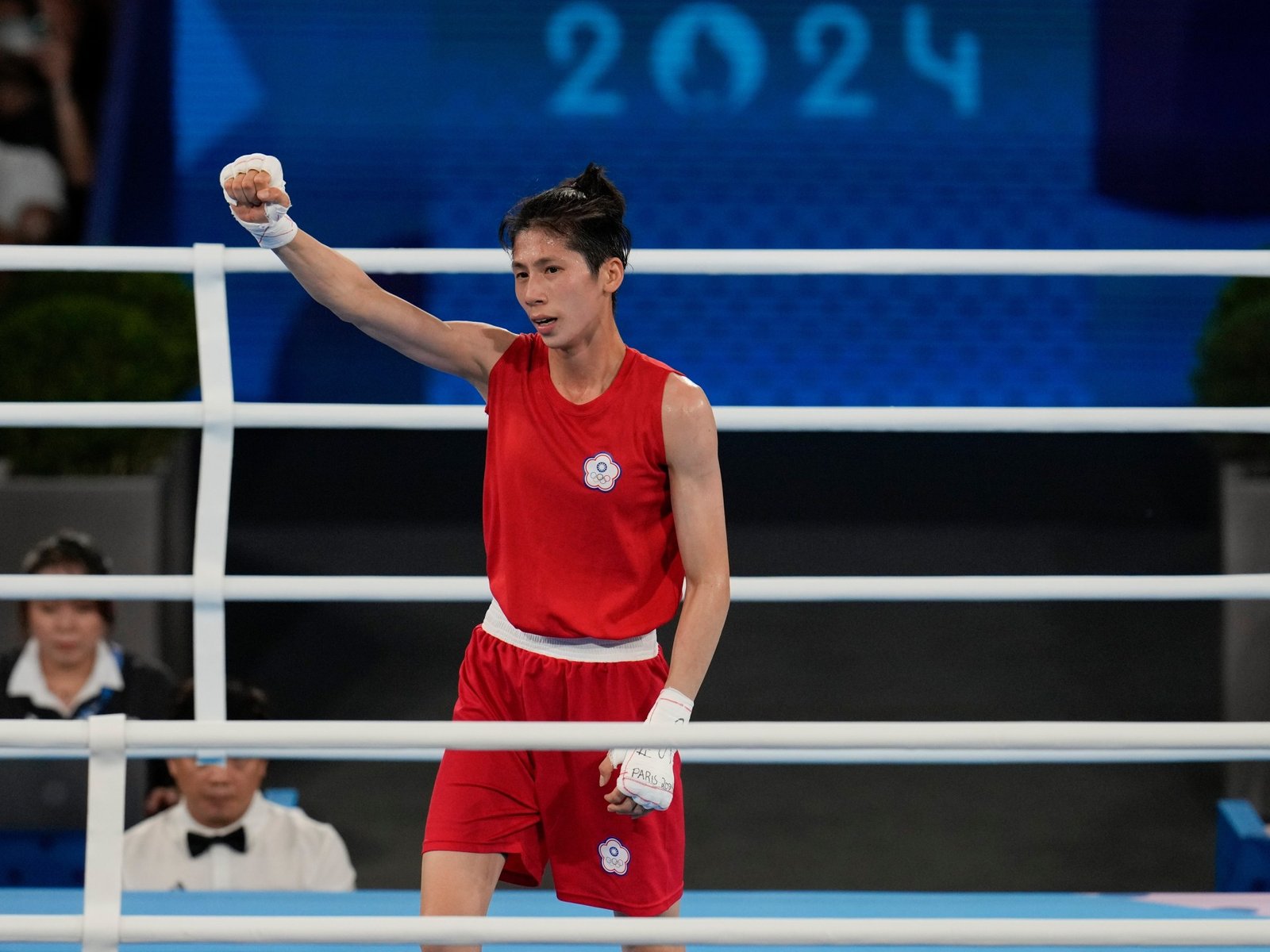
World Boxing cleared Taiwan’s Olympic gold medallist Lin Yu-ting to return to competition in the female category, the governing body announced on Friday 20 March 2026, ending months of uncertainty that had kept one of the sport’s most scrutinised athletes out of international tournaments. The decision came through an appeal lodged by the Chinese Taipei Boxing Association and arrived days before the Asian Boxing Championships, which ran from 29 March to 10 April in Ulaanbaatar, Mongolia.
World Boxing said the appeal had been handled under its established procedures and confirmed that Lin was eligible to compete in the women’s category at its sanctioned events. The organisation did not disclose the result of any test, and its statement referred to the case without naming the athlete in every instance. The Chinese Taipei association welcomed the outcome and said independent medical experts had confirmed Lin’s status, describing the ruling as a vindication after a prolonged period of public argument.
Lin’s absence stemmed from a policy World Boxing adopted in 2025. Having taken over as the sport’s international governing body and secured a route back into the Olympic programme, it introduced a Sex, Age and Weight Eligibility Policy requiring boxers aged over 18 to undergo a one-time polymerase chain reaction test, or a functionally equivalent genetic screen, to establish the presence or absence of Y chromosome material. Testing requirements took effect from July 2025 and the finalised policy document was issued on 20 August 2025, ahead of the inaugural World Boxing Championships in Liverpool that September. National federations were made responsible for arranging the tests and submitting chromosomal certification, with disqualification and sanctions set out for non-compliance or falsified results.
The policy was written against the backdrop of the 2024 Paris Olympics, where Lin and the Algerian boxer Imane Khelif both won gold medals amid intense international argument about eligibility in women’s boxing. Both athletes met the rules the International Olympic Committee applied at the time. Both had previously been excluded from the International Boxing Association’s 2023 world championships after the IBA said they failed eligibility tests, a decision the IOC later described as arbitrary and insufficiently explained, which is why it permitted them to box in Paris. The IBA’s own recognition had by then been withdrawn by the IOC over governance and financial concerns, leaving the two rulings in open conflict.
That conflict turned the two boxers into the focal point of a dispute that was as much political as sporting. Their bouts in Paris were discussed by heads of government and became a fixture of online argument, much of it conducted without reliable information about either athlete’s medical history. Neither boxer has ever been shown to have identified as anything other than female, and both were assigned female at birth, a point their federations have made repeatedly in response to mischaracterisation.
For Lin, the practical consequence of the 2025 policy was a lengthy absence. She did not appear at several major World Boxing events after the testing requirement came into force, missing competitive rounds at a stage of her career when Olympic qualification cycles reward continuity. Her clearance restored the possibility of a return in Ulaanbaatar and, beyond that, of a path towards the Los Angeles 2028 Games, where boxing’s place on the programme is administered by World Boxing rather than the IBA.
Taiwanese officials framed the ruling as the end of an ordeal rather than a triumph. Lin had spent the period since Paris answering questions about her body rather than her boxing, and her federation pressed World Boxing through formal channels for months before the appeal succeeded.
Khelif’s position remained different. She had also not competed in World Boxing-sanctioned events since the policy took effect, and she signalled an intention to return to Olympic-level boxing while preparing a professional debut in April 2026. Professional fighters are not currently eligible for Olympic competition, so that route carries its own complications, and her case had not reached the same resolution as Lin’s at the time of the announcement.
The eligibility question itself remains unsettled across Olympic sport. Governing bodies in athletics, swimming and cycling have each adopted their own screening regimes with differing thresholds, and the International Olympic Committee has moved towards a more centralised position after previously leaving the matter to individual federations. Critics of chromosomal screening argue that a single genetic marker is a poor proxy for competitive advantage and that mandatory testing exposes athletes to medical intrusion and public speculation. Supporters argue that a clear, uniformly applied rule is preferable to case-by-case decisions taken under political pressure, which is what produced the Paris controversy in the first place.
World Boxing’s handling of Lin’s appeal offered a partial answer to one criticism, in that the process was documented and the outcome published while the underlying medical information was withheld. Whether that balance holds as more cases arrive is the question facing the federation. The Asian Championships gave the first indication of how the restored eligibility framework would function in competition, with Lin’s return watched well beyond the sport’s usual audience.
There is also a governance dimension. World Boxing was formed by national federations that broke away from the IBA, and it has had to demonstrate to the IOC that it can run the sport credibly, including on eligibility. Handling the Lin case through a defined appeal process, rather than by announcement or exclusion, was part of establishing that record.
About the Author