About 500 Migrants March Out of Tapachula to Protest Mexico’s Legal-Status Backlog
 Yemen Herald News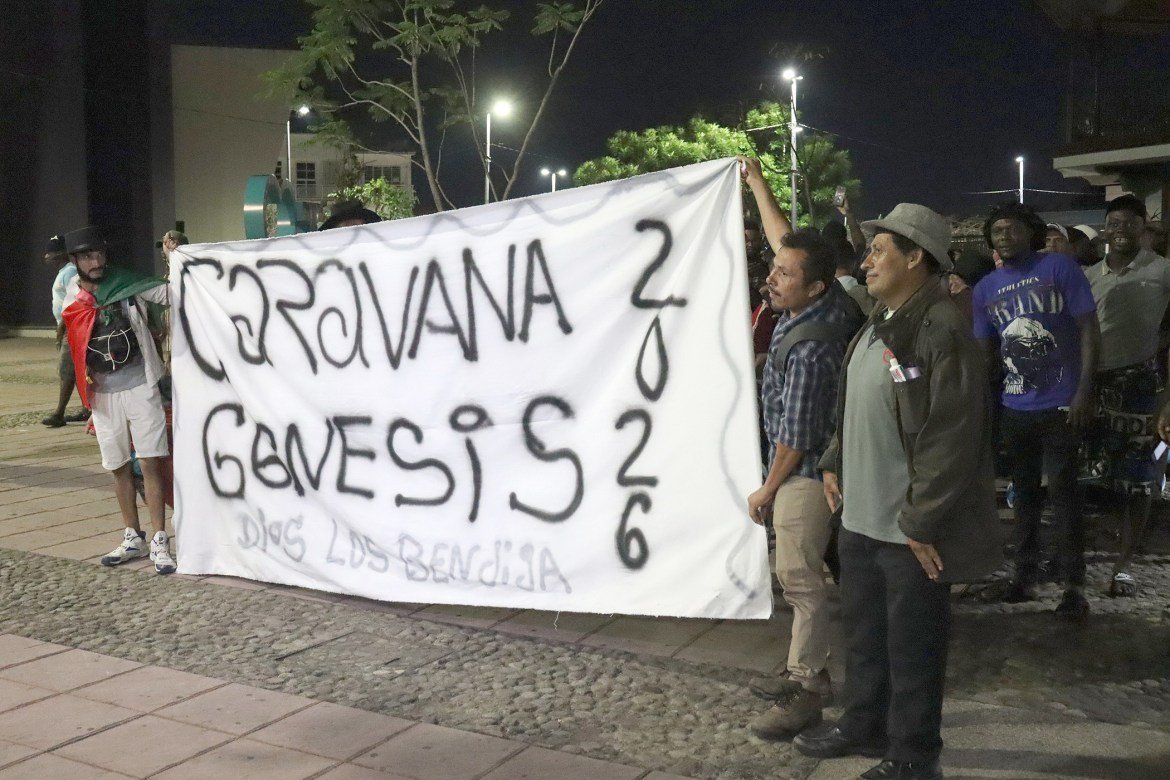
About 500 migrants and asylum seekers set out on foot from Tapachula in southern Mexico on the night of 25 March 2026, walking through into the following day in a protest against the conditions attached to seeking legal status in the country. Tapachula sits close to the Guatemalan border in the state of Chiapas and is the first significant city most people reach after entering Mexico from the south, which has made it a recurring starting point for demonstrations of this kind.
Participants said the problem was not simply that applications were refused but that the process itself had become unworkable. They described queues that consume days, restrictions on movement that confine applicants to Chiapas while their cases are pending, and delays that leave people unable to take formal work. Without documents, migrants cannot legally accept employment, rent housing in their own names or travel to cities in Mexico’s interior where jobs are more plentiful, which leaves many dependent on informal labour in one of the country’s poorest states.
The Southern Border Monitoring Collective, a coalition of civil society organisations that tracks conditions along Mexico’s southern frontier, reported that some migrants were being asked to pay close to 2,300 dollars for documentation that is legally free. The collective and other advocacy groups also criticised the increased militarisation of the border area, arguing that a heavier security presence raises rather than reduces the risks facing people who are already vulnerable to extortion and abuse.
Mexico’s National Migration Institute, known by its Spanish initials INM, is the agency responsible for processing applications and for managing movement out of the border zone. Its practice in recent years has been to contain groups within Chiapas, offering documents or transport in exchange for dispersal rather than allowing collective movements to continue north. The March demonstration was organised under the name Caravana Genesis and was described in later reporting as the first caravan of 2026. It set off from Tapachula at the end of March and was intercepted and dissolved by the INM after about twelve days, before it left the border state.
That outcome followed a familiar pattern. Groups leaving Tapachula are rarely stopped at a single checkpoint; instead they thin out over successive days as people accept offers of paperwork, run out of money, or split off in smaller units. By late April, subsequent caravans had begun to dissolve in the same way, with reporting at the time noting that many participants were no longer aiming for the United States border at all but for Mexican cities where work was available.
The shift in destination reflects changes on both sides of the frontier. Tightened United States asylum policy and the reduced availability of appointment-based entry processes have made the northern border a less realistic objective for many, while Mexico has become a destination country in its own right for Haitians, Cubans, Venezuelans and Central Americans. That transition has placed pressure on an administrative system built primarily to move people through rather than to settle them.
Chiapas itself has limited capacity to absorb the numbers involved. It is among Mexico’s poorest states, with a labour market that offers little formal employment even to residents, and Tapachula’s shelters and public services have been stretched for years by successive waves of arrivals. Local businesses have periodically complained about the strain, while migrants describe being pushed into street vending and day labour at rates far below the legal minimum.
Marches from Tapachula are as much a negotiating tactic as a journey. Organisers have long understood that collective visibility produces a response from the authorities that individual applications do not, and that walking out of the city forces officials to engage. The cost of that tactic falls on the participants, who cover long distances in heat with children and limited water, and who face the risk of dispersal at any point.
The allegation of unofficial charges is the most serious of the complaints raised in March. Mexican law provides that humanitarian visas and asylum registration carry no fee, so any payment demanded for them represents an informal levy rather than a legal cost. Advocacy organisations have documented such demands repeatedly along the southern border, and they compound the position of applicants who have already spent whatever savings they had on the journey.
The reference points for readers in Yemen are close at hand. Yemen sits on the other end of one of the world’s other major irregular migration corridors, receiving tens of thousands of arrivals each year from the Horn of Africa who cross the Gulf of Aden and the Red Sea, most of them Ethiopians travelling toward Gulf labour markets. They encounter a comparable set of pressures: detention, extortion by smugglers and armed groups, restricted movement, and a legal status that is difficult to obtain and easy to lose. The International Organization for Migration and other agencies have documented that route for years.
The parallel is not exact, since Mexico maintains a functioning asylum bureaucracy while Yemen’s institutions are fractured by war. But the underlying mechanics are similar, and so is the outcome: people stalled at a border, unable to move forward and unwilling to go back, protesting a process rather than a destination.
Neither the INM nor the federal government announced a change to processing procedures in response to the March march. Subsequent caravans left Tapachula in the weeks that followed and met the same containment approach.
About the Author