Mexico Will Keep Taking Cuban Medical Workers Despite US Pressure
 Yemen Herald News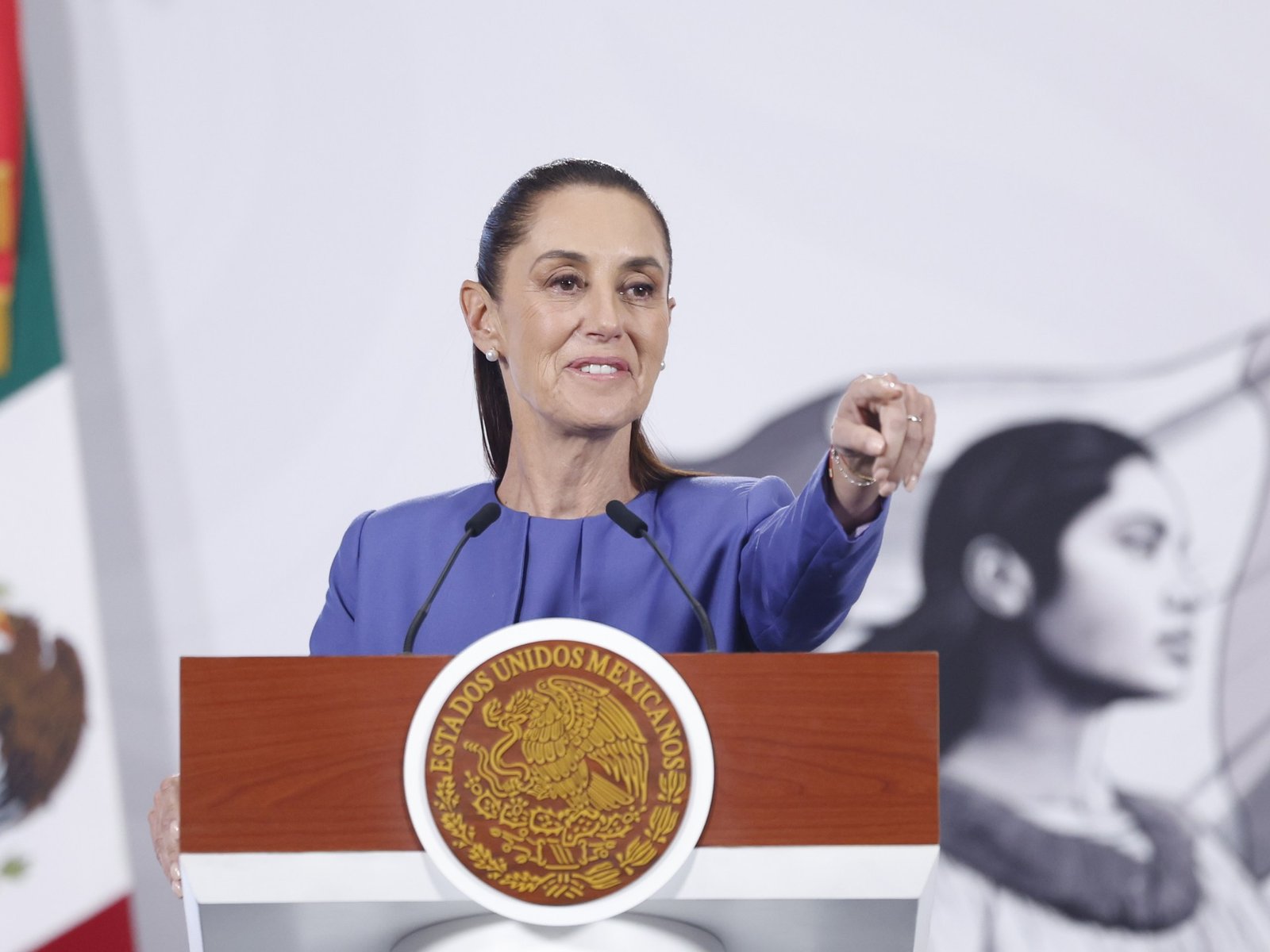
Mexican President Claudia Sheinbaum said on Wednesday, 25 March 2026, that Mexico would continue to receive Cuban medical workers, rejecting a sustained American campaign to persuade Latin American and Caribbean governments to end their participation in Havana’s overseas health programme.
Speaking at her regular morning news conference in Mexico City, Sheinbaum described the arrangement as a bilateral agreement that had been very beneficial for Mexico. She said it was hard to persuade Mexican doctors and specialists to take posts in many rural areas where specialists were needed, and that Cuban personnel were willing to work in those places.
Thousands of Cuban medical workers have been deployed to Mexico since 2022, concentrated in poor and rural districts. Reporting at the time of Sheinbaum’s remarks put the number of Cuban medics then working in the country at roughly 3,000.
Sheinbaum was asked directly whether she would uphold the agreement or yield to the Trump administration. She replied that the arrangement was a very good one that had helped Mexico a great deal, and returned to the practical argument that the programme addresses a staffing shortage her own health system has not solved.
The Mexican position stood out because several governments in the region had gone the other way. The Bahamas, Honduras, Guatemala, Jamaica and Guyana had by then ended their participation in the Cuban medical exchange programme, in most cases after direct American pressure.
That pressure had become formal. In February 2026 the United States enacted legislation opening the way to sanctions against countries that continued to take part in the programme. The law directed the Secretary of State to report within 90 days on which governments were still paying the Cuban state for what the text characterised as coerced and trafficked labour by Cuban medical professionals.
Secretary of State Marco Rubio was blunt about the administration’s reading of the scheme, telling reporters in February that it amounted to human trafficking. He argued that the doctors were barely paid, that their freedom of movement was tightly restricted, and that participating governments should understand what they were taking part in. The State Department subsequently imposed visa restrictions on officials in several Central American countries over their involvement.
Cuba has presented the missions for decades as an expression of solidarity with other developing countries. They are also one of the island’s most important sources of foreign currency, a matter of consequence for an economy that has operated under a restrictive American embargo since 1960 and that has faced acute shortages of fuel and electricity.
The criticism is not confined to Washington. United Nations experts have raised concerns of their own about conditions on the missions, including the confiscation of participants’ passports. The Cuban government has defended that practice as a means of preventing doctors trained at state expense from leaving the country permanently once they are abroad.
Washington’s legal instrument was narrower than an outright ban. Rather than prohibiting the missions, it created a reporting requirement and a sanctions mechanism aimed at the governments that host them, shifting the cost of participation onto recipient states and their officials rather than onto Cuba directly. Several governments concluded the exposure was not worth the medical staffing they gained.
The dispute therefore turns on a contested question rather than a simple one. Recipient governments point to real gaps in rural health provision that the missions fill at a cost they can afford. Critics point to the terms under which the doctors themselves work, and to the share of the payment that goes to the Cuban state rather than to the individuals providing the care.
For Mexico, the calculation is partly practical. Rural and indigenous municipalities have long struggled to attract and retain specialist physicians, a problem common to countries where medical training is concentrated in large cities and where the pay and conditions available in the countryside cannot compete. The Cuban programme offered a supply of staff prepared to take those posts.
It is also political. Sheinbaum’s government has tried to hold a position between its relationship with Havana and its far larger economic dependence on the United States, which takes the overwhelming share of Mexican exports.
Mexico had already signalled where it stood on Cuba more broadly. In February 2026 it dispatched vessels carrying humanitarian cargo to the island during an energy crisis brought on by measures that cut Cuba off from much of its imported fuel. The shipments drew American criticism but were framed by Mexico City as humanitarian rather than political.
The campaign against the medical missions forms part of a wider American effort during Donald Trump’s second term to isolate the Cuban government, including tariff threats against Cuba’s trading partners that curtailed the island’s access to foreign oil and left its electrical grid subject to repeated blackouts.
The campaign against the medical missions forms part of a wider American effort during Donald Trump’s second term to isolate the Cuban government, including tariff threats against Cuba’s trading partners that curtailed the island’s access to imported oil.
How far the pressure will reshape the programme remains unsettled. The missions operate in dozens of countries, and each withdrawal reduces both the reach of the scheme and the revenue it generates for Havana. Mexico is among the largest remaining participants.
About the Author