Senegal Takes AFCON Title Stripping to CAS After CAF Awards the 2025 Trophy to Morocco
 Yemen Herald News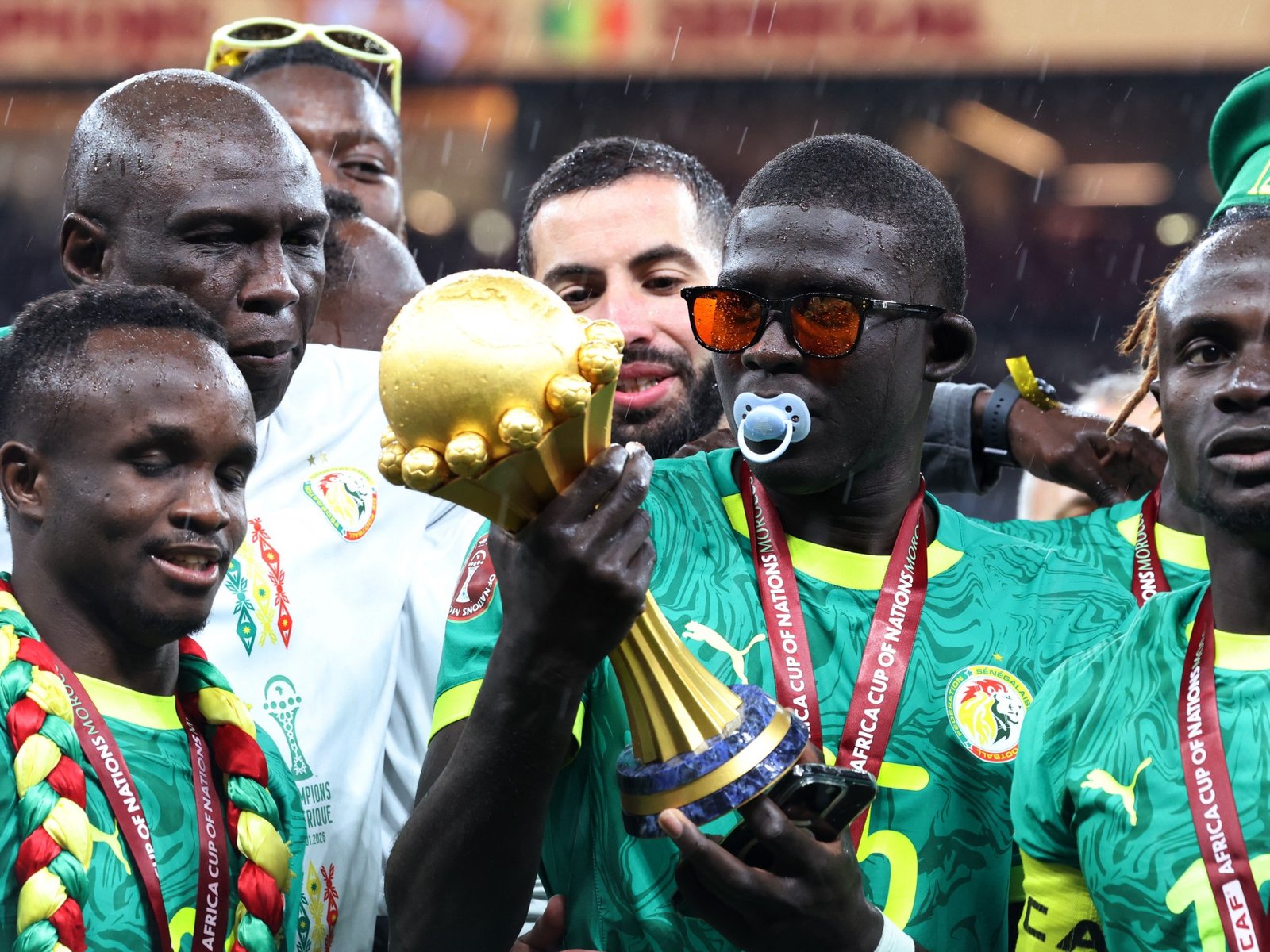
Senegal’s football federation vowed in March 2026 to fight the Confederation of African Football’s decision to strip the country of the 2025 Africa Cup of Nations title and award it instead to the host nation, Morocco. Abdoulaye Fall, president of the Federation Senegalaise de Football, described the ruling as the most grossly unfair administrative robbery in the history of the sport and said Senegal would defend its honour before the Court of Arbitration for Sport in Lausanne.
The decision came from CAF’s appeal judges roughly two months after a final in Rabat that had already been one of the most disputed matches in the tournament’s history. Senegal had won that match 1-0 after extra time. The appeal board ruled that Senegal was to be treated as having forfeited the final, converting the result into a 3-0 default win for Morocco and transferring the title with it.
The forfeit was imposed as punishment for what happened in the closing moments of normal time. Morocco was awarded a penalty that stood to decide the title with the last kick of the match. Senegal’s players walked off the pitch in protest, causing a stoppage of about fifteen minutes before they returned and play resumed. The penalty was then saved, the match went to extra time, and Senegal scored the only goal of the additional period.
That sequence is what CAF’s judges treated as decisive. Walking off the field of play during a match is a disciplinary matter under competition rules irrespective of the merits of the protest, and the sanction available for it includes forfeiture. Senegal’s position is that the punishment is disproportionate to the offence, that the team returned and completed the match, and that the result on the field should stand.
Fall’s objection went further than proportionality. He and the federation argued that the ruling violates a foundational principle of football, namely that refereeing decisions taken during a match are final and are not reopened afterwards by administrative bodies. Reversing a completed result months later, in their argument, sets a precedent that would leave any outcome open to revision. Senegal’s legal team, led by the sports lawyer Juan de Dios Crespo Perez, characterised the decision publicly as crude and irrational.
CAF’s president, Patrice Motsepe, publicly defended the award to Morocco in the days before the federation’s formal response, saying the confederation’s disciplinary process had been followed. CAF has not treated the matter as a review of the referee’s penalty award but as a disciplinary consequence of the walk-off, a distinction the confederation has maintained throughout.
Forfeiture is a rare sanction at this level. Governing bodies more commonly reach for fines, suspensions of individual players and officials, or orders to play matches behind closed doors, precisely because reversing a result affects supporters and commercial partners who had no part in the offence. Awarding a 3-0 default scoreline is the standard formulation when a forfeit is declared, and its application to a continental final is close to unprecedented.
The fifteen-minute stoppage also raises the question of what the match officials did at the time. Referees have authority to abandon a match when players leave the field and do not return, and to report the circumstances afterwards. In Rabat the referee allowed the match to restart and to be completed, which Senegal has argued indicates the incident was resolved within the game rather than left for later adjudication.
The Court of Arbitration for Sport acknowledged receipt of Senegal’s appeal against the decision. CAS is the standard forum for disputes of this kind, sitting outside national courts and applying the regulations of the relevant sporting body. Its panels can uphold a decision, annul it, or substitute a different sanction, and cases involving competition results are usually expedited, though not always quickly enough to affect a subsequent tournament.
Senegal made clear it did not intend to behave as though the title had been lost. The federation said it would parade the trophy at home and add a second star to the national team’s shirt, the conventional marker of a second continental championship. That decision put the federation in open symbolic conflict with the confederation that governs it, and left the unusual situation of two national federations both claiming the same tournament.
For Morocco, the award produced a title without a final. The country hosted the tournament and reached the decisive match, and the appeal board’s ruling gave it a championship by administrative action rather than on the pitch. Moroccan officials have accepted the decision, but the circumstances of the award have been widely discussed across African football, including by figures with no stake in either federation.
The Africa Cup of Nations is the continent’s principal international competition and carries substantial commercial and political weight for participating states. Prize money, sponsorship and the standing of a national federation within CAF all follow from performance, which is part of why a dispute over a single result has been pursued so far and so publicly.
CAS had not ruled on the appeal at the time of the federation’s announcement, and CAF’s decision stood pending the outcome. The tournament remains the continent’s principal international competition, and the standing a federation holds within CAF follows in part from performance in it, which is one reason a dispute over a single result has been pursued so publicly.
About the Author