Finance Minister and World Bank VP Discuss Yemen’s Economic Crisis
 Yemen Herald News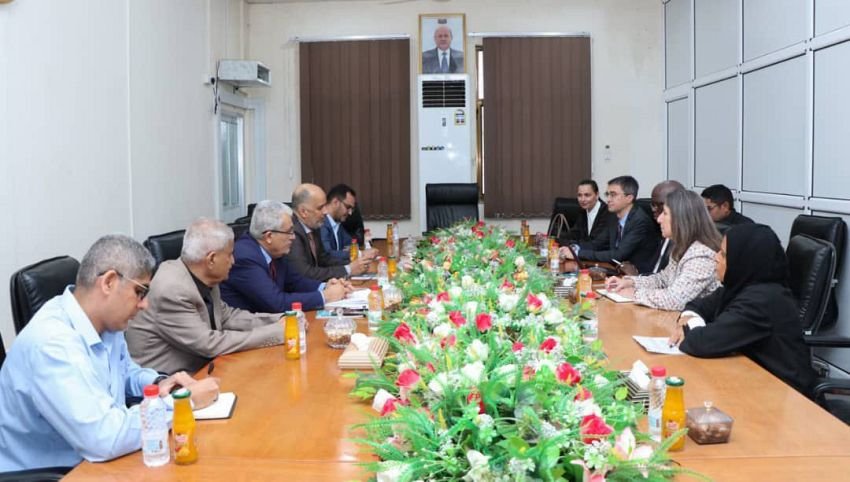
Yemen’s Finance Minister and a World Bank vice president have discussed the country’s worsening economic crisis, in high-level talks that underscored the growing urgency of coordinated international support. Marwan Faraj bin Ghanem met Ousmane Dione, the World Bank’s Vice President for the Middle East and North Africa, to address the mounting fiscal pressures and structural challenges confronting the Yemeni economy.
The meeting reflected the increasing difficulty of managing an economy under intensifying strain. Yemen’s financial system continues to face deep structural weaknesses, with public finances under pressure and government revenues struggling to keep pace with rising obligations, complicating efforts to sustain the functioning of the state.
Officials highlighted the increasing difficulty of maintaining basic state functions, including the delivery of essential services. The discussions pointed to a stark reality: economic stabilisation is no longer a long-term aspiration but an immediate necessity, and without sustained intervention, the gap between available resources and public needs is expected to widen further.
Yemen’s economic crisis is among the most severe consequences of its prolonged conflict. Years of war have devastated the economy, disrupting production, slashing revenues and driving a sharp depreciation of the currency in areas under government control, with consequences that include inflation and hardship for much of the population.
The strain on public finances lies at the heart of the challenges discussed. With revenues diminished by the conflict and obligations mounting, the government faces acute difficulty in financing its operations and in sustaining the services on which citizens depend, making the management of public finances a pressing and formidable challenge.
The difficulty of maintaining basic state functions reflects the depth of the crisis. The functioning of the state, including the payment of salaries and the delivery of services, depends on the availability of resources, and the pressures on public finances threaten the ability of the government to fulfil these fundamental functions.
The characterisation of economic stabilisation as an immediate necessity reflects the urgency of the situation. Rather than a goal to be pursued over the long term, stabilising the economy has become a pressing requirement, as the deterioration of the fiscal situation threatens consequences that could deepen the hardship facing the population.
The World Bank has been engaged with Yemen through various forms of assistance during the conflict, and its involvement reflects the importance of international support to the country’s economic situation. The engagement of a senior official such as the vice president for the region underscores the significance attached to the challenges facing Yemen.
The call for coordinated international support reflects the reliance of Yemen on external assistance. With its own resources severely constrained, the government depends on the support of international partners to sustain its finances and services, and coordinating this support is important to its effectiveness in addressing the crisis.
Structural economic challenges, referenced in the discussions, point to weaknesses that extend beyond immediate fiscal pressures. Addressing these challenges requires reforms and measures to strengthen the foundations of the economy, an undertaking that is difficult amid the constraints of the conflict but essential to durable stability and recovery.
The role of the Ministry of Finance in these discussions reflects its central function in managing the country’s public finances. The ministry is at the forefront of efforts to address the fiscal challenges facing the government, and its engagement with the World Bank is an element of the broader effort to secure support and to advance stabilisation.
The widening gap between available resources and public needs, warned of in the discussions, reflects the trajectory of the crisis. As needs grow and resources remain constrained, the gap between them threatens to expand, with consequences for the population and for the ability of the government to respond, underscoring the urgency of intervention.
The prospects for economic stabilisation depend on a range of factors, including the level of international support, the implementation of reforms and the broader trajectory of the conflict. Stabilising an economy under such strain is a formidable challenge, and progress will require sustained effort and, ultimately, an easing of the conditions driving the crisis.
The engagement between Yemen and the World Bank reflects the importance of the relationship to the country’s economic prospects. The bank’s support, alongside that of other partners, is significant to efforts to address the fiscal and structural challenges facing Yemen, making the maintenance and strengthening of this engagement a priority.
Behind the technical language of fiscal pressures and structural weakness lies a human reality that officials were at pains to stress. When revenues fall short and the state struggles to pay salaries or sustain services, the consequences are felt directly by families already stretched to breaking point, in unpaid wages, rising prices and the further fraying of the safety nets on which the vulnerable depend. Economists have long warned that Yemen’s humanitarian emergency cannot be separated from its economic collapse, and that durable relief will require not only aid but the restoration of a functioning economy. It is against that backdrop that the appeals for coordinated support carry their urgency, framed less as a request for charity than as a case that stabilising the economy is among the most effective forms of humanitarian action available.
For now, the talks between bin Ghanem and Dione underscored both the severity of Yemen’s economic crisis and the urgency of coordinated international support to address it. As the country grapples with mounting fiscal pressures and structural challenges, engagement with partners such as the World Bank remains central to its efforts to stabilise the economy and sustain the functioning of the state.
About the Author