Mocha Rally Backs Gulf Neighbours and Condemns Houthi Threats to Red Sea Shipping
 Yemen Herald News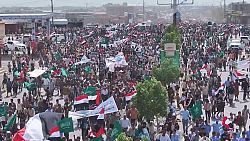
A mass rally held in the Red Sea port city of Mocha in early April 2026 drew crowds from surrounding districts in a demonstration of support for Yemen’s Gulf neighbours, according to reports carried at the time. Participants raised Yemeni and Gulf flags and issued a closing statement that condemned attacks on Saudi Arabia and Jordan and denounced Houthi threats to shipping in the Red Sea. The gathering was one of a series of public events staged in government-held areas during a period of unusually sharp regional escalation.
Mocha, also rendered al-Mukha, sits on the western coast of Taiz governorate and has an outsized strategic weight relative to its size. The historic coffee port lies close to the approaches to the Bab al-Mandab Strait, the narrow passage linking the Red Sea to the Gulf of Aden through which a substantial share of world seaborne trade passes. Since 2018 the city has served as the headquarters of the National Resistance Forces, a paramilitary formation also known as the Guards of the Republic.
Mocha itself carries historical resonance that organisers of such events often invoke. The port gave its name to the coffee trade that made Yemen a hub of global commerce from the fifteenth century onward, and it remained one of the Red Sea’s busiest harbours for generations before silting and the rise of Aden diminished its role. Heavy fighting along the west coast in 2017 and 2018 left much of the modern town damaged, and reconstruction has been partial.
That force is led by Brigadier General Tariq Saleh, a nephew of Yemen’s late former president Ali Abdullah Saleh. Tariq Saleh has been a member of the Presidential Leadership Council since the body was formed in April 2022, when Abd Rabbu Mansour Hadi transferred presidential powers to an eight-member council chaired by Rashad al-Alimi. His presence on the council gave the west coast forces formal representation in the internationally recognised leadership for the first time.
The rally’s timing placed it within a broader regional crisis. Conflict monitors recorded a marked escalation across the Gulf beginning in late February 2026, following strikes on Iran, with subsequent Iranian retaliatory fire directed at facilities in several Gulf states. Public demonstrations in Yemen during this period broke along the country’s existing political fault lines, with rallies in Houthi-controlled northern governorates expressing solidarity with Iran while gatherings in government-held territory, including Mocha, aligned themselves with the Gulf Cooperation Council.
The statement read out at the Mocha rally framed the attacks on Gulf states as a threat to Arab national security and called for a collective regional response. That characterisation reflects the position of the rally’s organisers and of the internationally recognised government; the Houthi authorities in Sanaa and the Iranian government describe the same events in very different terms, and no independent verification of the rally’s specific claims was available.
Organisers also used the occasion to condemn what they described as Houthi threats to freedom of navigation. The Bab al-Mandab has been a recurring flashpoint. Attacks on commercial vessels in the Red Sea corridor have repeatedly forced shipping lines to weigh the longer route around the Cape of Good Hope, adding time and cost to voyages between Asia and Europe. Insurance premiums for transits through the corridor have risen sharply during periods of heightened risk, and the disruption has been felt well beyond the region.
For Yemen itself, the consequences are direct. The country imports the overwhelming majority of its food and fuel by sea, and its principal ports sit on the same waterways affected by the disruption. Higher freight and insurance costs feed through to prices in local markets, compounding an economic crisis that the United Nations has repeatedly described as among the world’s most severe. Aid agencies have warned that the disruption complicates humanitarian deliveries.
The rally also illustrated the complicated position of Yemen’s west coast. The area has been comparatively stable relative to front lines further inland, but it remains close to Houthi-held Hodeidah, and its ports and coastline are of obvious military interest to all parties. Local authorities have repeatedly sought international support for coastal defence and for the reconstruction of infrastructure damaged during the war.
Yemen’s conflict has run since 2014, when Houthi forces took control of Sanaa, escalating the following March when a Saudi-led coalition intervened on behalf of the government. More than a decade on, the country remains effectively partitioned, with the Houthis administering much of the north-west, including the capital, and the internationally recognised government operating from Aden. Successive rounds of United Nations-mediated talks have produced periods of reduced fighting without a comprehensive settlement.
Public rallies of the kind held in Mocha carry limited weight on their own, but they function as a form of political signalling. For the Presidential Leadership Council and the forces aligned with it, visible popular support for closer alignment with the Gulf states strengthens the case for continued financial and military backing from Riyadh and its partners. For observers, such gatherings offer one of the few available indications of public sentiment in a country where independent polling is effectively impossible.
No independent estimate of the crowd size was published, and figures cited at the time came from organisers. What the event did demonstrate was the capacity of west coast authorities to mobilise a large public gathering, and their intention to place government-held Yemen inside the Gulf security framework.
About the Author