Yemen Warns of Regional Crises’ Toll on Its Economy at World Bank Meeting
 Yemen Herald News
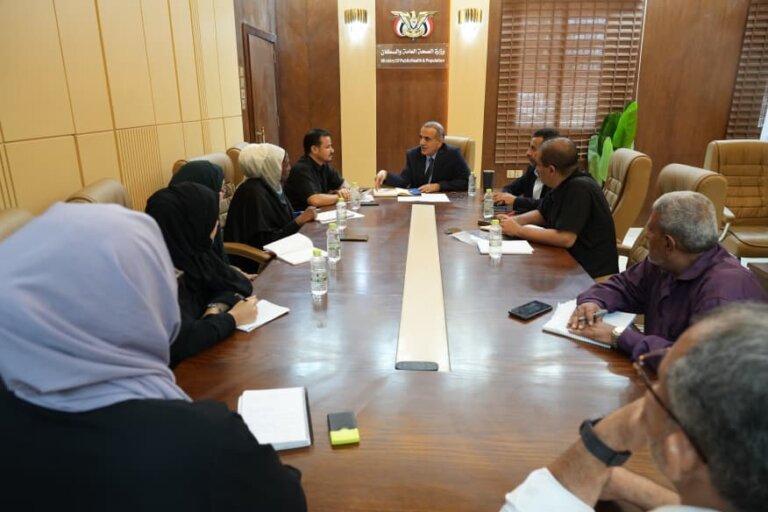
Yemen has warned of the toll that regional crises are taking on its economy and humanitarian situation, appealing for international support amid the fallout from instability across the Middle East. The concerns were raised by the Minister of Planning and International Cooperation, Dr. Afrah al-Zouba, at a meeting of the World Bank’s governors for the Middle East and North Africa.
Yemen has been embroiled in conflict for over a decade, a war that has left its economy in ruins and its social fabric frayed. Already among the poorest countries in the Arab world, Yemen finds its vulnerabilities compounded by the broader instability of the region, which exacerbates the challenges facing its population and its economy.
The meeting highlighted the urgent need for international support, as Yemen’s situation illustrates how regional instability can have localised and severe effects, particularly in a country already struggling with internal conflict. The interconnectedness of the region means that crises elsewhere can reverberate through Yemen’s fragile economy and humanitarian landscape.
The impact of regional dynamics on Yemen reflects the country’s position within a volatile environment. Developments across the Middle East, from conflicts to economic shocks, can affect Yemen through channels including trade, aid flows and the prices of essential goods, adding to the pressures created by its own internal conflict.
Yemen’s economy has been devastated by years of war, with production disrupted, revenues diminished and the currency sharply depreciated in areas under government control. The resulting inflation and hardship have deepened the humanitarian crisis, and the additional pressures from regional instability compound an already dire situation.
The appeal for international support reflects Yemen’s heavy reliance on external assistance. With its own resources severely constrained, the government depends on the support of international partners and institutions such as the World Bank to sustain its finances and services and to advance recovery, making such appeals a recurring feature of its engagement.
The World Bank has been engaged with Yemen through various forms of assistance during the conflict, and gatherings of its regional governors provide occasions for engagement on the economic challenges facing member countries. The participation of Yemen’s minister reflects the importance of such forums to the country’s efforts to secure support.
The vulnerability of Yemen to regional crises underscores the broader challenges facing a country already burdened by conflict. The compounding of internal and external pressures magnifies the difficulties, straining the capacity of the government and the humanitarian response to cope with the resulting needs.
The humanitarian consequences of the economic pressures are severe. Economic hardship translates directly into humanitarian need, as the erosion of incomes and the rising cost of goods leave families unable to meet their basic needs, driving more people into reliance on assistance and deepening the crisis.
The regional context, marked by instability and conflict across parts of the Middle East, forms the backdrop to Yemen’s appeal. The interconnected nature of the region means that Yemen’s fortunes are bound up with those of its neighbours, and instability elsewhere can have significant consequences for a country already in crisis.
The role of the Ministry of Planning and International Cooperation in engaging with international institutions reflects its function in coordinating development cooperation and securing support. The ministry’s participation in the World Bank meeting reflects its efforts to advance Yemen’s interests and to mobilise assistance for the country.
The challenge of securing adequate international support has been compounded by competition for resources and by the strains on donors. As crises around the world draw on the resources of the international community, ensuring that Yemen’s needs remain a priority requires sustained advocacy, of which engagement at forums such as the World Bank meeting is a part.
The situation illustrates the limits of the country’s capacity to insulate itself from external shocks. With its economy weakened and its resources constrained, Yemen is highly exposed to developments beyond its control, and mitigating the impact of regional instability requires both international support and the strengthening of the country’s own resilience.
The appeal for support reflects the government’s recognition of the severity of the situation and of its dependence on external assistance. Addressing the compounding pressures on the economy and the humanitarian situation is beyond the capacity of the government alone, making the mobilisation of international support essential to the response.
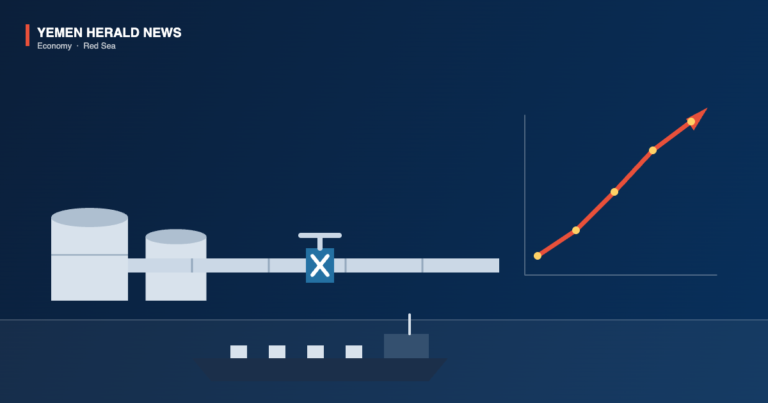
Among the channels through which regional turbulence reaches Yemen, few are as immediate as the cost and security of shipping. As a country that imports the overwhelming majority of its food, fuel and medicine, Yemen is acutely sensitive to disruptions in the surrounding waterways and to swings in global prices for the commodities on which it depends. When regional tensions raise insurance premiums, lengthen shipping routes or unsettle markets, the effects are felt quickly in Yemeni ports and, before long, in the prices paid by families in local markets.
Officials at gatherings such as the World Bank meeting have increasingly sought to make this case explicitly, arguing that support for Yemen should be understood not as isolated charity but as part of a broader effort to contain the spillover of regional instability. Framing the country’s plight in these terms is intended to keep its needs on the agenda of institutions and donors whose attention is pulled in many directions, and to underline that the fate of a single conflict-affected economy is bound up with the stability of the wider region.
For now, Yemen’s warning at the World Bank meeting underscored both the severity of the pressures facing its economy and humanitarian situation and the importance of international support in addressing them. As the country contends with the fallout from regional crises alongside its own conflict, sustaining engagement with international institutions and partners remains central to its efforts to cope and to recover.
About the Author