
PLC Member Othman Mujalli and US Ambassador Discuss Cooperation
 Yemen Herald News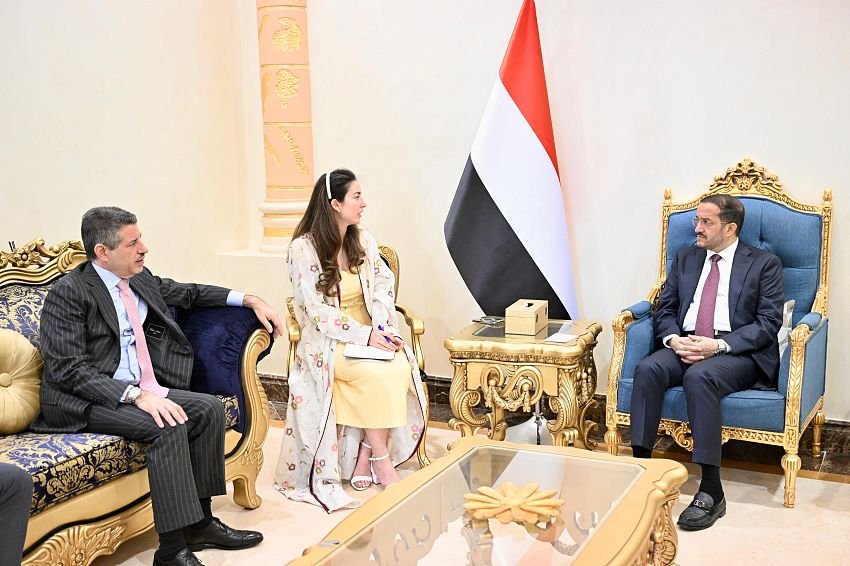
A member of Yemen’s Presidential Leadership Council and the United States ambassador have discussed cooperation and the country’s situation, in talks that reflected the continuing engagement between the two sides amid a complex regional environment. Sheikh Othman Mujalli met the US Ambassador to Yemen, Steven Fagin, to review the relationship and the challenges facing the country.
Yemen’s conflict has been shaped by a complex interplay of local, regional and international dynamics. Since the escalation of the war from 2014, the country has been an arena of contestation, with the Houthi movement, which the government and its allies say is backed by Iran, opposed by the internationally recognised government and the Saudi-led coalition supporting it.
The United States has maintained an interest in Yemen, shaped in part by the country’s location along critical maritime routes and by its implications for regional security. The engagement between Mujalli and Fagin reflected the ongoing relationship between the two countries and the shared interest in addressing the challenges facing Yemen.
The strategic location of Yemen, near vital shipping lanes and the Bab al-Mandab strait, lends it significance in regional and international affairs. The security of these routes is a matter of concern to many states, including the United States, giving it an interest in the stability of the country and the surrounding region.
The concerns expressed by the government and its allies about Iran’s role in the region form part of the context of the engagement. These concerns, which are contested by Tehran, reflect the framing advanced by the government regarding the conflict and its regional dimensions, and they inform its engagement with partners such as the United States.
The relationship between Yemen and the United States has encompassed a range of dimensions, from humanitarian and economic support to cooperation on security. The engagement of a Presidential Leadership Council member with the US ambassador reflects the importance attached to the relationship and to the support of the United States.
The role of the Presidential Leadership Council in unifying the anti-Houthi factions and strengthening governance is central to the government’s efforts. The engagement of a Council member with the US ambassador reflects the Council’s involvement in cultivating relationships with international partners in support of its objectives.
The challenges facing Yemen, from the conflict and the economic crisis to the humanitarian emergency, form the backdrop to the discussions. Addressing these interlocking challenges is central to the government’s agenda, and the support of partners such as the United States is regarded as important to its efforts.
The United States has been among the international actors engaged with Yemen’s recognised government, providing support across various domains. Its engagement reflects a shared interest in stabilising the country and in addressing the threats and challenges facing it, and cooperation forms part of the broader relationship between the two.
The regional dynamics that shape Yemen’s conflict add to the complexity of the situation. The involvement of various regional actors and the broader tensions of the region form the environment in which the conflict unfolds, and the engagement of external partners such as the United States is situated within this wider context.
The framing of the situation in terms of Iran’s influence reflects the perspective of the government and its allies. From this viewpoint, the conflict is bound up with the role of Iran in the region, a framing that shapes the government’s engagement with partners and that is contested by other actors, reflecting the disputed narratives of the war.
The support of international partners will remain important to Yemen’s efforts to advance stability and recovery. With its own resources constrained, the government relies on the backing of partners such as the United States, making the cultivation and maintenance of these relationships a continual priority as it pursues its objectives.
The engagement between Mujalli and Fagin forms part of the ongoing dialogue between Yemen’s leadership and its international partners. Sustained engagement at senior levels helps maintain and strengthen these relationships, providing opportunities to coordinate on the challenges facing the country and on the support required to address them.
The prospects for cooperation will depend on a range of factors, including the trajectory of the conflict and the priorities of both sides. Diplomatic engagement of this kind provides a foundation for cooperation, though its development typically unfolds over time as relationships are sustained and opportunities for collaboration emerge.
The relationship between Yemen and the United States reflects the broader web of international engagement on which the government relies. Sustaining these relationships and coordinating on the challenges facing the country are important to the government’s efforts, and engagements such as this one contribute to the ongoing dialogue.
Encounters of this kind, repeated across a range of Yemeni officials and US diplomats, form part of a steady rhythm of contact through which Washington calibrates its involvement in a conflict it has long watched warily. For Yemen’s leaders, each meeting is an opportunity to press their case for sustained attention and support, and to shape how their situation is understood in a capital whose priorities are pulled in many directions. The value of such engagements, officials on the Yemeni side suggest, lies less in any single outcome than in the cumulative effect of keeping the country’s needs and concerns firmly within the field of view of one of its most consequential partners.
For now, the meeting between Mujalli and Fagin reaffirmed the engagement between Yemen’s leadership and the United States and their shared interest in addressing the country’s challenges. As Yemen navigates its conflict and its efforts at recovery, cooperation with partners such as the United States remains an important element of its diplomacy and its pursuit of stability.
About the Author




