Education Minister Discusses Educational Cooperation with Russian Ambassador
 Yemen Herald News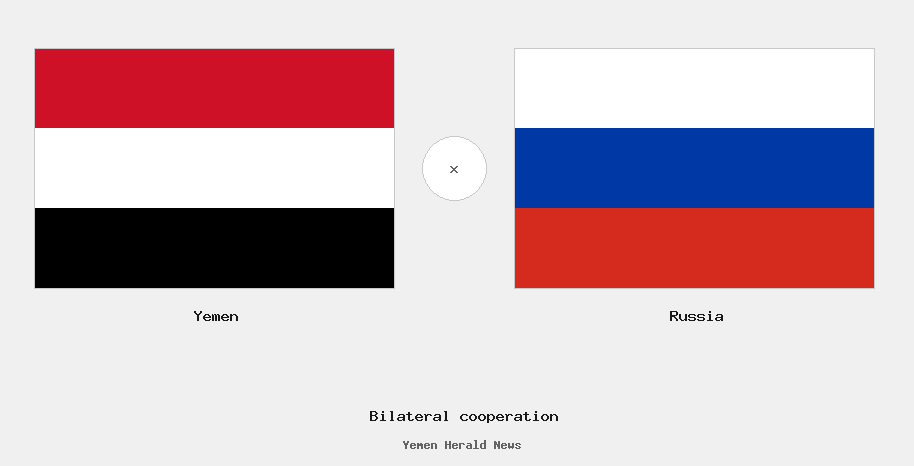
Yemen has been engulfed in a civil war since 2015, a conflict that has turned the country into one of the world’s most severe humanitarian crises. The war began when the Houthi movement, a group originating from northern Yemen, captured the capital, Sana’a, forcing the internationally recognized government to retreat to Aden. The situation escalated further as a coalition led by Saudi Arabia intervened militarily in support of the Yemeni government, seeking to restore its authority. Since then, various regional and global powers have become involved due to Yemen’s strategic location along the Red Sea and the Bab al-Mandab Strait, a vital shipping lane.
Compounding the challenges of the civil war, Yemen has witnessed a devastating humanitarian crisis, affecting over 18 million people who are in desperate need of assistance. Over 4.5 million people have been displaced internally, resulting in a significant strain on local resources and infrastructure. Malnutrition, disease outbreaks, and poor access to healthcare are rampant as critical services have been disrupted by the ongoing conflict. The unrest has severely impacted various sectors, with education taking a significant hit as schools and institutions struggle to remain operational amidst the chaos.
Humanitarian Crisis Overview
International efforts towards resolving the conflict have encountered numerous obstacles, including a lack of trust between the parties involved, ongoing violence, and external interference from countries with vested interests. Recent peace efforts under the auspices of regional and international actors have attempted to bring about a ceasefire and negotiate a sustainable political framework. However, the road to peace remains fraught with challenges, requiring not only military dialogue but also rebuilding the socio-economic fabric of the nation, which has been shredded by years of war.
In this context, the education sector symbolizes both the dire state of the country and the potential for recovery. Education is critical for Yemen’s long-term stability, as it provides the framework for rebuilding society and ensuring a brighter future for the youth. Recent discussions involving key international stakeholders indicate a growing recognition of the importance of education and the need for international cooperation to bolster Yemen’s recovery.
Education's Role in Recovery
In a recent meeting, Yemen’s Minister of Education, Dr. Adel al-Abadi, engaged with the Russian Ambassador to Yemen, Dr. Yevgeny Kudrov, to discuss collaborative efforts and mutual interests between the two nations. The meeting revolved around the current state of education in Yemen, highlighting the various challenges that have emerged in the sector as a direct consequence of the ongoing conflict. Al-Abadi emphasized the urgent need for sustainable peace, security, and economic stability to revive education and other vital sectors affected by the war.
The discussions also touched upon the broader implications of the current security and economic conditions in Yemen, recognizing how instability impacts development and overall societal well-being. The Minister outlined how the ongoing conflict has undermined many critical sectors, particularly education, and expressed the necessity of support and international partnerships to address these issues. He advocated for greater engagement from countries like Russia, which has historically extended support to Yemen in various fields, particularly in education.
International Partnerships
The Russian Ambassador reaffirmed his country’s commitment to fostering peace in Yemen and expressed an interest in bolstering the education sector. He indicated that Russia was prepared to offer additional scholarships for Yemeni students to study in its universities, which would serve to strengthen educational ties between the two nations. This diplomatic engagement signals a potential step forward in international cooperation to aid Yemen’s recovery efforts.
Furthermore, the private discussions between Al-Abadi and Kudrov reflect a growing awareness among global partners about the vital role education plays in rebuilding war-torn societies. As education contributes significantly to the developmental trajectory of nations, enhancing access and quality in this sector can facilitate broader socio-economic recovery in Yemen.
Several key stakeholders are involved in the ongoing discussions regarding Yemen’s educational landscape and the broader context of the country’s recovery. First and foremost, the Yemeni government, represented by Minister of Education Dr. Adel al-Abadi, plays a crucial role in assessing the state of education in the country. The government seeks to address the challenges posed by the war and avoid the complete deterioration of the educational framework. Al-Abadi’s insistence on establishing peace and security echoes the overarching priorities of Yemen’s leadership, who recognize that restoring educational services is essential for national recovery.
International actors like the Russian Federation are also significant players in this dialogue. Dr. Yevgeny Kudrov, as ambassador, represents Russia’s interests and commitment to aiding Yemen during its time of crisis. Russia’s involvement, particularly in the education sector, can open pathways for additional scholarships and training opportunities for Yemeni students, further assisting in developing the nation’s human capital.
Additionally, various non-governmental organizations (NGOs) and international agencies such as UNICEF and UNESCO are deeply concerned with Yemen’s humanitarian situation, particularly regarding education. These organizations work tirelessly to provide educational resources, training programs, and infrastructural support to help reinstate educational practices across war-affected regions. Their efforts are crucial in offering immediate relief while also laying the groundwork for long-term educational stability in the country.
NGO Involvement
Lastly, the Yemeni people, particularly the youth, represent the most vital stakeholder group in this context. With millions of children and young adults affected by the ongoing conflict, their need for a stable and robust educational system is paramount. The youth embody the future of Yemen and investing in their education represents a way to foster resilience and innovation, paving the way for a more stable and prosperous society post-conflict.
The ongoing educational and diplomatic engagements between Yemen and Russia reflect broader regional dynamics that involve multiple stakeholders and interests. Yemen’s strategic position along the Bab al-Mandab Strait not only makes it a focal point of maritime security and trade but also a battleground for influence among regional powers, including Iran, Saudi Arabia, and the UAE. The implications of educational partnerships with nations like Russia could serve as a counterbalance to the influence of other state actors in the region.
As Yemen struggles to establish peace and stability, the educational initiatives discussed could have ripple effects throughout the Middle East. Enhanced education opportunities and scholarships could help foster a sense of empowerment among Yemeni youth, potentially leading to a more engaged and productive populace. As educated individuals return to their homeland after their studies, they could contribute to the reconstruction and development of various sectors, further stabilizing the region.
Moreover, efforts to rebuild the educational framework have the potential to bridge divides between Yemen’s warring factions, promoting a culture of collaboration and understanding. Increased access to education can open doors for reconciliation by fostering inter-community dialogue and offering shared experiences that transcend political divisions. This is especially relevant in Yemen, where sectarian divides have been exacerbated by the conflict.
The humanitarian implications are also significant. With the majority of the population reliant on aid, restoring hope through educational initiatives can help alleviate some of the despair stemming from the ongoing crisis. A more educated populace may lead to enhanced vocational opportunities and a stronger economy in the long run, contributing to regional stability in a historically tumultuous area.
Long-term Implications
The discourse surrounding educational reform in Yemen amidst ongoing conflict underscores the intertwined nature of peace, security, and development. While military solutions often dominate discussions about conflict resolution, the emphasis on education illustrates a necessary shift towards understanding the foundational aspect of societal well-being. Enhancing educational opportunities is not merely about addressing immediate needs but rather about laying the groundwork for a sustainable future for Iraq.
Dr. Adel al-Abadi’s engagement with Dr. Yevgeny Kudrov opens up a channel of international support that is crucial for Yemen’s recovery. The reciprocal relationship between nations based on education can help to foster not only academic growth but also deeper cultural and diplomatic ties. Such collaborations can cultivate a sense of shared responsibility in addressing global educational challenges, particularly in regions beleaguered by conflict.
However, the efficacy of these diplomatic exchanges will depend significantly on the broader geopolitical context. The interests of regional powers and their long-standing rivalries can complicate the path forward. Without a comprehensive peace agreement addressing the underlying causes of the conflict, even significant educational reforms may only provide temporary relief without leading to substantial societal transformation.
The success of the educational initiatives will rely heavily on the capacity of both the Yemeni government and international partners to implement programs effectively and address the logistical challenges posed by insecurity. Education must be protected as a priority area of support, ensuring that schools are safe havens for learning rather than targets in the conflict. The international community’s role will be crucial in applying pressure on all parties to prioritize educational needs during the ongoing peace discussions.
Looking ahead, the discussions between Yemen and Russia mark a vital checkpoint in establishing stronger educational ties that could foster broader regional partnerships. The continuation of these diplomatic dialogues may lead to concrete proposals for scholarships and educational programs that not only focus on the immediate needs but also consider long-term recovery strategies. Ministers and ambassadors must work diligently to translate these discussions into actionable plans that can be implemented effectively.
As the Yemeni government seeks to regain control and restore order, the integration of educational reform into the broader peace efforts will be critical. There is a strong possibility that future negotiations will place education on the agenda as a means to facilitate dialogue between conflicting parties. Supporting the youth through education can serve to bridge divides, creating a generation that prioritizes dialogue over conflict.
On an international level, collaborative efforts must be reinforced to create a coherent strategy that not only addresses educational needs but also ties them to wider humanitarian and development agendas. Partners must ensure that as Yemen receives support, there is consideration for maintaining security, enhancing economic stability, and ultimately paving the way for lasting peace.
Through a coordinated global effort that emphasizes education as a pillar of recovery, Yemen has the potential to emerge from its prolonged crisis stronger and better equipped for the future. The outcomes of current discussions will be pivotal, determining the ease of transition towards peace and stability in this war-torn nation.
About the Author