LeBron’s Heroics Propel Lakers to Dominance: A Geopolitical Perspective
 Yemen Herald News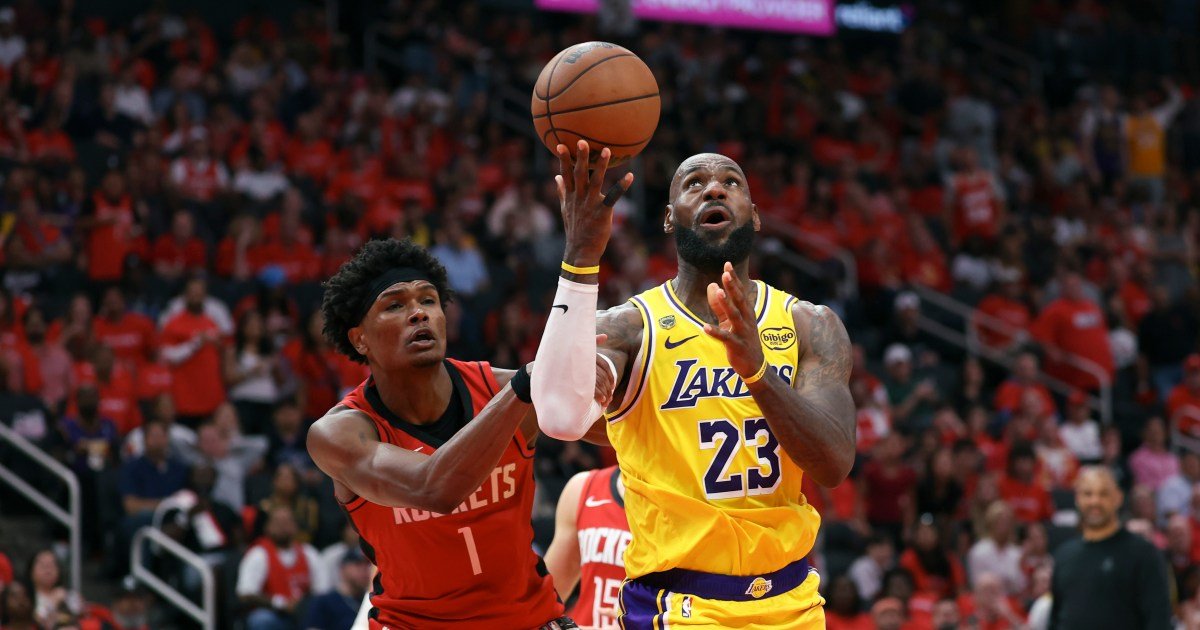
The Los Angeles Lakers’ recent victory over the Houston Rockets in the NBA playoffs is not merely a sports story; it is a reflection of broader geopolitical dynamics that resonate beyond the basketball court. As LeBron James leads his team to a commanding 3-0 series lead, the implications of this triumph extend to the realms of economic influence, cultural diplomacy, and shifting power dynamics in the sports world.
The NBA has long been a platform for cultural exchange and soft power, particularly in the context of American influence in global markets. The Lakers, a storied franchise, symbolize not only athletic excellence but also the commercial prowess of American sports. LeBron James, as a global icon, transcends the game, embodying the intersection of sports, politics, and economics. His recent performance against the Rockets, where he scored 29 points and made crucial plays in overtime, underscores his role as a leader both on and off the court. This playoff series occurs against a backdrop of increasing competition from international leagues and the growing significance of sports diplomacy in international relations.
The Lakers’ victory in Game 3 was marked by a dramatic comeback, showcasing not only LeBron’s individual brilliance but also the team’s resilience in the face of adversity. With key players like Luka Doncic and Austin Reaves sidelined, the Lakers’ ability to adapt and thrive speaks volumes about their depth and strategic acumen. The Rockets, led by Alperen Sengun, displayed tenacity but ultimately faltered under pressure, highlighting the psychological aspects of playoff basketball. The Lakers’ win also reinforces the historical narrative that no NBA team has ever come back from a 0-3 deficit, placing immense pressure on the Rockets as they face potential elimination.
The implications of the Lakers’ success extend beyond the court. Economically, the NBA generates billions in revenue, and the Lakers, as one of its flagship franchises, play a crucial role in this ecosystem. Their playoff run enhances the visibility of the league, attracting global audiences and sponsors. Furthermore, LeBron’s influence as a cultural ambassador cannot be underestimated; his activism and business ventures resonate with fans worldwide, particularly in regions where American culture is both celebrated and scrutinized. The Lakers’ success can thus be seen as a microcosm of American cultural hegemony, reinforcing the United States’ position as a leader in global sports.
Analyzing the Lakers’ playoff journey reveals deeper strategic insights into the evolving landscape of sports. The NBA’s global expansion efforts, particularly in markets like China and the Middle East, are intricately linked to the performance of its star players. LeBron’s ability to connect with diverse audiences enhances the league’s brand and opens doors for diplomatic engagement. However, this also poses risks; as international tensions rise, the NBA must navigate complex geopolitical landscapes while maintaining its commercial interests. The Lakers’ success could serve as a unifying force, promoting dialogue and understanding in regions where sports serve as a bridge between cultures.
Looking ahead, the Lakers have the opportunity to close out the series in Houston, a pivotal moment that could solidify their dominance in the Western Conference. Should they succeed, the implications for the franchise are profound, potentially leading to increased investment and a stronger global presence. Conversely, a Rockets comeback could shift the narrative, emphasizing the unpredictability of sports and the resilience of underdog teams. The outcome of this series will not only determine the fate of the teams involved but also influence the broader conversation about the role of sports in international relations and cultural diplomacy.
In conclusion, the Lakers’ playoff success, driven by LeBron James’ leadership, is emblematic of the intricate connections between sports, culture, and geopolitics. As the NBA continues to expand its global footprint, the outcomes of these games resonate far beyond the court, shaping perceptions and fostering connections across borders. The Lakers’ journey through the playoffs serves as a reminder of the power of sports to influence and inspire, reinforcing the idea that in the world of geopolitics, every game is a reflection of larger narratives at play.
About the Author