Yemen’s Transport Minister Reviews Aden Airport Security Overhaul with US Firm Valar
 Yemen Herald News
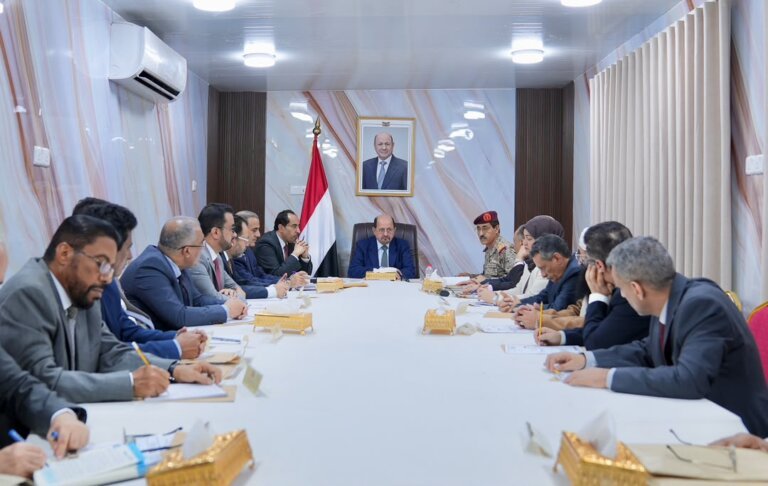
Yemen’s transport minister, Mohsen al-Amri, met the aviation security programme director for Yemen at the United States-based firm Valar, Louay Ishaq, to review progress on a project to rebuild the civil aviation security system at the General Authority of Civil Aviation and at Aden International Airport, the state news agency Saba reported in April 2026.
The talks focused on the procedures for approving a National Civil Aviation Security Programme, the framework document that sets out how a state screens passengers and cargo, controls access to restricted areas, vets staff and responds to security incidents. Approval of such a programme is a prerequisite for a country’s airports to be assessed against international civil aviation standards, and Yemen’s existing arrangements had been overtaken by years of conflict, damage and improvised operation.
According to the agency’s account, the two sides also discussed specialised training and qualification programmes for aviation security personnel, with the stated aim of raising the standard of screening and inspection work and building a national cadre capable of running the system without permanent external support. That emphasis on training rather than equipment alone reflects a recurring finding in aviation security assessments, where procedural discipline and staff competence matter as much as scanners and fencing.
Al-Amri took the transport portfolio on 6 February 2026 as part of a wider cabinet reshuffle. He came to the ministry from Yemenia Airways, the national carrier, where he had held senior commercial posts including deputy general manager for commercial affairs, giving him direct operational familiarity with the constraints Yemeni aviation works under.
Those constraints are considerable. Yemen’s civil aviation sector has contracted sharply over more than a decade of war. Airports have been damaged, closed for extended periods or restricted to limited humanitarian and commercial traffic, international carriers have largely withdrawn, and the country’s route network has narrowed to a small number of destinations served irregularly. Aden International Airport, which serves the interim capital and the seat of the internationally recognised government, has itself been subject to repeated disruption, including a suspension of operations at the start of 2026 amid a dispute over its administration.
Aviation matters to Yemen out of proportion to the number of flights involved. Land routes across the country are slow, contested in places and vulnerable to closure, and sea freight through the Red Sea has been disrupted by attacks on shipping. Air links carry medical evacuations, humanitarian personnel, business travellers and Yemenis returning to or leaving the country. Where those links are unreliable, the practical cost falls on patients seeking treatment abroad, on relief operations and on the diaspora remittances that underpin household incomes.
Restoring the security framework is also a precondition for anything larger. Foreign airlines will not resume scheduled service to airports that cannot demonstrate compliance with international security requirements, and insurers price flights to jurisdictions with unverified arrangements accordingly. A recognised national programme, audited and documented, is therefore less a bureaucratic exercise than the entry ticket to any broader recovery of air connectivity.
The General Authority of Civil Aviation sits at the centre of the work. As the regulator, it is responsible for licensing, oversight and for the national programme itself, and its capacity determines whether standards written on paper are applied consistently at each airport. Rebuilding a regulator is slower and less visible than refurbishing a terminal, but audits of civil aviation systems consistently identify regulatory oversight rather than airport infrastructure as the binding constraint. In Yemen the authority has had to function through a period in which the state itself was divided and its own records and staffing were disrupted.
The involvement of an American contractor places the project within a wider pattern of Western technical support directed at Yemeni state institutions. Such programmes typically combine assessment, equipment supply, procedural drafting and training, and are usually delivered over several years. They also depend on a stable counterpart institution, which in Yemen’s case is complicated by divided administration, contested control of revenue and the practical difficulty of retaining trained staff on public sector salaries.
Sustainability is the standard weak point in projects of this type. Screening equipment requires maintenance contracts and spare parts. Trained security officers need to be paid regularly enough to stay in post rather than move to better-paid work or emigrate. Procedures written during an assistance programme need an inspectorate with the authority and budget to enforce them after the programme ends. Assessments of aviation security in fragile states have repeatedly found that equipment outlasts the institutional discipline built around it.
The report of the meeting offered no timeline for approval of the national programme, no cost figure and no completion date for the work at Aden, and the account rested on the ministry’s own description of the discussions. Progress on projects of this kind in Yemen has historically been announced in stages, with intervals between announcements that reflect funding cycles and the security situation on the ground rather than a fixed schedule.
What the April 2026 meeting recorded, then, was a stage rather than an outcome. A minister with an airline background and an external technical partner were working through the documentation required to bring Yemeni civil aviation back within an internationally recognised framework. Whether that translates into more flights, more carriers and more reliable access to Aden will depend on funding, on the stability of the airport’s administration and on conditions well beyond the transport ministry’s control.
About the Author