Floods Across Twenty Yemeni Governorates Affect More Than 100,000 People
 Yemen Herald News
Floods and heavy rains that swept Yemen from late March into the end of April 2026 affected more than 100,000 people across twenty governorates, according to United Nations reporting, killing or injuring well over a hundred and damaging tens of thousands of family homes. It was one of the most destructive flood seasons the country had recorded during the conflict, and it arrived in a population already carrying one of the largest humanitarian caseloads in the world.
The damage was concentrated in the western highlands and the coastal plain. Al Hudaydah was among the worst affected, with local authorities reporting thousands of families displaced and extensive damage to housing and infrastructure. Hajjah, Al-Taweela and Marib also recorded heavy losses, and Taiz registered the largest single share of affected families of any governorate. In several districts the water arrived within hours of the rain starting, giving households little opportunity to move possessions, livestock or documents.
Yemen’s vulnerability to this kind of event is structural rather than incidental. Much of the country is drained by wadis, seasonal valleys that stay dry for most of the year and then carry very large volumes of water after intense rainfall. Terracing and catchment works that historically slowed run-off on mountain slopes have degraded through decades of underinvestment and, more recently, through the displacement of the rural labour that maintained them. Urban drainage has gone unrepaired in many towns, and settlement has expanded onto flood-prone ground.
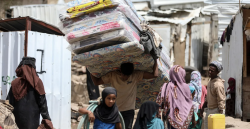
A significant proportion of those affected were already displaced. Yemen hosts a large internally displaced population living in sites that are frequently located on marginal land, in shelters built from plastic sheeting and salvaged material that offer almost no resistance to moving water. Aid organisations reported that displacement sites were among the locations that lost the most, and that families who had already been uprooted by fighting were displaced a second time by the flooding.
Relief agencies also warned of a hazard peculiar to countries contaminated by war. Floodwater moves landmines and unexploded ordnance out of known contaminated areas and deposits them in farmland, wadi beds and residential districts, where clearance maps no longer apply. Mine action organisations treat this displacement as one of the most dangerous secondary effects of flooding in Yemen, because it puts unmarked explosive remnants into ground that communities and returning farmers reasonably assume to be clear.
The public health risk followed the standard sequence. Damage to water supply and sanitation systems in a country with a long recent history of cholera outbreaks raises the probability of waterborne disease within weeks, and health facilities in the affected districts were operating with limited supplies, irregular electricity and staff who had frequently gone without full pay. Agencies prioritised clean water, sanitation, shelter and mobile health teams.
Documentation losses form a quieter part of the damage. Identity papers, land titles, school certificates and household registration records are commonly destroyed when a shelter floods, and replacing them in Yemen requires travel to offices that may sit in a different administrative area from the applicant. Without papers, families face obstacles registering for assistance, enrolling children in school and asserting claims to land they farmed before the water came.
The International Organization for Migration and other agencies scaled up distributions of shelter materials, household items, clean water and health services, and set out early recovery work covering water and sanitation systems, education and livelihoods. That second category matters more than it usually appears to. Emergency distributions keep households alive through the weeks after a flood; repairs to water networks, schools and access roads determine whether a village becomes viable again or its residents join the displaced population permanently.
Funding shaped what was possible. More than twenty-two million people in Yemen were assessed as requiring humanitarian assistance and protection during 2026, and the appeal covering that caseload has been financed well below requirement for several consecutive years. Money redirected to the flood response was in practice money withdrawn from other activities, and agencies were explicit that scaling up in flood-affected governorates meant reducing programming elsewhere in the country.
Access constraints compounded the shortfall. Yemen’s territory is divided between rival administrations, and relief operations require negotiated permissions that differ by area, with delays that can extend into weeks. Roads damaged by the floods themselves narrowed the remaining routes, and the movement of both staff and supplies depended on conditions that shifted from district to district.
The agricultural losses will be felt over a longer horizon. Run-off that arrives too quickly strips topsoil, breaches terrace walls and destroys standing crops rather than irrigating them. Farmers who lose a season lose both the income and the seed for the next planting, and repairing terracing is labour-intensive work that households rarely finance unaided. Livestock deaths compound the damage, because animals function as savings for families with no access to banking.
None of this was unforeseeable. Yemen has experienced serious flooding in successive recent years, and assessments after each season have recommended investment in drainage, catchment management, early warning and the relocation of settlements from the most exposed ground. Those recommendations require sustained capital spending and functioning administration, which is precisely what a divided state in a prolonged conflict finds hardest to supply. Without it, the pattern recorded in April 2026 is likely to repeat when the next heavy rains arrive.
About the Author