The Human Rights Minister discussed bilateral cooperation with the Italian ambassador.
 Yemen Herald News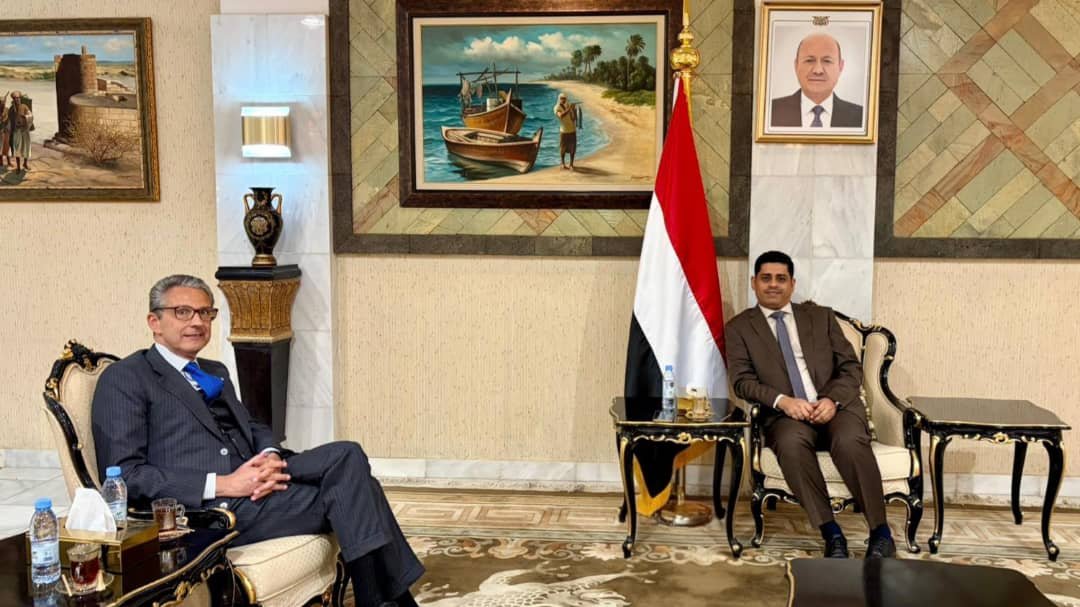
The ongoing conflict in Yemen, which has persisted since 2015, has had devastating implications for the nation’s population and its institutions. The civil war primarily pits the Houthi movement against the internationally recognized government, which has received support from a coalition led by Saudi Arabia. The situation has been further complicated by the involvement of various regional powers, including Iran, which supports the Houthis as part of a broader regional strategy. This protracted crisis has escalated into one of the worst humanitarian emergencies globally, with millions displaced and in dire need of assistance.
Yemen’s humanitarian crisis is marked by alarming statistics, with over 18 million people requiring urgent support and more than 4.5 million internally displaced persons (IDPs) facing significant hardships. The continuous violence has hindered humanitarian efforts, leaving communities vulnerable to outbreaks of diseases like cholera and measles. Amidst this chaos, human rights violations have become a significant concern, with many citizens subjected to arbitrary detentions, torture, and other forms of abuse. The Yemeni government has been striving to maintain a focus on human rights amid these challenges, recognizing their critical role in rebuilding the social fabric of the nation.
The Yemeni government’s recent engagement with international partners, such as the Italian ambassador, underscores its commitment to enhancing human rights protections. By prioritizing these discussions, the government aims to develop effective frameworks that address the needs of the most vulnerable groups within the population. As the conflict continues, the urgency for established and effective human rights mechanisms has never been more crucial.
The recent meeting between Yemen’s Minister of Human Rights, Mishdal Omar, and Italian Ambassador to Yemen, Carlo Baldocci, highlights ongoing efforts to enhance cooperation in human rights protection. The dialogue focused on critical areas, including the circumstances facing detainees, women, children, internally displaced individuals, and refugees. Such discussions are pivotal for both Yemen and Italy as they seek to bend their collective resources towards addressing human rights issues exacerbated by the conflict.
One of the key points raised during the meeting was the importance of national programs aimed at improving rights and protection measures within Yemen. The Yemeni government has reiterated its commitment to advocating for human rights while seeking to bolster institutional capacities that can respond to humanitarian struggles effectively. This initiative is vital, as Yemen’s ongoing crisis requires substantial international assistance to stabilize the situation and support vulnerable populations’ needs.
Minister Omar pointed out that various violations continue unabated, particularly at the hands of the Houthi militias, highlighting the need for an effective international response to these abuses. He maintained that strengthening Yemen’s human rights credentials is essential not only for domestic recovery but for garnering international solidarity. The Yemeni government emphasizes the integration of human rights initiatives into broader national policies as a cornerstone of its governance strategy during this tumultuous period.
The key stakeholders in Yemen’s human rights discourse include the Yemeni government, represented by the Ministry of Human Rights, and international parties seeking to assist in addressing the crisis. The Yemeni government, particularly under the leadership of Minister Mishdal Omar, is striving to ensure that human rights are not merely an afterthought but a fundamental component of the state’s rebuilding efforts. They are guided by the need to integrate human rights into national policies and programs.
International actors, such as Italy and other countries, have expressed their willingness to support Yemen’s human rights initiatives. The Italian ambassador’s affirmation of Italy’s readiness to explore collaborative projects is a crucial development, indicating that foreign nations recognize the urgent need for a unified approach towards promoting and protecting fundamental rights in Yemen. This partnership can potentially lead to sustainable programs that advocate for the rights of marginalized groups.
Additionally, local non-governmental organizations play significant roles in monitoring human rights situations and offering support for those affected by the conflict. These local entities often serve as a bridge between the government and the vulnerable populations, amplifying voices that might otherwise go unheard. Their collaboration with governmental and international stakeholders can enhance the effectiveness of human rights initiatives and create a more robust framework for addressing grievances and abuses.
The situation in Yemen reverberates across the Middle East, impacting regional stability and the humanitarian landscape. The ongoing conflict has heightened tensions between regional rivals, particularly Saudi Arabia and Iran, each backing opposing sides in the civil war. The Iranian support for the Houthis adds a layer of complexity, as it raises concerns about a broader sectarian conflict that may extend beyond Yemen’s borders.
Furthermore, the crisis in Yemen has implications for Gulf Cooperation Council (GCC) countries, which are increasingly vigilant about the spillover effects of instability. The humanitarian needs in Yemen not only strain the nation’s resources but also pose significant challenges to regional security, as large-scale displacement could lead to migration pressures on neighboring countries. Such dynamics could exacerbate existing tensions within the region and challenge international efforts to manage humanitarian and security concerns.
The geopolitical significance of Yemen—particularly its strategic location along the Red Sea and the Bab al-Mandab Strait—makes the situation even more critical. This waterway serves as a vital shipping route for global trade, and any instability in Yemen could disrupt maritime operations and affect international shipping. As regional powers jockey for influence in the context of the ongoing conflict, the international community continues to urge for solutions that address both humanitarian needs and political resolution in Yemen.
The engagement between Yemen and Italy on human rights issues represents a significant step towards addressing the dire human rights situation in Yemen amidst the conflict. This dialogue not only highlights a commitment to improving human rights protections but also showcases the potential for international partnerships to foster meaningful change. The practical implications of this engagement could lead to enhanced training and capacity-building initiatives, essential for empowering Yemeni institutions to effectively uphold and protect human rights.
Minister Omar’s emphasis on institutional strengthening reflects an understanding that human rights protection cannot occur in a vacuum. By embedding these principles within broader government policies, the Yemeni government is taking a proactive stance on governance and civil rights. However, achieving substantive improvements in human rights will require sustained international support and a commitment to addressing ongoing abuses, particularly from armed groups like the Houthis.
The humanitarian situation in Yemen remains precarious, and the international community’s role is crucial. The continued influx of humanitarian assistance and diplomatic engagement is essential for preventing further deterioration of rights and freedoms. As Yemen navigates its complex landscape of political and social challenges, maintaining a focus on human rights protection will be vital for long-term stability and recovery.
As Yemen looks ahead, the responsibility of addressing human rights protection and humanitarian needs will continue to require concerted efforts both domestically and internationally. The dialogue between the Yemeni government and Italy is a promising step, but much work remains to be done, particularly in ensuring these discussions translate into actionable initiatives on the ground. Future cooperation agreements and projects need to be clearly defined to meet the specific needs of vulnerable groups within Yemen.
In the coming months, it is anticipated that the Yemeni government will further engage with other international partners to enhance its human rights initiatives. This could reflect a broader strategy to align these efforts with global human rights standards while leveraging international expertise and resources. Collaborative approaches that focus on the capacity-building of local institutions will be critical for creating a sustainable framework of rights and protections in Yemen.
Moreover, addressing the root causes of human rights violations will require ongoing dialogue with all stakeholders in Yemen, including armed groups and civil society. It will be essential to establish mechanisms for accountability to deter future abuses and foster an environment conducive to peace and reconciliation. Only through a comprehensive approach that includes political negotiation, humanitarian support, and robust human rights frameworks can Yemen hope to see genuine progress towards recovery and lasting stability.
About the Author