PLC Mahmoud Al-Subaihi meets with the US Ambassador to discuss the end of his tenure.
 Yemen Herald News
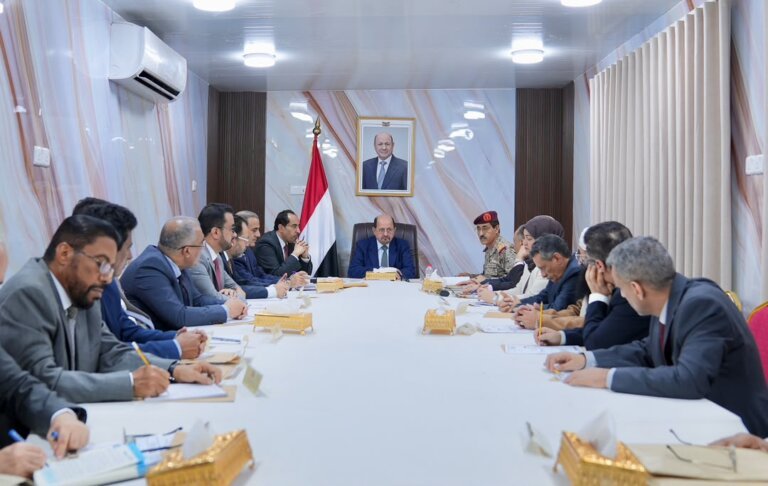
Lieutenant General Mahmoud al-Subaihi, a member of Yemen’s Presidential Leadership Council, recently held a video conference with Ambassador Stephen Fagin, who is concluding his diplomatic mission in Yemen. The dialogue centered around the significant political, economic, and humanitarian challenges currently affecting the country, as well as future opportunities for collaboration between Yemen and the United States.
During this meeting, Lt. Gen. al-Subaihi praised Ambassador Fagin for his dedication and efforts to enhance connections between Yemen and the U.S. He acknowledged the ambassador’s role in rallying international support to alleviate the significant humanitarian crises the Yemeni people are facing. These include the dire economic conditions impacting citizens’ everyday lives and the urgent need for sustained assistance in rebuilding the nation’s infrastructure.
The meeting underscored the critical need for ongoing international support to strengthen Yemen’s governmental institutions and promote various developmental initiatives. With economic hardship as a major concern, distinctions drawn regarding social challenges shed light on how international partnerships can facilitate change and restore essential services within the country.
Ambassador Fagin reciprocated the appreciation and expressed his commitment to continue U.S. support for Yemen even after the conclusion of his tenure. He emphasized the importance of collaborative efforts with both regional and international partners to bolster Yemen’s recovery and development prospects, along with addressing humanitarian needs.
The situation in Yemen involves a range of stakeholders, each with diverse interests and roles in the ongoing conflict. The Presidential Leadership Council, which acts as the legitimate government recognized internationally, remains at the forefront of efforts to stabilize Yemen and rebuild following years of conflict. This body plays a crucial role in navigating the complex political landscape and addressing the country’s multifaceted challenges.
Supporting the Yemeni government, the United States has been instrumental in providing humanitarian assistance and advocating for diplomatic solutions to the ongoing conflict. U.S. involvement reflects a broader strategic interest in maintaining regional stability, as Yemen’s location adjacent to vital shipping routes, including the Bab al-Mandab strait, holds significant geopolitical importance.
Regional players such as Saudi Arabia and the United Arab Emirates also continue to influence the situation dramatically. Their ongoing military involvement and political engagement with various factions, including the Houthis, complicate peace efforts. Additionally, the Houthis, who control substantial territories in Yemen, including the capital Sanaa, remain a crucial player in any potential resolution to the conflict.
Moreover, international organizations and humanitarian agencies focus on addressing Yemen’s urgent humanitarian needs. Efforts to mitigate the effects of diseases like cholera and measles, alongside support for displaced populations, are driven by the imperative for humanitarian action amidst the ongoing violence.
The conflict in Yemen has significant implications for the broader Middle East. As a country strategically located near critical maritime routes, instability in Yemen threatens shipping lanes essential for global trade. The Bab al-Mandab Strait, connecting the Red Sea to the Arabian Sea, is vital for the transit of oil and goods, making security in this area a priority for regional powers and the global community.
Yemen’s complicated geopolitical landscape has often drawn in various regional powers, resulting in proxy dynamics that risk further escalating tensions. Iran’s support for the Houthis exemplifies the sectarian and geopolitical divides at play. This influence complicates U.S. efforts and those of its allies to mediate peace, as regional rivalries often override local considerations.
In addition to military ramifications, the humanitarian crisis resulting from the ongoing conflict has regional consequences. The influx of displaced persons and the spread of diseases can have spillover effects into neighboring countries, exacerbating regional instability. For instance, the humanitarian burden affecting Yemen has implications for Gulf Cooperation Council member states, which deal with refugee flows and health crises that could arise from Yemen’s turmoil.
Consequently, international actors are pressured to develop a concerted approach to de-escalate tensions within Yemen and promote humanitarian relief, thereby addressing both immediate needs and longer-term stability in the region. Collaborative efforts among regional and international stakeholders remain essential in forging paths towards peace and alleviating humanitarian despair.
The recent talks between Lt. Gen. al-Subaihi and Ambassador Fagin illustrate a continuation of diplomatic engagement that is crucial for Yemen’s future, underscoring the importance of international partnerships. As Yemen grapples with compounding crises that intertwine human suffering and political instability, the role of the United States and its ability to mobilize international support remains paramount.
The acknowledgment of the various economic and humanitarian challenges faced by Yemen reflects an understanding that sustainable solutions must involve comprehensive support for governmental institutions. Enhancing the capacity of these institutions to provide essential services, support development, and facilitate reconstruction is not only beneficial for Yemenis but crucial to regional security as well.
In this regard, the United States’ commitment to Yemen signifies a long-term interest in addressing both humanitarian and political needs. However, translating this commitment into meaningful action requires overcoming significant obstacles, such as the complex realities of Yemen’s internal divisions and regional politics. Cooperative synergy among international actors, state institutions, and local communities can provide a comprehensive framework for addressing these intertwined issues.
Despite the challenges, recent diplomatic engagements present a flicker of hope for effective collaboration. Looking ahead, the continuity of these discussions and the development of actionable strategies to address Yemen’s myriad challenges could ultimately lead to an environment conducive to sustainable peace and recovery.
As Yemen continues to navigate its multifaceted crises, the road ahead remains uncertain. The end of Ambassador Fagin’s diplomatic mission marks a transition period, and the U.S. will likely appoint a successor who will engage with Yemeni leadership and international partners to pursue continued support for the government and humanitarian efforts. The new ambassador’s approach will be critical in shaping U.S. policy and strategy in Yemen going forward.
The ongoing need for humanitarian assistance will continue to drive international engagement, as organizations work diligently to address the immediate needs of the displaced populations and those affected by the violence. Efforts to restore basic services and tackle health issues like cholera outbreaks will remain vital in the months ahead. Coordinated responses from international and local actors will be essential in this regard.
At the same time, the political landscape in Yemen will remain complex, characterized by the interplay of various factions and competing interests. As negotiations for peace continue, the potential for either progress or further escalation remains. Continued dialogue between Yemeni leaders and international partners could pave the way for a more unified approach to resolving the conflict, but it will require navigating sensitive territorial and leadership dynamics.
Ultimately, Yemen’s future hinges on the effectiveness of both diplomatic engagement and humanitarian relief efforts. The interplay of regional politics, humanitarian priorities, and local governance will shape Yemen’s trajectory as it strives for peace, stability, and recovery in the aftermath of a brutal conflict.
About the Author