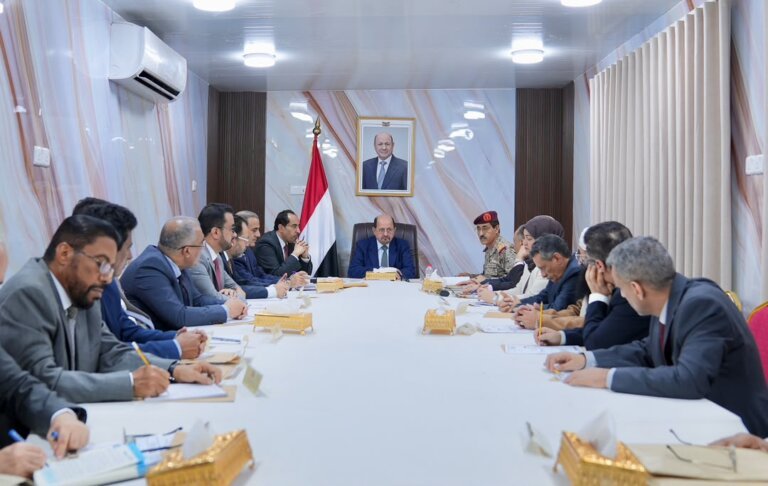
Discussion on Yemen’s peace efforts and development held by the UN Envoy with PLC member Al-Muharrami.
 Yemen Herald News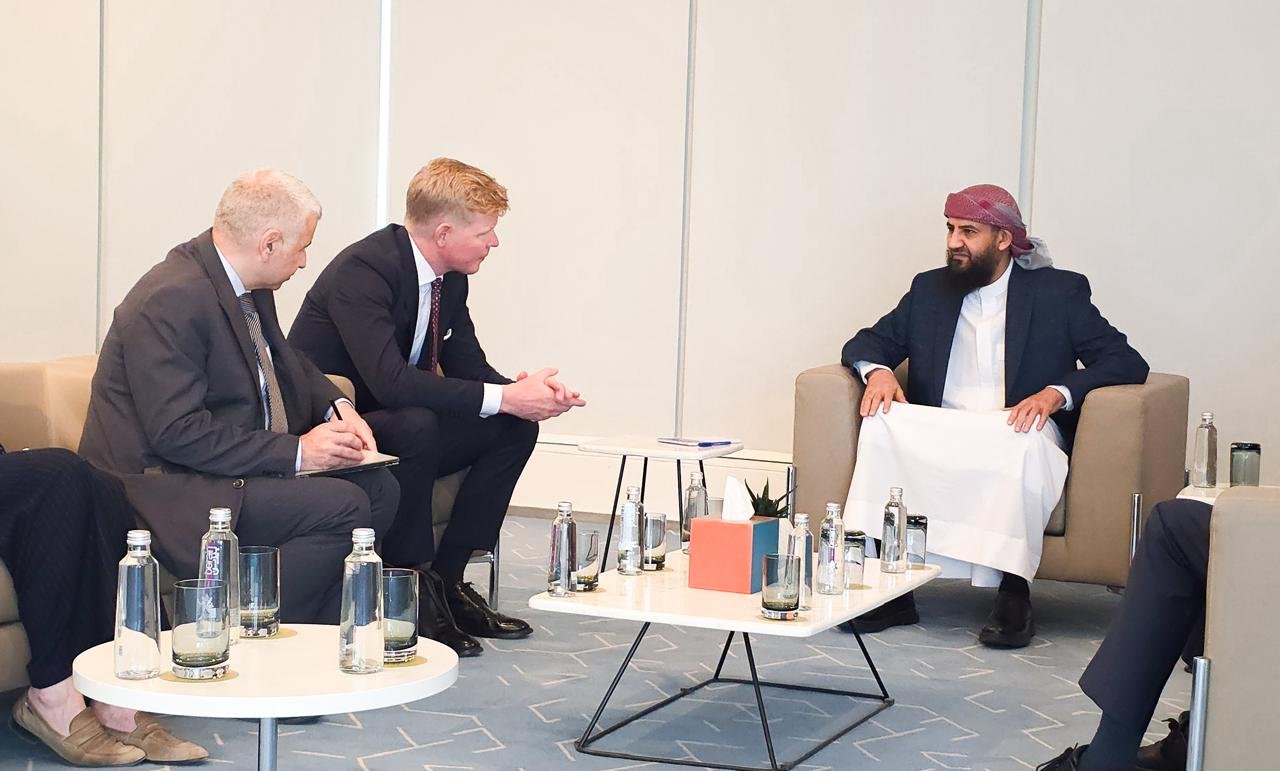
The complex and prolonged Yemeni civil war began in 2015 when Houthi forces, linked with Iran, seized control of the capital, Sana’a, prompting a Saudi-led coalition to intervene in support of the internationally recognized government. This multifaceted conflict has led to catastrophic humanitarian consequences, with millions of Yemenis suffering from food insecurity, inadequate healthcare, and the widespread destruction of infrastructure. According to recent estimates, over 18 million individuals in Yemen require humanitarian assistance, with more than 4.5 million displaced from their homes due to the violence and instability that has persisted for nearly a decade.
The situation in Yemen is fueled by geopolitics, particularly in the strategic Red Sea region and the Bab al-Mandab Strait, which serves as a crucial maritime trade route. The Iranian influence through support for the Houthis adds a significant layer to the conflict, intensifying tensions not just within Yemen but across the Gulf region. The involvement of regional powers complicates peace efforts, as differing interests create obstacles to negotiations. Amid these challenges, various international actors, including the United Nations (UN) have made attempts to mediate a peaceful resolution to the conflict.
The establishment of the Presidential Leadership Council (PLC) in 2022 marked a significant shift in Yemen’s political landscape. Formed to unify the fragmented Yemeni political scene and provide a more effective governance structure in the face of ongoing conflict, the PLC aims to work more cohesively with international bodies and address the concerns of the Yemeni populace. However, despite these administrative efforts, the humanitarian crisis remains dire, and the aspirations for a political resolution continue to face numerous hurdles.
The recent meeting between Abdulrahman al-Muharrami, a member of the PLC, and Hans Grundberg, the UN Secretary-General’s Special Envoy for Yemen, highlights ongoing diplomatic efforts to address the current humanitarian and political situation in the country. Discussions during their engagement revolved around the latest developments on both military and humanitarian fronts as well as the potential future pathways toward peace. This meeting underscores the continued emphasis on fostering dialogue and cooperation between Yemen’s leadership and international stakeholders.
Central to their discussions was the issue of prisoners and detainees, a significant concern in the broader peace negotiations. The representatives touched upon the need for a release framework based on an “all-for-all” principle, aiming to diminish the prolonged suffering of those affected by the conflict. This approach seeks to establish trust and initiate further negotiations by securing the release of captives, which remains a critical humanitarian issue in Yemen.
The engagement comes at a time when the international community, particularly through the UN, is increasingly involved in revitalizing the peace process. Multiple attempts have been made in the past to negotiate a ceasefire and an eventual resolution to the conflict, yet sustained violence continues, complicating these efforts. The discussions aim to address not only the immediate humanitarian needs but also to lay the groundwork for a more stable political environment conducive to lasting peace.
The Yemeni civil war involves a multitude of stakeholders, each with differing motivations and power dynamics. The primary actors include the Houthis, who control significant portions of northern Yemen, and the PLC, representing the internationally recognized government in Aden. The PLC, which was formed as part of a wider consensus to unify various factions, strives to restore stability and governance in areas under its control while seeking external support for its initiatives.
Internationally, the UN plays a crucial role in facilitating dialogue and proposing solutions to the ongoing crisis. With its Special Envoy, Hans Grundberg, at the forefront of negotiations, the organization strives to broker peace and address humanitarian issues affecting millions of Yemenis. Additionally, regional powers, particularly Saudi Arabia and Iran, exert substantial influence over the conflict, each backing opposing sides and complicating peace efforts with their vested interests in Yemen’s future.
Humanitarian organizations also represent a significant stakeholder group, seeking to alleviate the suffering of affected populations. With the grim statistics reflecting widespread malnutrition and disease outbreaks, these groups advocate for increased aid and access to crucial services. Their work is essential in mitigating the impacts of the conflict, though they often face challenges such as security threats and logistical constraints.
The ramifications of the Yemeni conflict extend beyond its borders and have significant implications for regional stability and security. The ongoing civil war exacerbates tensions in the Gulf region, where sectarian divides and geopolitical rivalries have been laid bare. Saudi Arabia’s involvement is particularly notable, as it seeks to curb Iranian influence in Yemen and counteract any potential threats to its own territorial integrity. The conflict serves as a proxy battleground where regional powers frequently assert their influence through their respective alliances.
Furthermore, the humanitarian crisis in Yemen has drawn international attention due to its scale and severity. The crisis poses a risk not only to Yemeni citizens but also affects regional stability. A large-scale humanitarian disaster creates a fertile ground for extremism and can lead to mass migrations, which further strain neighboring countries. The potential for an influx of refugees or displaced individuals can create political and social challenges for countries within the Gulf Cooperation Council (GCC) and beyond.
Moreover, the strategic location of Yemen along key maritime routes reinforces global interest in the resolution of the conflict. The Bab al-Mandab Strait is essential for international shipping and trade, and any instability in this region can disrupt flows, leading to broader economic implications. Ensuring peace in Yemen thus aligns with the needs of various global stakeholders, who are invested in maintaining safe passage through these critical waterways.
The ongoing discussions between the PLC and the UN envoy highlight the cautious optimism surrounding peace negotiations in Yemen. Despite a strong desire for resolution, the fragmented nature of authority on the ground and external influences continue to be significant obstacles. The diversified interests of local factions and foreign nations complicate any unified approach to ending the conflict. Each group often prioritizes its own immediate goals over a collective peace that would benefit the national populace.
The humanitarian dimension of the situation is equally crucial. While discussions about political resolutions take place, the pressing nature of the humanitarian crisis demands immediate and sustained attention. The plight of those suffering from food insecurity, lack of medical care, and ongoing conflicts cannot be overlooked in the quest for peace. A comprehensive approach that addresses both political and humanitarian concerns is essential to engendering trust and fostering a stable future for Yemen.
Continued international involvement will be vital in shaping the outcome of Yemen’s future. The influence of external actors, both regional and global, can determine whether the peace talks are successful or fell into the same patterns of failure seen in previous negotiations. An inclusive process that accommodates various voices within Yemen and receives backing from regional powers could set the foundation for lasting peace and rebuilding efforts.
Looking ahead, the trajectory of the peace process in Yemen is uncertain. The recent high-level discussions suggest a renewed interest in addressing the conflict, but achieving a breakthrough will require persistent efforts and sustained commitment from all parties involved. Both the PLC and the Houthis will need to display flexibility and a willingness to compromise to facilitate any substantive progress.
As priority issues such as the release of prisoners and humanitarian access persist, the role of the UN and other international organizations will be crucial in mediating ongoing talks. If both sides can agree on foundational issues and move toward a more conciliatory stance, it may catalyze further negotiations that can ultimately lead to a ceasefire and a long-term settlement. Alongside these discussions, the international community must ensure that humanitarian aid flows uninterrupted and addresses the needs of the most vulnerable populations to prevent further deterioration of the situation.
Moreover, regional dynamics will continue to play a pivotal role in the conflict’s resolution. As long as foreign stakeholders maintain their positions, the potential for conflict to escalate remains high. For peace efforts to be effective, regional powers must also be willing to engage in constructive dialogue that prioritizes Yemen’s stability over their own strategic interests. The path forward requires not just engagement from local actors but also a concerted effort by the international community to hold all parties accountable and support a comprehensive peace framework.
Ultimately, the situation in Yemen remains fluid, but the momentum toward renewed dialogue and potential solutions reflects a glimmer of hope amidst years of turmoil and suffering. The coming months will be crucial in determining whether Yemen can steer towards peace or continue to struggle under the weight of conflict and humanitarian crises.
About the Author