To restore Yemen’s institutions and achieve peace, ending the Iranian regime’s agenda is essential.
 Yemen Herald News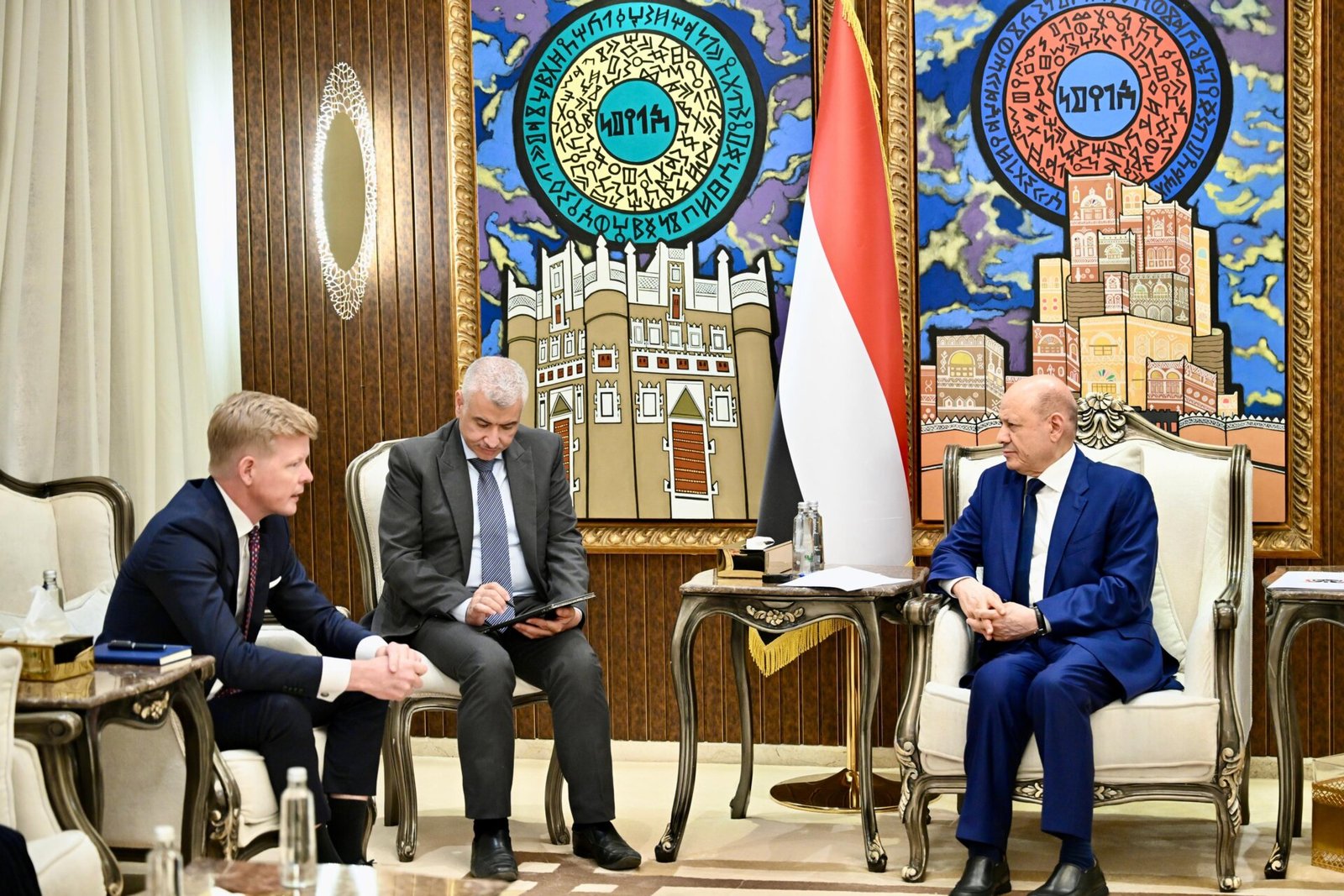
Since the commencement of the Syrian conflict in 2015, Yemen has been engulfed in a protracted civil war marked by intense fighting, humanitarian crises, and political instability. The conflict revolves around the Houthis, an Iranian-backed group that seized the capital, Sana’a, in 2014, leading to a Saudi-led coalition intervening in support of the internationally recognized government. This coalition includes the United Arab Emirates, which has its own interests in the region. The war has compounded existing hardships, plunging Yemen into one of the worst humanitarian crises globally, with over 18 million people requiring assistance and more than 4.5 million internally displaced.
The Presidential Leadership Council was formed to lead the government from its de facto capital in Aden, uniting various factions against Houthi control. This council was established to facilitate a more coherent governance structure and to garner international support. However, it maintains the challenge of unifying the differing political factions under its leadership while also addressing the dire needs of its citizens amidst dwindling resources and ongoing attacks.
As conflicts persist, international efforts to broker peace have been fraught with difficulties. The Houthis have shown limited willingness to engage constructively with peace proposals, often favoring aggressive military strategies instead. This situation has led to a cycle where temporary ceasefires are made only to be broken, exacerbating the humanitarian situation. Despite these challenges, organizations like the United Nations continue to advocate for humanitarian rights and strive to mediate a comprehensive peace agreement.
Recently, President Dr. Rashad al-Alimi of the Presidential Leadership Council met with UN Special Envoy Hans Grundberg to discuss recent developments in Yemen, particularly following the death of former President Abd Rabbu Mansour Hadi. This meeting emphasized the urgency for peace and stability in Yemen, as well as a need for the international community to work cohesively towards this goal. Grundberg extended condolences for Hadi’s passing and underscored the need for a renewed focus on humanitarian issues, notably the agreement to release 1,750 detainees as part of ongoing peace negotiations.
During their discussions, President al-Alimi expressed his hope that the detainee release agreement would act as a stepping stone towards broader humanitarian initiatives and called for the international community to focus on the root causes of the Yemeni crisis rather than allowing military factions to derail progress. He highlighted the importance of sustaining efforts to build upon any achievements achieved through negotiation, ensuring the smooth implementation of humanitarian measures without interference from the Houthis.
Furthermore, the President shed light on the disturbing patterns of aggression adopted by the Houthis. As the Houthis have publicly declared their allegiance to Tehran’s regional ambitions, al-Alimi pointed out the increasing risks posed to Yemen’s stability and sovereignty. He characterized the Houthis not merely as a political faction but as an armed group that undermines the Yemeni state’s authority, indicating that foreign intervention complicates local governance and exacerbates ongoing tensions.
The key stakeholders in the Yemen conflict include the Presidential Leadership Council, the Iranian-backed Houthis, and international powers such as Saudi Arabia, the United Arab Emirates, and the United Nations. The Presidential Leadership Council, formed with a cohesive goal to unify governance efforts, represents various factions within Yemen that oppose the Houthis. However, the council faces significant internal challenges that hinder its ability to respond effectively to the humanitarian crisis and governance issues.
The Houthis, on the other hand, have leveraged their military power to assert regional influence while aligning closely with Iranian interests. Their actions reflect a broader strategy, as evidenced by their declarations of support for Iran’s activities throughout the region. This alignment complicates peace efforts and prompts concerns regarding Yemen as a battleground for proxy conflicts, impacting both regional stability and international security, particularly in relation to maritime navigation through the Red Sea.
Additionally, external partners like Saudi Arabia and Oman play a crucial role in mediating the conflict. Saudi Arabia leads the coalition aimed at restoring the legitimate government in Yemen, while Oman has positioned itself as a neutral party that facilitates dialogue. The involvement of these nations is critical, as their influence over local factions can help to steer narratives and negotiations towards more peaceful outcomes.
International organizations, particularly the United Nations, serve as mediators seeking to navigate the complexities of the ongoing crisis. The UN’s role includes mobilizing humanitarian aid and facilitating dialogue between conflicting parties while ensuring that any agreements reached are implemented effectively. Their success is often contingent upon the cooperation of the involved stakeholders and their willingness to prioritize peace over ongoing hostilities.
The ongoing conflict in Yemen has far-reaching implications for regional stability, particularly given its strategic location along vital maritime trade routes such as the Bab al-Mandab strait. This narrow passage is one of the world’s most important chokepoints for global shipping, linking the Mediterranean Sea to the Indian Ocean. Continued unrest in Yemen not only threatens the safety of vessels navigating these waters but also raises alarms about the potential for broader geopolitical confrontations involving regional powers.
The situation is exacerbated by the direct involvement of Iran in supporting the Houthi militia, which has prompted Saudi Arabia and its allies to reassert their military presence in the region. This dynamic creates a landscape of heightened tension, where military posturing and proxy conflicts could lead to larger confrontations. As Yemen becomes a platform for Iranian influence, the potential for conflict escalates, raising concerns about spillover effects in neighboring countries such as Saudi Arabia and Oman.
In addition to immediate military concerns, the humanitarian crisis in Yemen impacts regional stability and security. With millions of people facing food insecurity and health crises, the potential for mass migration and associated socio-economic challenges escalates. Neighboring countries, already grappling with their challenges, could find their resources stretched further with an influx of refugees seeking sanctuary from the conflict.
Furthermore, international relations are also influenced by the situation in Yemen. Countries involved in the conflict are often guided by their strategic interests, balancing humanitarian needs with national security concerns. The complexity of relationships among Yemen, Iran, and Saudi Arabia complicates diplomatic efforts, as regional powers prioritize their own agendas over collaborative solutions to restore peace and stability in Yemen.
The discussions between President al-Alimi and UN envoy Grundberg reveal critical insights into the path forward for Yemen. Al-Alimi’s emphasis on sustainable peace over temporary truces underscores the need for a comprehensive approach to resolving the conflict. Rather than merely addressing surface-level issues, a deeper understanding of the motivations and actions of the Houthi militia is essential to prevent the resurgence of violence that could derail progress.
Al-Alimi’s critique of the Houthis as a proxy for Iranian interests illustrates the broader narrative that needs to be addressed in any peace negotiations. To create a lasting resolution, the international community must recognize that the crisis is not solely a domestic political conflict but also part of a larger struggle involving external influences that complicate the autonomy and governance of Yemen. This nuanced understanding calls for a distinct approach to diplomacy that prioritizes Yemen’s sovereignty and the restoration of its state institutions.
In addressing the humanitarian aspects, the President’s push for continued international support for the reform program is crucial. Adequate reform in public administration and governance will be necessary to rebuild trust between the government and its citizens and to stabilize the socio-economic landscape of Yemen. Ensuring that humanitarian aid translates into effective institutional support will play a significant role in curbing the humanitarian crisis.
Ultimately, the success of peace efforts will heavily rely on the unity of the Presidential Leadership Council and its ability to foster cohesion among the diverse factions within Yemen. Without a solid internal framework, calls for peace risk becoming futile as competing interests undermine collective action. The true challenge lies in navigating external pressures while building internal trust and capability to ensure governance suffices to meet the needs of the populace.
Looking ahead, the situation in Yemen necessitates stronger, coordinated efforts from the international community to facilitate meaningful dialogue between the warring factions. This will involve maintaining pressure on the Houthis to engage in constructive negotiations rather than adopting aggressive postures. Continuous monitoring and intervention by organizations like the United Nations will be essential to ensure any agreements reached are honored and implemented efficiently.
Simultaneously, the humanitarian needs of the Yemeni population must remain a focus. International aid must not only provide immediate relief but also support long-term reconstruction efforts. With millions in need of assistance, humanitarian agencies must collaborate closely with local governance structures to ensure aid reaches those most affected by the conflict.
The strategic dynamics in the region will also play a critical role in shaping Yemen’s immediate future. As tensions involving Iran and its proxies continue to simmer, the international community must be prepared for the implications of escalations that could draw in neighboring countries. Diplomatic avenues must be prioritized to disengage from the cycle of violence and assert a unified front for promoting stability not just in Yemen, but across the broader region.
Ultimately, the resolution of the conflict in Yemen hinges on a multifaceted approach that addresses both political and humanitarian dimensions. The commitment from the Presidential Leadership Council to pursue sustainable peace provides a glimmer of hope, but success will depend on the collaborative efforts of stakeholders, the recognition of Yemen’s sovereignty, and the creation of an environment conducive to lasting peace and stability.
About the Author