Parliament Speaker discusses bilateral relations and recent developments with British Ambassador.
 Yemen Herald News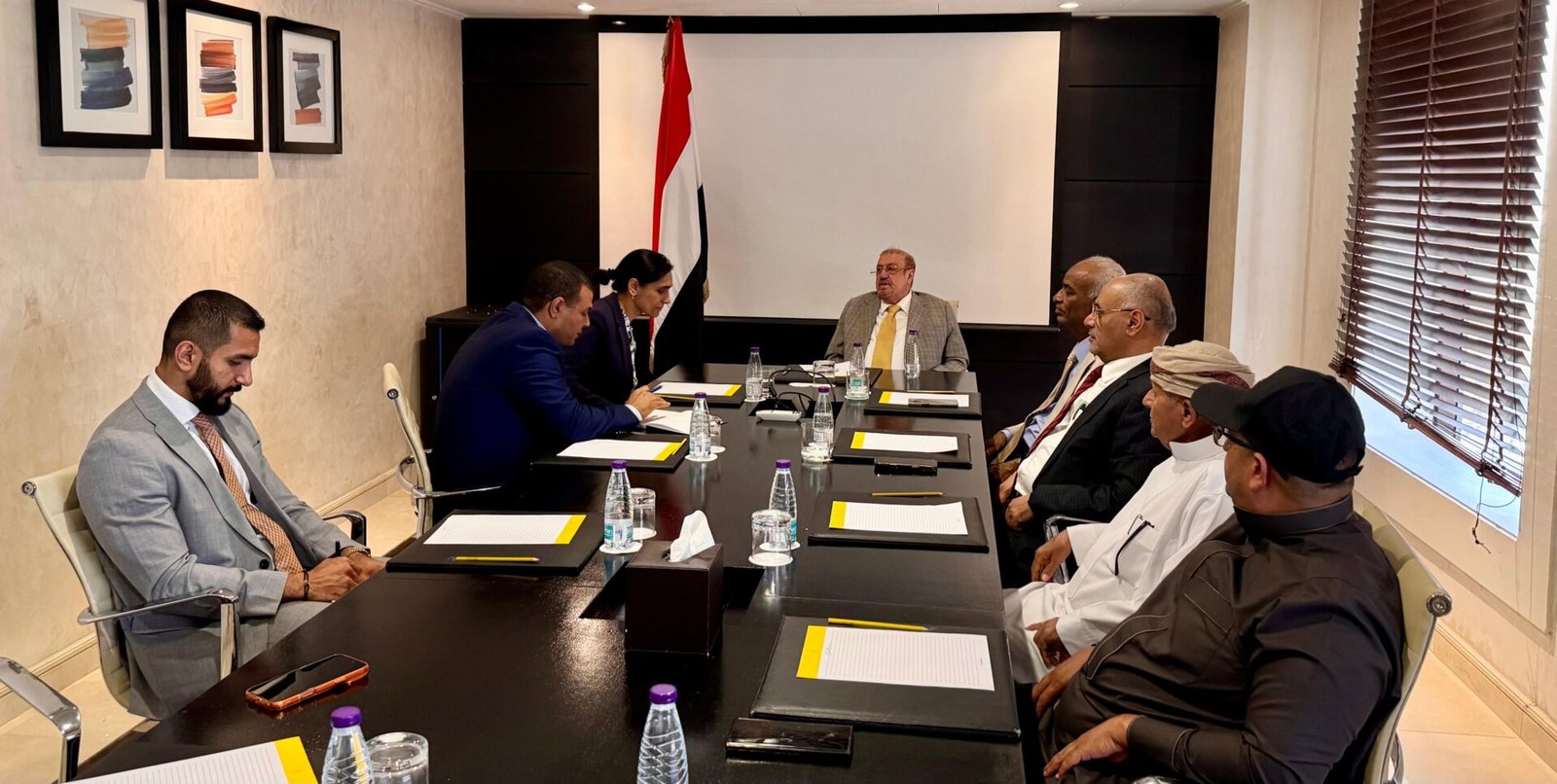
As of today, Yemen faces one of the world’s most dire humanitarian crises, with an estimated 18 million individuals requiring assistance. Over 4.5 million people are internally displaced due to ongoing violence, and health crises, including cholera and measles outbreaks, are common. These challenges exacerbate the already difficult living conditions for the Yemeni population, many of whom struggle to access basic services.
Despite these challenges, the Presidential Leadership Council and the newly formed government show signs of optimism towards improving the situation through reforms and cooperation with international allies. The new government’s establishment aims to stabilize state institutions and restore order, which are crucial for long-term recovery and peace.
Given the strategic significance of Yemen in the Red Sea and Bab al-Mandab Strait, the geopolitical stakes remain high. Yemen’s location is pivotal for global trade routes and energy supplies; thus, various regional and international actors, including Iran, engage in proxy dynamics through their support for factions within the conflict.
Recently, the Speaker of the Yemeni Parliament, Sheikh Sultan al-Barakani, held a meeting with the United Kingdom’s Ambassador to Yemen, Abda Sharif. The two discussed pertinent developments regarding bilateral relations and the current state of affairs within Yemen and the region. Their dialogue also focused on ways to reinforce economic stability and enhance essential services for citizens, amidst the challenging backdrop of the ongoing civil strife.
Al-Barakani emphasized the Prime Minister’s efforts, noting a spirit of camaraderie and understanding within the new government, which is seen as a critical component in adhering to national laws and establishing a functional partnership between governing bodies. He underscored that the activation of state institutions must be prioritized to ensure the government’s success and implement needed reforms that could lead to tangible improvements in citizens’ lives.
Moreover, the Speaker called on both the United Nations and the international community to reaffirm their commitments towards supporting Yemen’s constitutional legitimacy. He urged for a more proactive stance in exerting pressure on the Houthis to end their takeover, restore legitimate governance, and facilitate peacebuilding efforts within the country. His position reflects a broader call for unity and cohesion among the nation’s armed forces and security services.
The British Ambassador echoed these sentiments, emphasizing her country’s dedication to supporting Yemen’s constitutional framework and its commitment to providing humanitarian aid amid the tragic realities faced by the Yemeni people. She expressed hope for the convening of a parliamentary session that would complete necessary constitutional processes, thus boosting institutional stability and facilitating reform initiatives.
Key stakeholders in the Yemen conflict include the Yemeni government, the Houthis, regional powers such as Saudi Arabia and Iran, and various international organizations. Understanding the interests of these groups is vital for grasping the ongoing dynamics in Yemen.
The Yemeni government, represented by the newly formed Presidential Leadership Council, strives to consolidate authority and restore state institutions to ensure stability and governance. This body, supported by international allies, aims to address the urgent needs of the population while also reinforcing respect for constitutional legitimacy. The government faces the challenging task of balancing internal pressures from armed factions with the demands of its international partners.
On the other side, the Houthi movement remains a significant force in the conflict, with its own agenda and support from Iranian allies. The Houthis view themselves as defenders of the Yemeni people against foreign intervention, and they maintain control over several key territories, including the capital. Their continued military and political activities complicate the government’s efforts to restore peace and legitimacy throughout the country.
Regional powers, mainly Saudi Arabia and the United Arab Emirates, play influential roles in Yemen’s battle for control. Their support for the Yemeni government is crucial but comes with its own set of strategies and interests. Both countries are keenly aware of the implications of a stable Yemen on regional security, especially given concerns surrounding Iranian influence in the region.
International bodies, notably the United Nations, are also key players in mediating the conflict. Their role focuses on negotiating peace processes and facilitating humanitarian aid delivery, although their effectiveness has often been hampered by the complex realities on the ground.
The conflict in Yemen has broad implications for regional stability, particularly in the context of the ongoing struggle for influence between Saudi Arabia and Iran. The civil war has not only exacerbated local tensions but has also become a focal point for larger geopolitical rivalries.
Saudi Arabia has been involved in military operations aimed at countering Houthi advances, leading to a prolonged and costly engagement. The kingdom perceives the Houthis as an Iranian proxy, asserting that their control over Yemeni territories provides Tehran with a strategic foothold along the Arabian Peninsula. This perception has heightened security concerns for Saudi Arabia, making Yemen a pivotal front in the regional battle against Iranian influence.
Conversely, Iran’s backing of the Houthis showcases its strategy of leveraging local actors to expand its foothold in the region. This support complicates international efforts to reach a negotiated settlement and often leads to renewed hostilities. The dynamics between these regional powers heavily influence the prospects for peace in Yemen.
Moreover, the humanitarian crisis fueled by the ongoing conflict has implications for the entire region. The significant influx of Yemeni refugees could destabilize neighboring countries, particularly those already grappling with their own challenges, such as Oman and Saudi Arabia. The international response to Yemen’s crisis may set precedents for how similar situations are handled in the region.
The ongoing instability in Yemen also affects critical maritime routes in the Red Sea, prompting concerns from global trade actors about potential disruption. The Bab al-Mandab Strait represents a strategic choke point for oil and trade routes, making the security of this region crucial for the global economy.
The current meeting between Yemen’s parliamentary leadership and representatives from the UK signals a renewed commitment to international collaboration in addressing Yemen’s crisis. The dialogue reflects an acknowledgment of the interconnectedness of local governance, security, and humanitarian needs. Analysts suggest that fostering robust partnerships with international actors can provide the Yemeni government with much-needed resources and political backing to pursue its objectives.
The emphasis on institutional activation is crucial; without functional institutions, the government cannot execute reforms effectively or implement necessary services for its citizens. Efforts to stabilize the economy and enhance service delivery must be prioritized to gain the trust and support of the Yemeni population, who have borne the brunt of the ongoing conflict.
Furthermore, the call for unity within national armed forces indicates a recognition of the fragmented nature of security in Yemen. Unifying military forces and ensuring cohesion among various factions can play a significant role in mitigating violence and supporting peace initiatives. However, this task presents challenges, as different groups have varying loyalties and agendas.
The role of international mediation, primarily through the United Nations, remains vital. However, if pressure is not adequately exerted on the Houthis and other obstructive forces, the prospects for ending the conflict may remain bleak. Thoughtful diplomacy and strategic engagement from external powers are necessary to steer the situation toward a stable resolution.
Moving forward, the next steps for Yemen will hinge on effective collaborative efforts to achieve consensus among key stakeholders. The hope for a reconvened parliament may inspire citizens, but the actual effectiveness of such initiatives will depend significantly on the government’s ability to unify and implement reforms that address the longstanding grievances of the Yemeni people.
Engagement from international partners, particularly in the form of aid and political support, will be critical. Without substantial resources and a clear strategy for the reconstruction of state institutions, progress may remain elusive. The international community may also need to reevaluate its commitment and preparedness to intervene if hostilities escalate.
Moreover, ongoing dialogue with the Houthis, while challenging, could be essential to ease tensions and broker an agreement on governance and peace. Such negotiations, if pursued earnestly, might pave the way for a comprehensive peace agreement that accounts for the diverse interests within Yemen.
Lastly, addressing the humanitarian crisis should remain a priority, as ensuring the well-being of citizens is foundational to long-term stability. Without addressing immediate needs, including food security, health care, and basic services, the cycle of conflict and suffering may continue unabated. The outlook for Yemen remains uncertain, but a concerted humanitarian and diplomatic effort could alter the course of the nation’s future significantly.
About the Author