Al-Arada inspects progress on construction at Marib International Airport.
 Yemen Herald News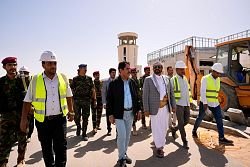
One critical component of Yemen’s infrastructure recovery is the Marib International Airport project. Located in a strategic area, Marib serves not only as a logistical hub but also plays a vital role in humanitarian efforts and connections between regions. The airport has the potential to facilitate the movement of goods and people, crucial in a country where transportation networks have been severely disrupted by ongoing conflict. The airport’s development signifies hope for revitalization amid mounting challenges, particularly for the citizens of Marib and the surrounding areas.
Amidst these challenges, the formation of the Presidential Leadership Council aimed to unify the Yemeni government and coordinate efforts to stabilize the country. This body has been endorsed by the international community, which recognizes the urgent need to restore order and rebuild infrastructure. The construction of the Marib International Airport is a direct reflection of the Council’s commitment to implement projects that serve both immediate humanitarian needs and long-term developmental goals.
Recently, Sultan al-Arada, a prominent member of the Presidential Leadership Council and Governor of Marib, visited the Marib International Airport project to assess its progress. During the inspection, al-Arada met with project managers and engineers, obtaining detailed insights into the current status of construction. The tour covered various components of the airport, including runways, terminals, and administrative facilities, highlighting substantial progress on multiple fronts.
The construction work has advanced significantly, with many elements nearing completion. Al-Arada recognized the efforts of the dedicated engineering teams and workers who have meticulously managed the project despite the various challenges encountered along the way. Engaging with the engineering teams, he expressed his satisfaction with the pace of development and the quality of work being executed.
Moreover, the governor emphasized the project’s importance extends beyond mere infrastructural development, framing it as a service-oriented endeavor aimed at alleviating citizens’ hardships. Al-Arada articulated that the airport serves a humanitarian purpose, aiming to support both regional and national needs as it prepares to cater to travelers from across Yemen.
The key stakeholders in the Marib International Airport project encompass a diverse range of actors. At the helm of the project is the Presidential Leadership Council, which has been instrumental in overseeing the coordination of governmental efforts and rallying support for essential infrastructure initiatives. The Council’s leadership not only directs the project but also strategizes on overcoming obstacles associated with ongoing conflict and humanitarian crises.
Additionally, local authorities, represented by Sultan al-Arada and his administration, play a crucial role in mobilizing resources and managing local operations. Their insights into the unique challenges faced by the region, as well as their connections with project contractors and engineers, are vital to ensure that the construction adheres to the set timeline and quality standards.
Other stakeholders include various engineering and construction firms involved in the airport’s development. These entities bring technical expertise and resources crucial for effective implementation. Their collaborative efforts with local authorities and the national government underscore a significant partnership that is rooted in a mutual goal of improving Yemen’s infrastructure in light of humanitarian needs.
International organizations also play a role, both in facilitating funding and providing technical assistance. Given the broader implications of improved infrastructure in Yemen, these organizations are invested in the airport’s successful completion, which serves as a critical element in supporting the nation’s recovery.
The successful completion of the Marib International Airport project has the potential to transform not only the locality but the entire region. As a pivotal infrastructure hub, the airport could significantly enhance connectivity throughout Yemen, fostering economic development and facilitating humanitarian aid deliveries. By easing the movement of people and goods, it plays into a broader strategy of stabilization and growth in a country long plagued by conflict.
Moreover, the airport stands to improve tourism and investment opportunities in Marib, an area rich in historical and cultural significance. Improved air travel can encourage tourism, attracting both domestic and international visitors eager to explore Yemen’s heritage. In turn, this could spur job creation and foster local businesses, contributing to the region’s longer-term economic recovery.
In light of ongoing food insecurity and health crises, the operational airport could serve as a key conduit for humanitarian aid. Enhanced logistics capabilities can help bring timely assistance to those in dire need, alleviating some of the pressures and hardships faced by the population. By serving as a node for aid delivery, the airport can facilitate much-needed support in a country where access to essential services is often hampered by conflict.
Lastly, the strategic importance of the airport extends beyond local borders. Yemen is situated along crucial maritime routes, including the Red Sea and Bab al-Mandab Strait, making its infrastructure developments vital not only for national recovery but also for broader regional stability. Consequently, the airport’s success could play a role in mitigating the geopolitical tensions present in the area, potentially fostering collaborative efforts among neighboring countries.
The advancement of the Marib International Airport project represents a beacon of hope amid the pervasive challenges facing Yemen. The progress made thus far demonstrates resilience and determination from both local and national authorities, highlighting a critical opportunity for constructive change. The positive perception around the project underscores a collective motivation to rebuild a country devastated by war.
However, several challenges remain. Continued conflict in various parts of the country, particularly in regions under Houthi control, poses risks to the project’s timelines and overall success. Political instability could undermine efforts to ensure smooth operations at the airport, which relies on broader national security for full functionality. It is paramount that the efforts to restore governance and security are matched with infrastructure development to create a sustainable future.
The airport project also illustrates the complex interplay between development initiatives and the humanitarian crisis in Yemen. While significant progress is being made, addressing the urgent needs of the population remains paramount. The successful operation of the airport could dramatically improve access to critical resources, but this requires a holistic approach that prioritizes humanitarian needs alongside infrastructural advancements.
Moreover, the international community’s role cannot be understated. Support from global agencies and foreign governments will be essential to ensure the project not only reaches completion but also operates effectively. Collaborative efforts must be sustained, with a focus on peace-building and economic recovery to maximize the airport’s potential as a catalyst for change.
As the Marib International Airport project progresses, the coming months will be crucial for determining its operational timeline and capacity. Key stakeholders must focus on overcoming existing challenges to maintain momentum and ensure that the project is completed within the established deadlines. Near completion, attention will need to shift towards operational readiness, which includes integrating systems that will facilitate smooth air traffic and logistics.
Further, it will be essential to establish regulations and frameworks that govern the airport’s operations once it is functional. These frameworks will need to address security concerns, air traffic control, and customs protocols, ensuring that the opening of the airport does not lead to complications or delays in service delivery. Training personnel and developing the necessary services will be a vital part of this transition.
Public awareness and engagement will also play a significant role in the airport’s acceptance and successful usage. Community outreach efforts should aim to inform citizens about the airport’s role in their lives, the services it offers, and how to use this infrastructure effectively. This is particularly important as the airport is designed to serve families and individuals across the Republic, rather than just Marib.
Lastly, ongoing assessments of the airport’s impact on local communities and the broader Yemeni population will become increasingly important. Stakeholders should remain vigilant and responsive to evolving on-the-ground dynamics to ensure the project consistently aligns with the humanitarian and infrastructural needs of all citizens. Ultimately, the Marib International Airport project holds the promise of transformation for Yemen, contingent on sustained support and strategic planning as it transitions towards completion and operation.
About the Author