Yemeni ministers open implementation of $150 million I-WISE water project in Amman
 Yemen Herald News
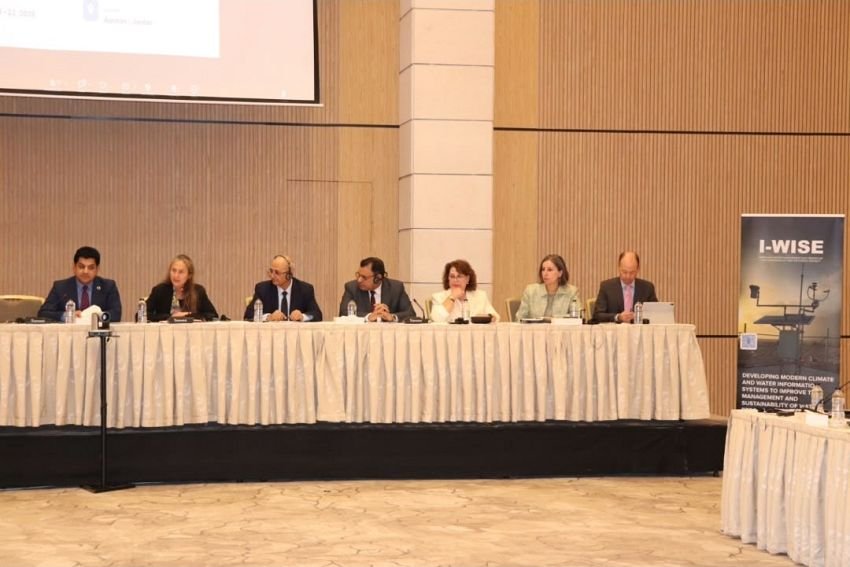
AMMAN, Jordan — Yemen’s water and agriculture ministers opened a five-day technical mission on Sunday to begin implementing a $150 million project to overhaul the country’s irrigation and water supply.
Minister of Water and Environment Tawfiq al-Sharjabi and Minister of Agriculture, Irrigation and Fisheries Salem al-Soqatari attended the opening in the Jordanian capital, the state news agency Saba reported. The mission runs until Oct. 22.
The project is named Improved Water Management and Irrigation for Sustainability and Efficiency, shortened to I-WISE.
It is financed by the World Bank Group’s International Development Association and by the Netherlands, according to the UN Development Programme. The Dutch funding passes through the Yemen Resilience, Recovery and Reconstruction Umbrella Trust Fund.
IDA is the World Bank’s concessional financing arm for the poorest countries.
UNDP said implementation was initiated at the Amman meeting.
The programme is the first phase of a 10-year multiphase approach, UNDP said. Al-Sharjabi told the opening session that the first phase was now beginning.
The phase is structured as a multiphase programmatic approach, a World Bank instrument that commits financing in stages across a longer programme.
Its stated objective is to strengthen Yemen’s climate and water information system and to improve climate-resilient irrigation and access to water and sanitation in selected basins.
The first phase covers the Aden-Tuban and Wadi Hajir basins, UNDP said. Saba reported that the areas sit within the governorates of Aden, Lahj, al-Dhale’e and Hadramout.
Saba said the project aims to develop the irrigation sector, raise agricultural water efficiency and strengthen the agricultural data systems used for planning.
UNDP expects the project to reach more than 850,000 people with improved resilience to climate risks.
A further 475,000 people are targeted for measures on terrestrial and aquatic systems, and 375,000 through climate-resilient infrastructure, according to the agency’s project page.
It also sets targets of 15,500 hectares of land under improved conservation or sustainable management and 7,500 hectares of farmland fitted with climate-resilient irrigation or drainage.
A developed and operational information system is listed among the project’s own results targets.
UNDP leads the Climate and Water Information Management System, known as CWIMS, together with watershed management and irrigation work.
The UN Office for Project Services is responsible for restoring and expanding water supply and sanitation infrastructure. That work targets urban, peri-urban and displaced communities, UNDP said.
Yemen’s National Water Resources Authority and its Civil Aviation and Meteorological Authority are also involved.
“Integrated water resources management across entire basins, from upstream to downstream,” al-Sharjabi said of the method the programme follows.
He described the project as a central pillar of the national response to the country’s water and agriculture pressures.
Al-Soqatari said the project would support irrigation, farm production, food security and rural incomes, calling it a strategic investment.
“Through I-WISE, we will support more efficient irrigation and stronger Water User Associations,” he said.
Water User Associations are farmer-run bodies that administer shared irrigation supply.
Dina Abu-Ghaida, the World Bank Group’s country manager for Yemen, tied the work to the wider economy.
“In Yemen, water security is inseparable from food security, livelihoods,” she said.
Zena Ali Ahmed, UNDP deputy regional director for the Regional Bureau for Arab States, said lasting solutions “must be owned and led by Yemenis.”
Muhammad Usman Akram, representative and director of the UNOPS multi-country office in Amman, said restoring water and sanitation services was a prerequisite for public health.
Saba said delegates would review the project’s operational, technical and institutional arrangements during the five days.
Implementation readiness and priority interventions were also on the agenda, the agency said, along with coordination between Yemeni institutions and international partners.
Al-Sharjabi said a seawater desalination plant for Aden was a priority for the programme’s second phase.
He said it would be pursued with the World Bank Group and the Green Climate Fund.
The Green Climate Fund is a multilateral climate finance body established under the UN climate convention.
Aden, the seat of the internationally recognised government, has had recurrent water and electricity shortages.
UNDP describes Yemen as one of the most water-stressed countries in the world. It estimates that about 17 million people there lack enough water for basic daily needs.
Agriculture accounts for most national water consumption, and groundwater levels have fallen in several farming basins.
The UN Office for the Coordination of Humanitarian Affairs said in its March 2026 humanitarian needs and response plan that more than 22 million Yemenis require assistance.
That plan put the number of acutely food insecure people at 18.3 million.
It reported more than 2.2 million children under five as acutely malnourished, including 516,157 severe cases.
OCHA counted 5.2 million internally displaced people and sought $2.16 billion to reach 12 million of those in need.
The World Bank Group launched a country partnership framework for Yemen in June 2026 alongside several projects.
Yemen’s war began in 2014, when Houthi forces seized Sanaa. A Saudi-led coalition intervened the following March on the side of the government.
Water networks and pumping stations have gone without maintenance in several governorates through the conflict.
The ministers at the Amman mission serve in the cabinet of the internationally recognised government, which is seated in Aden.
Neither Saba nor UNDP said whether areas under Houthi administration in the north fall within the first phase.
About the Author