
Yemen’s al-Alimi Meets Hunt Oil Chief to Discuss Reviving US Energy Investment
 Yemen Herald News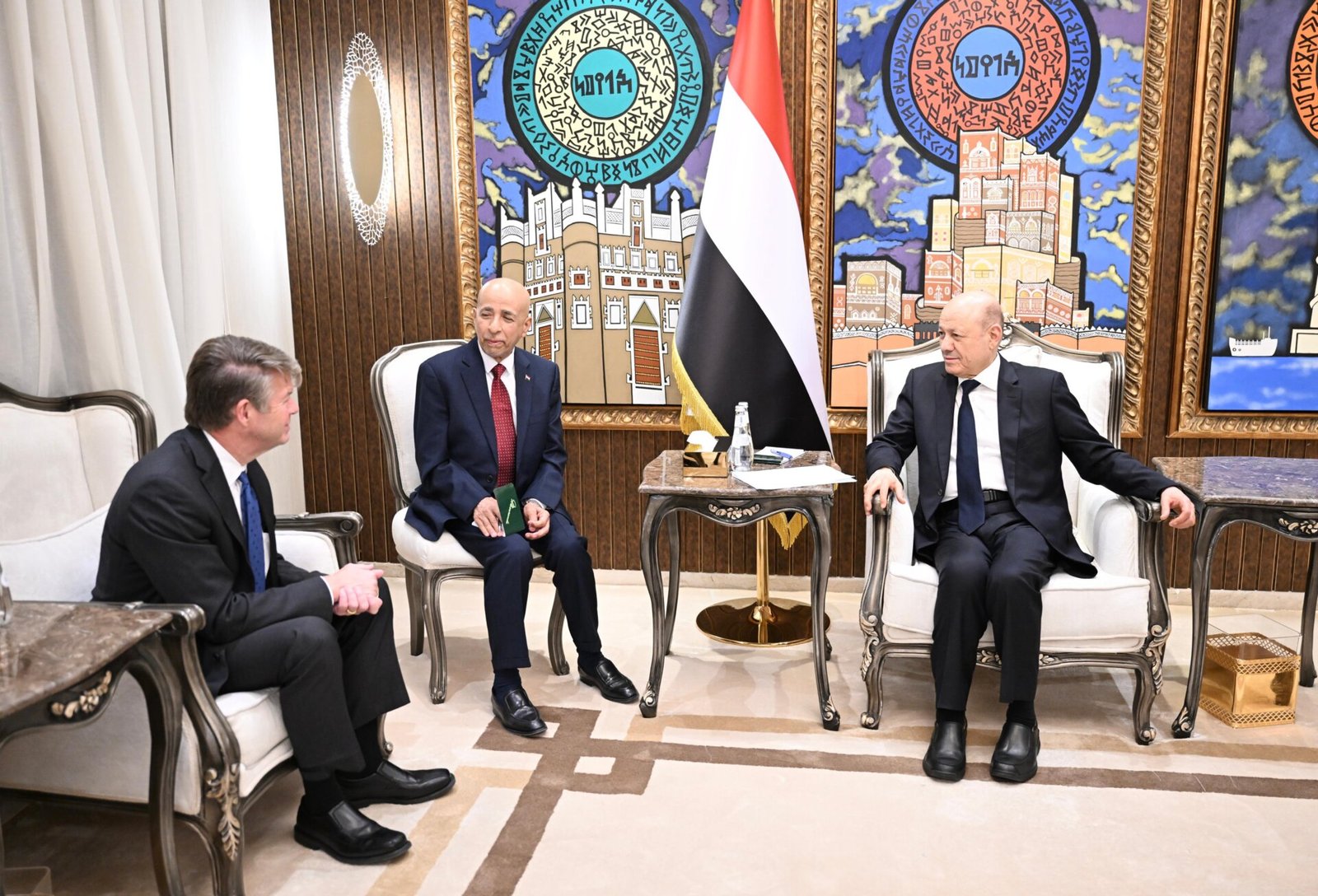
In a notable development for Yemen’s energy sector, the Chairman of the Presidential Leadership Council, Dr. Rashad Mohammed al-Alimi, has met a high-level delegation from the United States oil company Hunt, led by its chief executive, Hunter Hunt. The talks centred on the prospects for reviving the company’s investment activities in Yemen and on possible partnership in oil and gas exploration, production and export, areas the government views as central to supporting economic recovery and strengthening energy security.
During the meeting, al-Alimi received an update from the delegation on Hunt’s past projects and its potential future strategy in Yemen’s oil sector. Much of the conversation focused on building on the company’s long historical relationship with the Yemeni state, a relationship that played an important part in the early development of the country’s oil industry. With Yemen’s economy battered by years of conflict, officials presented renewed engagement with established foreign firms such as Hunt as an important route toward revival.
Al-Alimi praised what he described as Hunt’s pioneering contributions to Yemen’s oil sector, including its role in discovering the country’s first commercial oil reserves and in developing the infrastructure that followed. He also highlighted the company’s involvement as a key partner in Yemen’s liquefied natural gas project, one of the largest single investments the country has ever attracted, and acknowledged Hunt’s record of training local workers, which helped build a skilled Yemeni workforce in the industry’s formative years.
Hunt’s history in Yemen stretches back decades. The company was instrumental in the discovery of commercial quantities of oil in the country’s interior in the 1980s, a breakthrough that transformed Yemen into an oil exporter and reshaped its economy, with production later expanding across a series of fields in the Marib region and elsewhere in the interior. In the years that followed, oil revenues became a mainstay of the state budget, underlining why the government today places such emphasis on bringing production and exports back toward their former levels.
That ambition, however, runs up against the realities of a country still gripped by conflict. The war that escalated in 2015 has disrupted the energy sector heavily, with exports repeatedly interrupted and major facilities operating well below capacity or sitting idle. The country’s liquefied natural gas operations, once a flagship of its energy industry, suspended exports after the war intensified, while crude shipments from government-held areas have at times been halted altogether following attacks on export terminals. The cumulative effect has been a sharp fall in the oil revenues that the state once relied upon. Restoring investor confidence in such conditions is no small task, and the government’s outreach to Hunt forms part of a broader campaign to persuade international companies that it is safe and worthwhile to return.
To that end, al-Alimi briefed the delegation on the economic, financial and administrative reforms the government has been pursuing, including changes within the oil and gas sector itself. He pointed to efforts to improve the investment climate, to enhance transparency and governance, and to provide the guarantees that foreign companies typically require before committing capital. These measures, officials argue, are intended to reassure investors that Yemen is working to create a more stable and predictable environment.
The president reinforced the government’s pledge to support investors directly, saying the state was prepared to provide the assistance and resources needed to help resume productive activity in the sector. He linked this to wider cooperation with regional and international partners aimed at securing vital infrastructure, improving living conditions and strengthening overall security, all of which are seen as preconditions for any sustained return of foreign investment.
The stakes extend well beyond company balance sheets. With around 19.5 million people in Yemen estimated to need humanitarian assistance and millions displaced by the fighting, the revival of the energy sector could carry consequences far beyond pure economics. A return to meaningful oil production would help replenish government revenues, which in turn could support salaries, services and the basic functioning of the state, easing at least some of the pressures bearing down on the population.
Energy is also closely tied to everyday survival in Yemen, where fuel shortages have driven up prices, disrupted transport and strained the operation of hospitals and water systems that depend on generators. A more reliable domestic energy supply could therefore have humanitarian as well as fiscal benefits, helping to keep essential services running in a country where recurring outbreaks of disease and chronic shortages have become part of daily life.
For now, the discussions remain exploratory, and any resumption of Hunt’s activities would depend on security guarantees, commercial terms and the broader trajectory of the conflict. Yet the meeting carried symbolic weight, signalling both the government’s determination to attract investment back to the oil sector and the continued interest of at least some foreign firms in Yemen’s long-term potential. Whether that interest translates into concrete projects will become clearer in the months ahead, as the government in Aden seeks to turn pledges of cooperation into renewed activity on the ground and to demonstrate that Yemen’s energy resources can once again become an engine of recovery rather than a casualty of the war.
About the Author




