Kuwait Foils a Terror-Financing Network, Arresting 24 Over Funds Disguised as Charity
 Yemen Herald News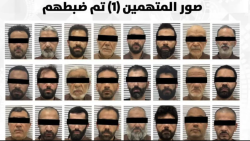
Kuwait’s Ministry of Interior has announced that it foiled a plot aimed at undermining national security and financing terrorist entities, detaining 24 people found to be connected with illicit funds. Officials, who disclosed the operation in mid-April 2026, described it as a significant step in the country’s continuing effort to confront threats to its stability and protect public safety. The case has drawn attention across the Gulf, both for the scale of the network involved and for the methods its members allegedly used to raise and move money under the cover of legitimate causes.
According to the ministry, the cell raised money by posing as religious and charitable organisations, soliciting donations from members of the public who believed their contributions were destined for genuine humanitarian work. In reality, investigators say, the funds were diverted, stockpiled and prepared for transfer abroad. Those behind the scheme are accused of exploiting the trust of well-meaning donors and channelling the proceeds away from the causes they were ostensibly supporting.
The profile of those implicated underscored the sensitivity of the case. Among the 24 people arrested was one individual whose Kuwaiti citizenship had previously been revoked, while authorities also identified eight fugitives who had fled abroad and were said to be linked to the unlawful funding of terrorist organisations. Notably, the network was reported to include five former members of parliament, a detail that lent the case additional weight and raised uncomfortable questions about how figures once entrusted with public office came to be associated with such activity.
Investigators outlined a sophisticated apparatus designed to evade detection. The accused are alleged to have used various commercial enterprises as legal fronts, employing complex methods to launder and transfer money while distributing it among multiple individuals to avoid triggering scrutiny from financial regulators. By fragmenting the flows and routing them through ostensibly legitimate businesses, the network sought to obscure both the origin and the destination of the cash it controlled.
The ministry said the money was ultimately intended to be sent abroad on the instructions of foreign entities, indicating that the operation was not confined to Kuwait but formed part of a wider cross-border effort. That external direction has heightened concern among Kuwaiti authorities, who view the exploitation of domestic charitable and commercial structures by outside actors as a particularly insidious threat requiring close coordination with partners in the region and beyond.
Legal proceedings against the detained suspects have already begun, and the Ministry of Interior has pledged to pursue further investigations to uncover any additional accomplices. The ministry signalled that more arrests could follow as it works to dismantle every layer of the funding scheme, framing its approach as a comprehensive effort rather than a single, isolated action. That commitment to sustained legal pressure reflected a determination to disrupt not only the immediate cell but also the broader infrastructure that allowed it to operate.
The episode fits within a long-running challenge for governments across the region, where the misuse of charitable giving to fund armed groups has proved stubbornly difficult to root out. As established channels are closed off and their backers search for new ways to move money, the line between genuine philanthropy and disguised funding has become increasingly hard for regulators to police, particularly when donations are gathered in cash or routed through informal networks.
The implications of the disruption are likely to extend to closer examination of financial flows within and beyond Kuwait’s borders. Authorities and analysts suggest the case could prompt stronger regulatory frameworks governing how donations are collected, handled and monitored, potentially shaping policy not only in Kuwait but in neighbouring states confronting similar challenges. In a globalised economy where money can cross frontiers with relative ease, the interconnected nature of security measures has rarely been more apparent, and gaps in one jurisdiction can quickly become vulnerabilities for others.
For Kuwait, the operation reinforced a message of vigilance at a time of heightened regional tension. Officials cast the crackdown as evidence of their resolve to uphold the rule of law and to deny terrorist organisations the resources they need to operate. The crackdown also positioned Kuwait within a wider Gulf effort to tighten controls on terrorism financing, as several states in the region have moved in recent years to strengthen oversight of charities, money-transfer businesses and informal funding channels, recognising that such mechanisms can be quietly co-opted to support violence.
The timing added to the significance of the case. The disclosure came against a backdrop of elevated tensions across the Middle East, a climate in which governments have grown especially wary of covert financial operations that could fuel instability or bankroll groups operating beyond their borders. Security services across the Gulf have repeatedly warned that periods of regional turmoil tend to coincide with intensified efforts to raise and move money discreetly.
By publicising the arrests and the methods involved, Kuwaiti authorities appeared keen to deter would-be imitators and to reassure citizens that charitable giving, a deeply rooted practice in the country, would be protected from those seeking to abuse it. The ministry’s decision to detail the alleged techniques, rather than simply announce the detentions, suggested an effort to educate the public about how trusted institutions can be manipulated and to encourage greater scrutiny of where donations ultimately end up.
About the Author