Yemen Urges Stronger Global Counterterrorism Cooperation in Address to UN Assembly
 Yemen Herald News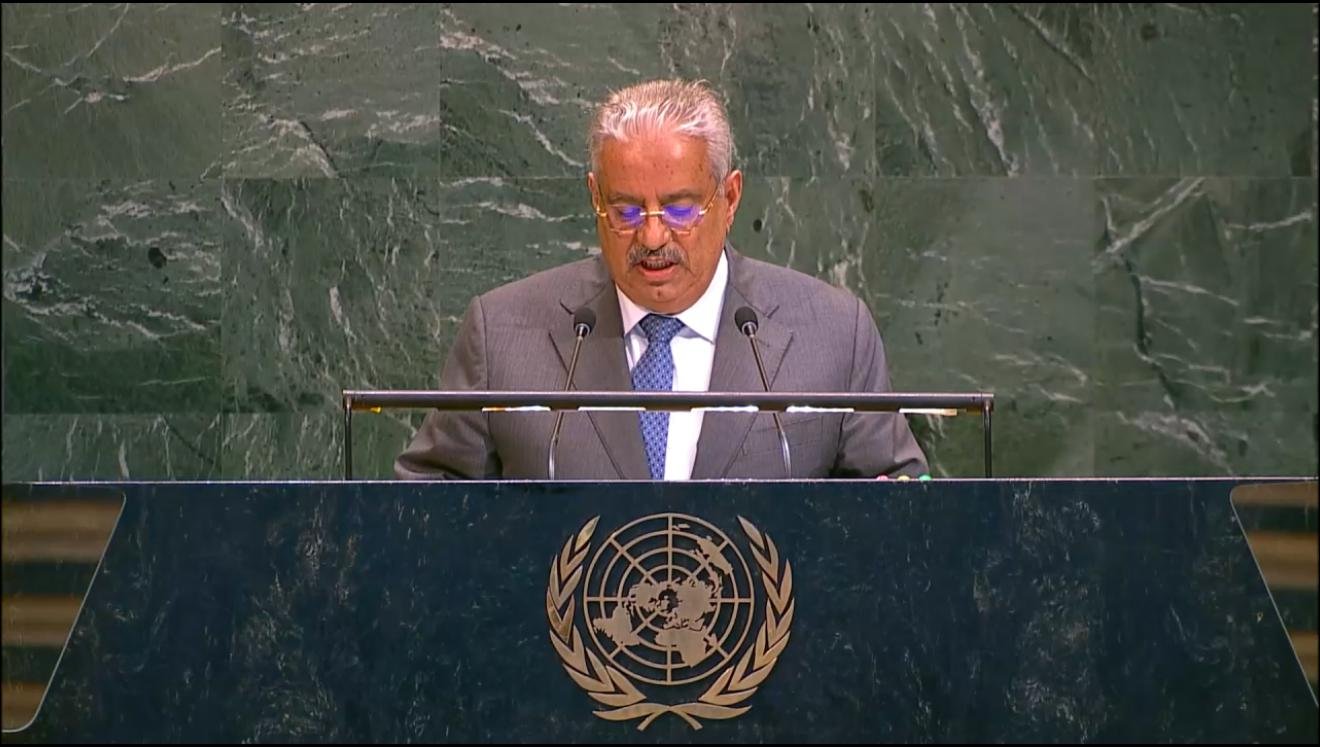
Yemen has called for stronger international cooperation against terrorism, telling the United Nations General Assembly that evolving security threats can only be countered through sustained collaboration, more capable domestic institutions and greater support for states affected by conflict. Speaking during a review of the United Nations Global Counter-Terrorism Strategy, Major General Mohammed Aydha, described as head of Yemen’s State Security Service, said the government was determined to confront terrorism in all its forms.
Aydha rejected any attempt to link extremist violence to particular religions, nationalities, civilisations or ethnic groups, echoing a longstanding position that terrorism should not be equated with any faith or community. He argued that the fight against violent extremism is a shared global responsibility that no single country, especially one mired in conflict, can shoulder alone, and that solidarity among states is essential to any lasting success.
The United Nations Global Counter-Terrorism Strategy, first adopted by member states in 2006, is reviewed periodically by the General Assembly and provides a shared framework covering prevention, capacity-building, human rights and international cooperation. Yemen’s participation in the review gave its officials a platform to link the country’s own experience of conflict and extremism to that global agenda, and to argue that support for fragile states forms an indispensable pillar of any effective international response.
Aydha told delegates that years of internal strife had created conditions in which terrorist organisations could exploit instability, with Yemen serving as a stark example. Since the Houthi movement seized the capital, Sanaa, in 2014, the country has endured one of the world’s most severe humanitarian crises, and the collapse of state authority in parts of the country has, in the government’s account, given armed groups room to operate.
Among the concerns he raised was the detention of United Nations personnel and aid workers by the Houthis. He put the number of detained UN staff at around 73, alongside members of non-governmental organisations, civil society groups and diplomatic missions. Independent reporting has documented the detention of dozens of UN employees in Sanaa — at least 53 by some accounts — whom the Houthis accuse of espionage, allegations the United Nations has firmly denied.
Aydha also drew attention to maritime security, citing attacks on commercial vessels in the Red Sea and the Bab al-Mandab Strait. According to the Yemeni official, Houthi forces have carried out more than 180 assaults on ships in these international waters, damaging numerous vessels and, in some cases, seizing them and their crews. The campaign of attacks on shipping has been widely documented since it began in late 2023.
He attributed much of the escalation to Iran, asserting that the Islamic Revolutionary Guard Corps has supplied the Houthis with weapons and military equipment. Iran denies arming the group, and the Houthis describe their maritime operations as a response to the war in Gaza, but Western governments and independent monitors have reported the interception of weapons shipments they say were bound for the movement.
The government, Aydha said, has restructured elements of its security apparatus, including the formation of a specialised counterterrorism unit intended to improve efficiency and readiness. Such reorganisation, he argued, is meant to better equip Yemen’s forces to keep pace with a fast-changing threat environment in which armed groups continually adopt new tactics and technologies to evade the authorities.
Chief among those emerging threats, according to Aydha, is the growing use of drones. He warned that groups including both the Houthis and al-Qaeda in the Arabian Peninsula are increasingly adapting commercially available technology for hostile purposes, raising the risk to regional and global security. The proliferation of cheap, capable unmanned systems has become a widespread concern for security officials well beyond Yemen’s borders.
Al-Qaeda in the Arabian Peninsula, long considered one of the network’s most dangerous affiliates, has maintained a presence in parts of Yemen throughout the war, exploiting ungoverned spaces and the diversion of security resources toward the conflict with the Houthis. Counterterrorism specialists have warned that prolonged instability risks allowing such groups to regroup, making the restoration of state authority a priority with international implications.
Aydha acknowledged the support Yemen has received from Saudi Arabia, crediting the kingdom with helping to strengthen the country’s security framework through the coalition it has led since 2015. He also thanked the United Nations Office of Counter-Terrorism for its work implementing and reviewing the global strategy, framing international institutions as essential partners in Yemen’s own efforts to rebuild its security capacity.
His appeal for expanded international assistance reflected a recurring theme in Yemeni diplomacy: that conflict-affected states require sustained help to build the institutions capable of confronting terrorism, and that neglecting them creates vulnerabilities felt far beyond their borders. The argument places Yemen’s security within the broader framework of global counterterrorism rather than treating it as a purely local concern.
The remarks came as Yemen’s leadership has intensified calls for what it describes as firm international action against the Houthis, warning that the group poses a threat not only to Yemen but to regional and global stability. Senior officials have argued that the international community has struggled to protect UN staff, commercial shipping and infrastructure, and have urged a more assertive response to the crisis.
Whether such appeals translate into greater support remains uncertain, particularly as global attention is divided among multiple crises. For Yemen’s government, however, forums such as the General Assembly offer an opportunity to keep its security concerns before an international audience and to press its case that stabilising the country is inseparable from the wider fight against terrorism and the protection of vital maritime routes.
About the Author