
Starmer and UAE’s Sheikh Mohamed Discuss the Iran War and Regional Security in Abu Dhabi
 Yemen Herald News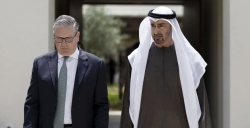
British Prime Minister Keir Starmer has held talks with UAE President Sheikh Mohamed bin Zayed Al Nahyan in Abu Dhabi, using a visit to the Gulf to underline the United Kingdom’s solidarity with the Emirates amid the escalating conflict with Iran. The meeting, part of a three-day tour of the region, centred on the situation in the Middle East and the far-reaching implications of Iran’s attacks for both regional stability and global security.
At the heart of the discussion were the strikes that have targeted the UAE and neighbouring states during the 2026 conflict. The two leaders addressed Iran’s targeting of civilians and non-military infrastructure, actions that Abu Dhabi has condemned as violations of its sovereignty and of international law, including the principles of the UN Charter. Such attacks have sharpened tensions across an already volatile region and prompted calls for a collective response from the states affected.
Starmer reiterated Britain’s firm condemnation of the assaults and affirmed that the United Kingdom stands with the UAE. He said the UK supported the measures the Emirates is taking to defend itself and to ensure the safety of its territory and people, a message intended to reassure a key partner at a moment of acute regional strain. The stance reflects a broader British strategy of backing Gulf allies as threats to their security intensify.
Energy and maritime security featured prominently in the talks. The Gulf’s waterways and energy infrastructure are vital to the world economy, and disruption there reverberates far beyond the region, feeding into global fuel prices and supply chains. Both leaders stressed the importance of cooperation in protecting these arteries of trade, an issue that has taken on fresh urgency as attacks on shipping and energy facilities have multiplied during the conflict.
The meeting also produced a step forward in bilateral relations. Building on earlier conversations between the two governments, the UK and the UAE agreed a framework for enhanced cooperation spanning foreign affairs, defence, trade and investment, artificial intelligence, the energy transition, and judicial cooperation and the fight against illicit finance. The breadth of that agenda signalled an intent to deepen a partnership that extends well beyond the immediate security crisis.
For London, the framework represents an effort to place the relationship with Abu Dhabi on a more strategic footing. Trade, investment and emerging technologies such as artificial intelligence have become increasingly central to Britain’s engagement with the Gulf, and pairing those economic ambitions with cooperation on defence and security offers a more comprehensive basis for the partnership than security guarantees alone.
The leaders also reflected on the long history of ties between the two countries. Decades of diplomatic, commercial and defence links provide a foundation on which both governments hope to build, and officials framed the current moment — however fraught — as an opportunity to strengthen those bonds rather than merely to manage a shared threat.
The geopolitical stakes extend directly into Yemen. The UAE has been an active participant in the Saudi-led coalition that has confronted the Houthi movement, and the war there has produced one of the world’s worst humanitarian crises, leaving millions in urgent need of assistance. The Houthis’ alignment with Iran ties the conflict in Yemen to the wider confrontation now playing out across the region.
That linkage means the implications of Iranian aggression are not confined to the UAE. Renewed instability threatens to deepen the crisis in Yemen, complicating already fragile peace efforts and worsening conditions for a population that has endured years of hardship. The interconnection of these theatres was part of what gave the Abu Dhabi talks their weight, underscoring how developments in one arena ripple through others.
Addressing such interlocking crises, both sides acknowledged, requires coordination among international partners rather than isolated national responses. Britain’s engagement with the UAE is one strand of a wider web of diplomacy through which Gulf states and their Western allies are attempting to contain the fallout from the conflict and to prevent it from spreading further.
Not everyone is convinced of the UK’s leverage, however. Some analysts have questioned how much influence Britain still commands in a Middle East increasingly shaped by regional powers acting on their own calculations, arguing that London’s capacity to steer events is more limited than its rhetoric suggests. Whatever the merits of that critique, the visit reflected a clear British determination to remain engaged rather than to stand aside.
The Abu Dhabi meeting was not an isolated gesture. It followed earlier telephone conversations between Starmer and Sheikh Mohamed during the crisis, and formed one leg of a wider Gulf tour through which the prime minister sought to shore up Britain’s relationships across the region. That sustained diplomatic contact reflected London’s assessment that the Gulf’s stability, along with its energy and trade links, is of direct consequence to British interests at home.
For the UAE, the value of the meeting lay in the reaffirmation of support from a significant Western partner at a dangerous juncture. For Starmer, it offered a chance to demonstrate that the United Kingdom intends to play an active role in the Gulf’s security and economic future. Whether the framework agreed in Abu Dhabi translates into durable cooperation will depend on the course of the conflict, but the talks left little doubt about the importance both capitals attach to the relationship.
About the Author




