
Yemen’s Information Minister Says Houthi Blockade Claims Mask Ties to Iran’s Revolutionary Guard
 Yemen Herald News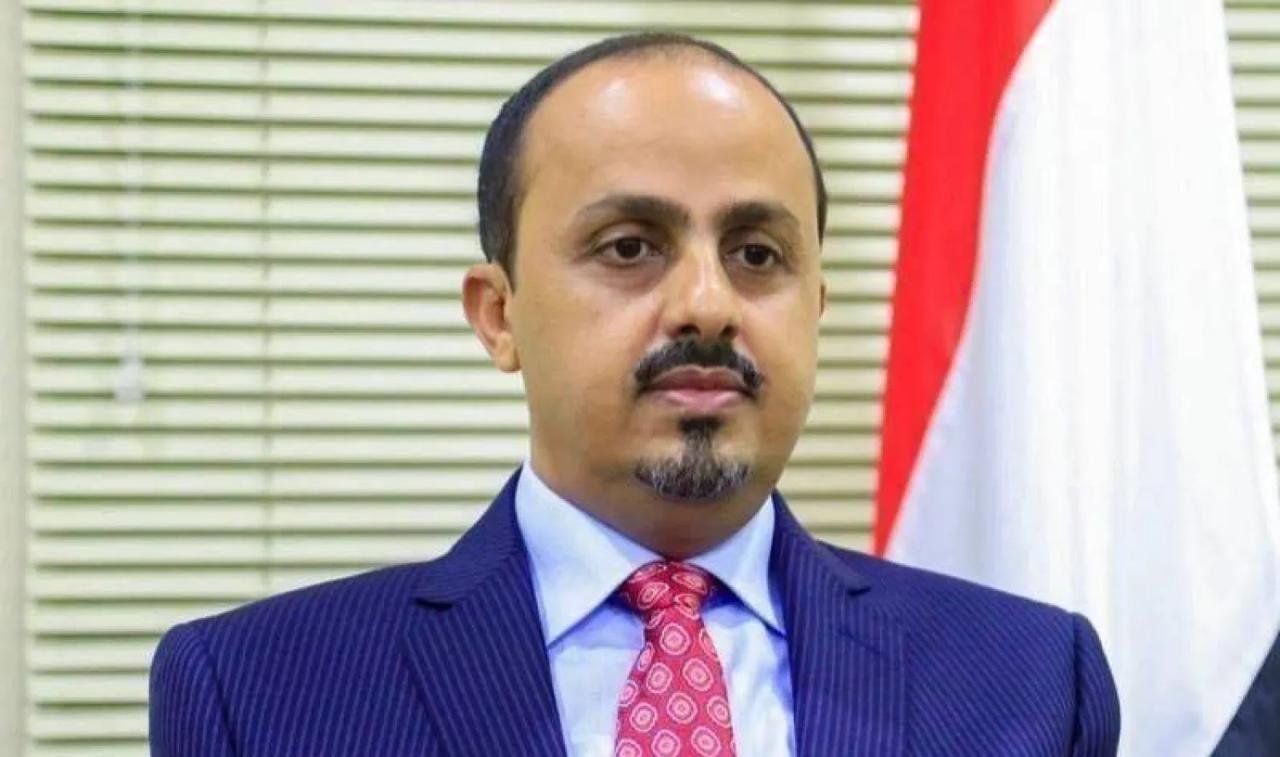
Yemen’s Minister of Information, Moammar al-Eryani, has rejected the Houthi movement’s assertion that Yemen is under blockade, arguing that the claim is designed to justify the group’s deepening coordination with Iran’s Islamic Revolutionary Guard Corps. According to al-Eryani, no blockade currently affects the areas the Houthis control, and the narrative of a siege is a political tool rather than a description of conditions on the ground. He points to the truce brokered in April 2022, which lifted long-standing restrictions on Sanaa International Airport and the Red Sea port of Hodeidah, allowing commercial flights and maritime traffic to resume.
The minister argues that the Houthis themselves are responsible for the later disruptions to that traffic. He accuses the group of diverting revenue collected at ports and airports — money he says should have paid public-sector salaries — toward its military campaign. Since November 2023, the Houthis have carried out a wave of attacks on international shipping in the Red Sea and the Bab al-Mandab Strait, a campaign the group launched after a call by Iran’s supreme leader, Ali Khamenei. Those attacks drew retaliatory strikes that, in turn, interrupted operations at Sanaa airport.
The April 2022 truce that al-Eryani cites was the first nationwide pause in the fighting in years, brokered by the United Nations. It halted most frontline combat, permitted a set number of commercial flights from Sanaa to destinations including Amman and Cairo, and allowed fuel ships to dock at Hodeidah. Although the formal agreement lapsed later that year, many of its provisions held informally, and the relative calm it produced is part of why the minister disputes the idea of an active blockade today. Aid officials credited the arrangement with easing fuel prices and improving civilian movement, even as a comprehensive peace deal remained out of reach.
Al-Eryani frames the dispute as part of a wider pattern in which the Houthis, he says, act as an extension of Iranian policy rather than an independent Yemeni faction. The government in Aden has repeatedly accused the movement of taking direction from Tehran, and independent analysts have reported senior IRGC figures operating in Houthi-held territory. The minister contends that the blockade narrative allows the group to present its military build-up as defensive, thereby legitimizing further Iranian support.
The Houthis, for their part, reject these characterizations and describe their maritime operations as acts of pressure tied to the war in Gaza, while blaming the Saudi-led coalition and its allies for Yemen’s economic hardship. The competing accounts underscore how thoroughly the information battle has become intertwined with the military one, with each side seeking to assign blame for the suffering of ordinary Yemenis.
That suffering remains the defining feature of the conflict. The United Nations has estimated that well over 18 million Yemenis need humanitarian assistance, and more than four million people have been displaced from their homes since the war escalated in 2015. Repeated outbreaks of cholera and measles have deepened the strain on a health system that was already among the most fragile in the region, and aid agencies have warned that funding shortfalls threaten the programs keeping many families alive.
The economic dimension is central to al-Eryani’s argument. Control over ports and the revenue they generate has become one of the war’s most contested prizes, because customs duties and fees represent a rare reliable source of income in a shattered economy. The minister’s charge that the Houthis have redirected these funds toward weapons rather than wages speaks to a grievance felt acutely in areas where salaries have gone unpaid for extended periods.
Geography adds to the stakes. The Bab al-Mandab Strait, at the southern entrance to the Red Sea, is one of the world’s busiest maritime corridors, and disruptions there ripple far beyond Yemen’s borders. Shipping companies have rerouted vessels around southern Africa to avoid the risk, raising costs and delivery times for global trade. That international exposure has kept Yemen’s internal conflict on the agenda of governments far removed from the Arabian Peninsula.
The Houthi movement, which emerged from the Zaydi Shia community in Yemen’s northern highlands, now controls the capital, Sanaa, and territory home to a large share of the population, while the internationally recognized government operates from Aden with backing from Saudi Arabia and the United Arab Emirates. This division has hardened into a prolonged stalemate, and repeated diplomatic initiatives have struggled to translate temporary truces into a durable settlement.
Diplomatic efforts to end the war have continued through the office of the United Nations special envoy, who has pressed both sides to move from temporary ceasefires toward a negotiated political settlement covering unpaid salaries, a nationwide truce and a broader political process. Progress has been halting, and the resumption of Red Sea attacks complicated an earlier roadmap that regional mediators, including Oman and Saudi Arabia, had helped advance. Analysts caution that without agreement on revenue-sharing and the status of state institutions, any further pauses in the fighting are likely to prove fragile.
For now, al-Eryani’s remarks reflect the government’s effort to counter Houthi messaging on the international stage as much as to describe conditions inside Yemen. Whether his account or the Houthis’ prevails in shaping outside opinion may influence how much support each side attracts. What is not in dispute is that ordinary Yemenis continue to bear the cost of a war that shows few signs of ending, and that access to airports, ports and salaries remains bound up in a struggle over both territory and narrative.
About the Author




