Yemen and International Partners Weigh the Future of the Social Fund for Development
 Yemen Herald News
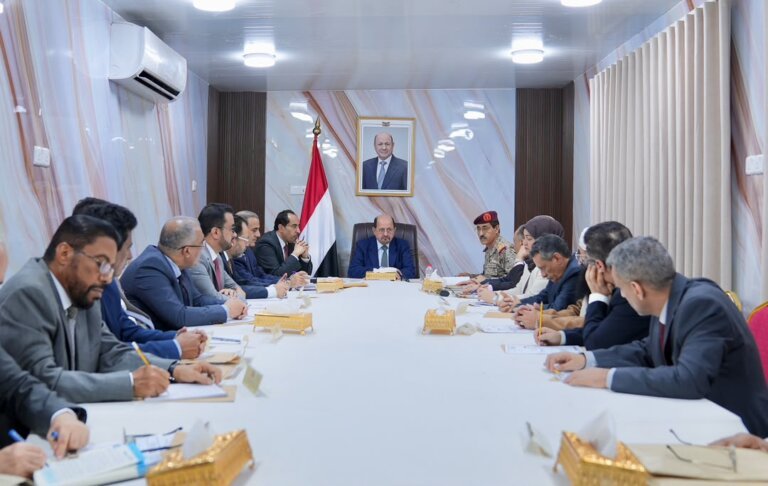
Yemen’s Minister of Social Affairs and Labour, Mukhtar al-Yafei, held a virtual meeting with the European Union’s ambassador to Yemen, Patrick Simonnet, and a group of international officials to discuss the future of the Social Fund for Development, one of the country’s most important channels for delivering assistance to households in need. The government said the talks focused on strengthening the fund’s national role and ensuring the continued delivery of cash support to families struggling amid a protracted humanitarian crisis.
Alongside the EU envoy, the meeting brought together senior figures from institutions that help keep the fund running. They included the World Bank’s country director for Yemen, Dina Abu Ghaida, the International Fund for Agricultural Development’s country director, Tawfiq al-Zubari, and a representative of the Dutch Embassy responsible for water, food security and private-sector development, Winnie van der Val. Their presence reflected both the fund’s central place in Yemen’s social safety net and the collective effort required to sustain it through a period of war and economic decline.
Established in the late 1990s, the Social Fund for Development is a semi-autonomous, government-affiliated institution that carries out development and social-protection programmes across Yemen. Over the years, it has become a key vehicle for donor-financed projects, including cash transfers, small-scale infrastructure and community development work. Its cash assistance is designed to give families a measure of control over how they meet their most pressing needs, from food to medicine, while also channelling money into local markets that have been battered by years of conflict.
Sustaining that support has grown steadily harder as donor funding tightens and the economy deteriorates. In the meeting, al-Yafei reaffirmed what the government described as its commitment to transparency and to coordination with international partners on social-protection programmes. He stressed the importance of government oversight to ensure that assistance is distributed fairly across all governorates and reaches eligible families and vulnerable groups, arguing that the fund should serve people uniformly regardless of region. He also underlined the need to maintain operations from Aden, which the internationally recognised government uses as its interim capital while the Houthi movement controls the capital, Sanaa.
According to the government’s account, the international participants reaffirmed their support for social-protection and development work in Yemen and for the fund’s role in reaching people in need. They pointed to the value of continuity at a time when overlapping crises have stretched aid budgets and complicated delivery, and expressed a shared interest in preserving an institution that many donors have relied upon for more than two decades. The United Nations estimates that well over 18 million Yemenis require some form of humanitarian assistance, a figure that has kept programmes such as the fund’s cash transfers at the centre of the international response even as financing has become harder to secure.
The talks came at a painful moment for the institution. In early May 2026, the fund’s acting executive director, Wesam Qaid, a prominent Yemeni-British development figure who had founded the Small and Micro Enterprise Promotion Service, was abducted and killed in Aden. No group claimed responsibility, though analysts and rights groups pointed to tensions surrounding the relocation of the fund’s operations from Sanaa to Aden, a move over which Qaid had reportedly been threatened shortly before his death. Yemeni authorities later said they had arrested several suspects as part of an ongoing investigation.
The killing drew condemnation from the United Nations, UNESCO, Western governments and a coalition of international aid organisations, and shocked an aid community already operating under severe strain. It exposed the insecurity that development workers face even in government-held areas, and raised concerns about the safety of staff carrying out programmes on which millions of people depend. That context helps explain why partners are now focused on shoring up the fund and protecting those who run it, as much as on financing its work.
Delivering aid in Yemen means navigating competing authorities, damaged infrastructure and a collapsing currency, and doing so while the people responsible for programmes are themselves at risk. The government has pressed for assistance to be channelled through recognised state structures, while donors and UN agencies weigh how best to reach populations in areas outside its control. The fund’s semi-independent status has historically allowed it to work across front lines and retain donor confidence, but the pressures of the current period have tested that balance, and the currency’s slide erodes the real value of every payment that reaches a household.
Participants also stressed the value of involving local communities in designing and carrying out programmes, arguing that local ownership improves both effectiveness and resilience. Engaging residents to identify their own priorities, they said, helps ensure that scarce resources are directed where they are most needed and that projects endure. It is a model the fund’s backers hope to preserve through the current turbulence.
For now, the meeting served to reaffirm a shared commitment to keeping the fund functioning as a pillar of Yemen’s response to poverty and displacement. Whether that translates into sustained financing and improved security for its staff remains to be seen. With needs still rising and resources under growing strain, the coming months will test whether the institution can remain both credible to donors and able to operate nationwide.
About the Author