Hadramout Governor Champions Women’s Role in Development
 Yemen Herald News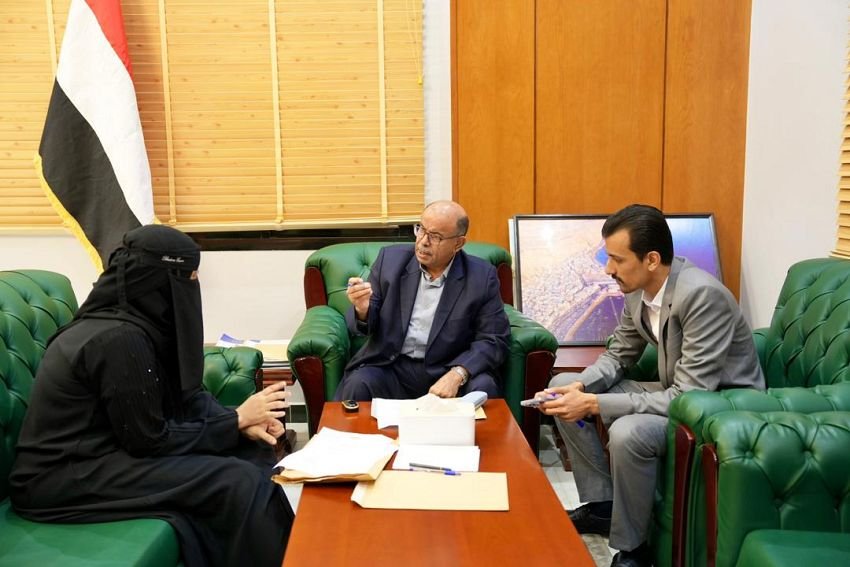
The Governor of Hadramout and member of the Presidential Leadership Council, Salem Al-Khanbashi, has emphasised the critical role of women’s participation in the development process, describing their engagement as essential to fostering progress and achieving sustainable development across the governorate. He made the remarks during a meeting in Mukalla with Atab al-Amodi, the head of the National Women’s Committee in the Hadhramaut Coastline region.
Al-Khanbashi used the occasion to express the local authority’s commitment to enhancing women’s involvement in a range of development initiatives. He stressed the necessity for women to take active roles in decision-making, asserting that their contributions are vital to the overall advancement of society and that no genuine development can be achieved while half the population remains on the margins.
The governor’s remarks reflect a growing recognition of the importance of gender inclusion in development efforts. By advocating for women’s engagement, the local authority signalled an intention to create a more inclusive environment, one that empowers women and enables them to participate fully in the social and economic life of the region.
Hadramout, Yemen’s largest governorate by area, occupies a significant place in the country’s economic and social landscape. Stretching from a long coastline on the Arabian Sea to the vast interior, it encompasses important towns, agricultural areas and resources, and its relative stability compared with other parts of the country has allowed for a degree of development activity that many regions cannot sustain.
Within this context, the question of women’s participation carries particular weight. Across Yemen, women have borne much of the burden of the conflict, often assuming responsibility for households and communities amid displacement and hardship. Yet their formal involvement in decision-making and development planning has frequently lagged, making calls for greater inclusion both timely and consequential.
The National Women’s Committee, represented at the meeting by al-Amodi, plays a role in advocating for women’s interests and coordinating their involvement in public affairs. Engagement between such bodies and local authorities is important for translating general commitments to inclusion into concrete measures that expand women’s opportunities and influence.
Women’s participation in development is widely regarded by experts as a driver of better outcomes. Evidence from many settings suggests that when women are involved in planning and decision-making, programmes tend to be more responsive to community needs and more effective in delivering benefits. Inclusion is thus not only a matter of fairness but of practical effectiveness.
In the Yemeni context, where resources are scarce and needs immense, harnessing the full capacities of the population is especially important. Excluding women from development processes deprives communities of skills, perspectives and energies that could contribute to recovery, while their inclusion can strengthen the resilience and adaptability of society as a whole.
The emphasis on decision-making roles, rather than mere participation, is significant. Meaningful inclusion requires that women not only take part in activities but also have a voice in shaping priorities and policies. Al-Khanbashi’s focus on decision-making pointed to an understanding that genuine empowerment involves influence over the choices that affect people’s lives.
Sustainable development, the goal invoked by the governor, depends on building foundations that endure beyond immediate interventions. Inclusive approaches that draw on the contributions of all segments of society are more likely to produce lasting results, embedding progress in the fabric of communities rather than relying on external support alone.
The commitment expressed by the local authority will ultimately be measured by the concrete steps that follow. Advocacy and statements of principle are important, but their value lies in the actions they inspire, from creating opportunities for women in education and employment to ensuring their representation in the bodies that make decisions about development.
Challenges remain considerable. Social norms, economic constraints and the disruptions of conflict all shape the extent to which women can participate in public life, and overcoming these obstacles requires sustained effort and support. The recognition of the issue by senior officials, however, represents an important step in fostering an environment more conducive to inclusion.
The meeting in Mukalla formed part of a broader conversation across Yemen about the role of women in the country’s present and future. As communities work to recover from the effects of prolonged conflict, the question of how to harness the contributions of all citizens, women included, has assumed growing importance in discussions about development and reconstruction.
The discussion also echoed longstanding debates in Yemen about the place of women in public life. In earlier efforts to chart the country’s political future, participants had called for significantly greater female representation in state institutions and decision-making bodies, reflecting a recognition that inclusive governance requires the meaningful involvement of women. Although the war has since overtaken many of those aspirations, the underlying principle has endured, resurfacing in statements such as al-Khanbashi’s and in the continued advocacy of women’s organisations working, often in very difficult conditions, to keep the issue on the agenda.
For now, Al-Khanbashi’s remarks offered an affirmation of the value of women’s participation and a commitment, at least in principle, to advancing it. Whether that commitment yields tangible gains for the women of Hadramout will depend on the policies and practices that follow, but the acknowledgement of their importance marked a noteworthy statement from the governorate’s leadership.
About the Author