Education Minister and UNICEF Discuss Strengthening Yemen’s Schools
 Yemen Herald News
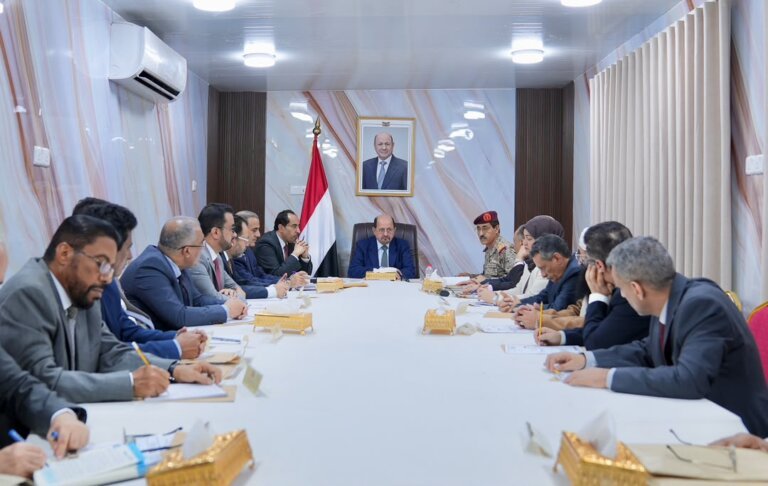
Yemen’s Education Minister has discussed strengthening the education sector with UNICEF officials in Aden, in a meeting focused on sustaining schooling amid the pressures of conflict. Dr. Adel al-Abbadi and the UNICEF Representative in Yemen, Peter Hawkins, explored ways to enhance their strategic partnership and to develop mechanisms of cooperation that would bolster educational initiatives and help ensure the stability of the educational process.
Minister al-Abbadi underscored the ministry’s dedication to maintaining educational stability, highlighting the importance of continued support and collaboration with UNICEF. He commended the organisation’s contributions, particularly its support for the confidential printing press over the past year, which he said had played a crucial role in facilitating the examination process and overcoming logistical hurdles.
During the meeting, the minister outlined the key features of the ministry’s sector plan, which is structured around a set of strategic objectives. Such a plan provides a framework for the ministry’s efforts to sustain and improve education, guiding the allocation of resources and the coordination of initiatives in a challenging environment.
Education has been among the sectors most severely affected by Yemen’s conflict. Years of war have disrupted schooling for large numbers of children, damaged school buildings and strained an already fragile system, while economic hardship has added to the obstacles facing families seeking to keep their children in school.
The emphasis on educational stability reflects the importance of maintaining continuity in schooling despite these challenges. Ensuring that the educational process continues, that examinations are held and that children can progress through their studies, is essential to safeguarding their development and to preserving a sense of normalcy amid crisis.
The support for the confidential printing press, singled out by the minister, illustrates the practical dimension of cooperation with UNICEF. The secure printing of examination materials is essential to the integrity and smooth conduct of examinations, and support in this area helps ensure that a critical component of the education system functions effectively.
Examinations occupy an important place in the education system, marking the progression of students and certifying their achievements. Ensuring that examinations can be held reliably and with integrity is significant both for individual students and for the credibility of the system, making support for the examination process a meaningful contribution.
UNICEF, the United Nations agency dedicated to children, has been a key partner in supporting education in Yemen. Its work in this area forms part of its broader engagement on behalf of children, and its contributions have helped sustain educational services and address the challenges facing the sector during the conflict.
The strategic partnership between the ministry and UNICEF reflects the importance of cooperation between national authorities and international organisations in sustaining education. With the ministry’s own resources severely constrained, the support of partners such as UNICEF is essential to maintaining and improving educational services across the country.
Developing mechanisms of cooperation, a focus of the discussions, is central to making the partnership effective. Structured and well-designed cooperation helps ensure that support is delivered efficiently and that it addresses the priorities of the education sector, enhancing the impact of the resources and expertise that partners bring to bear.
The ministry’s sector plan represents an effort to approach the challenges facing education in a systematic manner. Articulating strategic objectives and a framework for achieving them can help guide the ministry’s work, coordinate the contributions of partners and provide a basis for measuring progress in a demanding environment.
Investing in education is widely regarded as an investment in the future. The children whose schooling has been disrupted by the conflict represent the country’s future workforce and citizens, and safeguarding their education is essential to Yemen’s long-term recovery and development, lending particular importance to efforts to sustain the sector.
The challenges facing education in Yemen are unlikely to ease quickly. The legacy of conflict, economic hardship and the strain on the system mean that sustaining and improving education will require continued effort and support, underscoring the importance of partnerships such as that between the ministry and UNICEF.
The continued collaboration depends, as with much humanitarian and development work in Yemen, on adequate funding and sustained commitment. Maintaining support for education requires reliable resources, and the mobilisation of funding remains an ongoing priority for sustaining the services on which the country’s children depend.
The scale of the challenge is daunting. Aid agencies have estimated that millions of school-age children in Yemen are out of school, their education interrupted by displacement, poverty and the damage inflicted on schools, while many teachers have gone long periods without regular pay. Sustaining the system under such pressures has depended heavily on the support of partners, and initiatives that keep examinations running and schools open are regarded as vital to preventing a temporary disruption from hardening into a permanent loss of schooling for a generation.
For the ministry, cooperation with organisations such as UNICEF also offers a means of maintaining standards and continuity across a fractured country. Coordinating the printing of examinations, the training of teachers and the provision of learning materials helps preserve a coherent national system even where the reach of central institutions has been weakened, an objective that officials say is essential to ensuring that Yemeni pupils are not left behind as the conflict grinds on.
For now, the meeting between al-Abbadi and Hawkins reaffirmed the shared commitment of the Yemeni government and UNICEF to sustaining and strengthening education. As the country works to protect the schooling of its children amid the challenges of conflict, cooperation of this kind remains essential to safeguarding the education and prospects of a generation.
About the Author