
Al-Alimi Leads Yemeni Delegation to Doha to Mourn Qatar’s Father Emir
 Yemen Herald News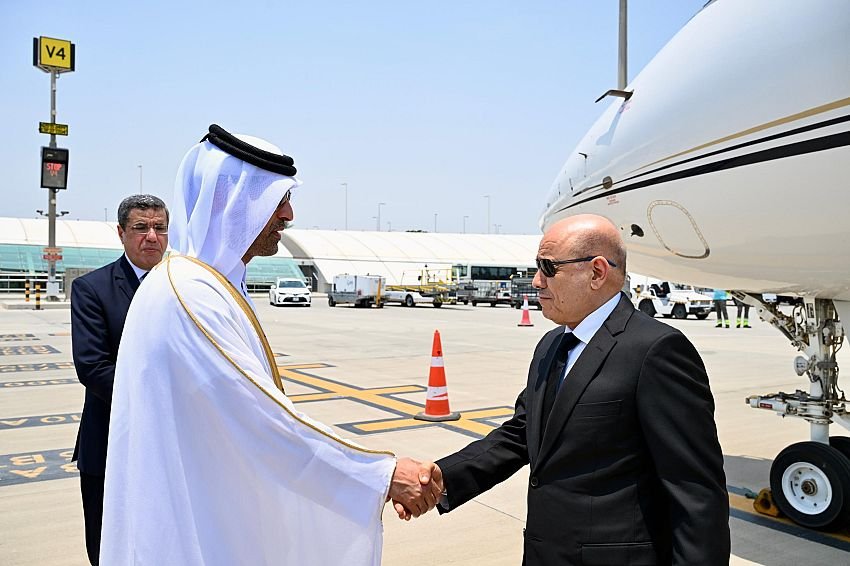
Rashad Mohammed al-Alimi, chairman of Yemen’s Presidential Leadership Council, arrived in Doha on Wednesday at the head of a senior delegation to offer condolences on the death of Sheikh Hamad bin Khalifa Al Thani, the former Emir of Qatar. The visit placed Yemen among a long line of governments sending high-level representatives to the Qatari capital to pay their respects to a ruler widely credited with transforming his country into one of the wealthiest and most influential states in the Gulf.
Sheikh Hamad, known in Qatar as the Father Emir, died on the morning of 12 July at the age of 74. The Amiri Diwan, the office of the ruler, announced his passing but did not disclose a cause of death. He had governed Qatar from 1995, when he took power from his father, until 2013, when he handed authority to his son, Sheikh Tamim bin Hamad Al Thani, in a rare voluntary abdication by a hereditary Gulf ruler.
During his 18 years in power, Sheikh Hamad presided over a dramatic expansion of Qatar’s wealth and international profile, built largely on the development of its vast natural gas reserves. He oversaw the launch of the Al Jazeera media network in the mid-1990s and pursued an assertive foreign policy that gave the small peninsula an outsized role in regional affairs. Following his death, Qatar declared four days of national mourning, lowering flags to half-mast and suspending work at government bodies as tributes arrived from around the world.
His tenure also secured milestones that would define Qatar’s global standing for years to come. The 2022 FIFA World Cup, the first ever staged in the Arab world, was awarded to Qatar in 2010 during his rule, a landmark for the small state that reflected the global prominence he cultivated.
Al-Alimi travelled with a delegation whose composition underscored the weight Yemen attached to the visit. Among those accompanying him were Lieutenant General Mahmoud al-Subaihi, a member of the Presidential Leadership Council; Sheikh Sultan al-Barkani, Speaker of the House of Representatives; and Akram al-Amiri, minister of state and deputy chairman of the Consultation and Reconciliation Commission. Members of parliament, including Abdulwahab Moawada and Insaf Mayo, were also part of the group. On arrival at Doha’s airport, al-Alimi was received by Qatar’s minister of transport, Sheikh Mohammed bin Abdullah Al Thani, and by Yemen’s ambassador to Qatar, Rajeh Badi.
The reception reflected the diplomatic courtesies extended to visiting leaders during the mourning period, as well as the working relationship between the two governments at a time when Yemen is seeking to consolidate ties across the region. Al-Alimi was far from alone in travelling to Doha. The current Emir, Sheikh Tamim bin Hamad Al Thani, received a steady procession of foreign dignitaries offering condolences over his father’s death.
Senior figures from the United Arab Emirates, including Sheikh Mansour bin Zayed and Sheikh Abdullah bin Zayed, made the journey, as did Syria’s president, Ahmed al-Sharaa, and Somalia’s president, Hassan Sheikh Mohamud, among others. The scale of the turnout underlined the standing Sheikh Hamad retained across the region long after stepping down. The condolence visit carried significance beyond protocol, for Yemen’s internationally recognised government has sought to strengthen relationships with Gulf states that can offer political backing and humanitarian assistance.
Qatar has mediated a range of regional disputes and has hosted talks aimed at resolving conflicts elsewhere, fuelling occasional hopes that its diplomatic reach might be brought to bear on Yemen’s own crisis. That crisis remains one of the world’s most severe. United Nations agencies estimate that more than 18 million Yemenis need some form of assistance, and several million have been displaced by fighting since 2015, when the Iran-aligned Houthi movement seized the capital and a Saudi-led coalition intervened to restore the government.
Against that backdrop, every high-level engagement abroad offers the government a chance to press its case for support and to signal that it remains a functioning actor on the regional stage. Analysts note that visits of this kind, though rooted in ceremony, also serve practical diplomatic ends. Gathering so many heads of state and senior officials in one place creates opportunities for conversations on the margins, where leaders can discuss security, economic cooperation and the calculations of larger neighbours. For a government as dependent on outside support as Yemen’s, such moments can prove as valuable as formal summits.
Qatar’s position within the Gulf Cooperation Council and its influence in regional affairs make it a partner Yemen is keen to court. Both countries are navigating relationships with more powerful states, including Saudi Arabia and Iran, whose rivalry has shaped much of the conflict in Yemen. The government in Aden has generally aligned with the Saudi-led coalition, but it has also sought to keep channels open with a range of Gulf capitals as it looks for allies willing to support reconstruction and a political settlement.
With the mourning period under way, attention in Doha has centred on the legacy of a ruler who reshaped his country and on the steady stream of dignitaries arriving to pay tribute. For al-Alimi, the trip offered both a gesture of solidarity with a neighbouring monarchy and an occasion to reaffirm Yemen’s place among the states of the region. Whether the goodwill on display translates into tangible support for Yemen’s battered government will depend on engagements that extend well beyond the ceremonies of this week.
About the Author




