
Yemen and China Discuss Renewing 2013 Cultural and Academic Exchange Agreement
 Yemen Herald News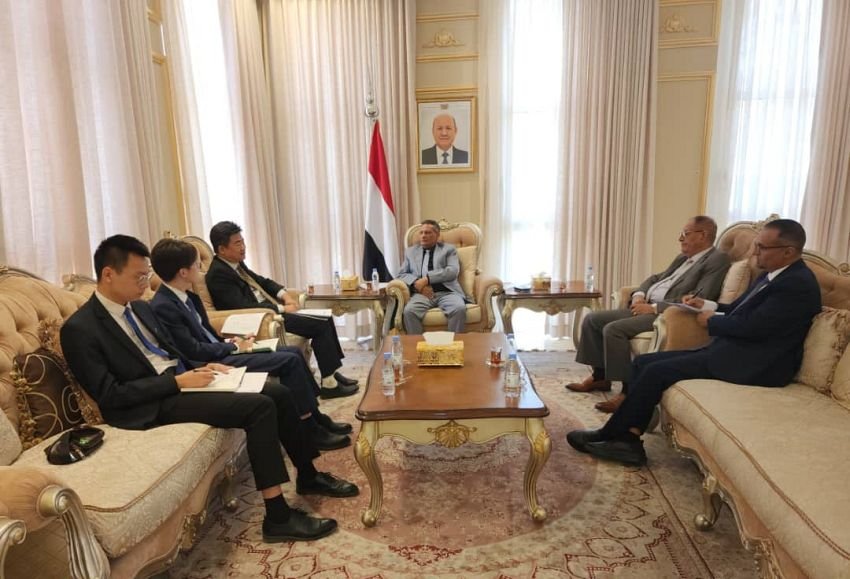
Yemen’s Minister of Higher Education and Scientific Research, Dr Amin Noman, met on Wednesday with Shao Weng, the Chargé d’Affaires of the Chinese Embassy in Yemen, to discuss reviving and updating academic and cultural cooperation between the two countries. The central item on the agenda was the renewal of a Cultural Exchange Agreement first signed in 2013, which both sides want to bring into line with the ministry’s new strategic vision for higher education.
The two officials explored ways to activate twinning arrangements and forge direct partnerships between Yemeni public universities and leading Chinese institutions. Such links, they suggested, could give Yemeni academics and students access to expertise and facilities that years of conflict have placed out of reach at home. The minister framed the effort as part of a broader push to reconnect the country’s battered university system with international partners.
A significant portion of the meeting focused on joint research. According to accounts of the talks, the two sides discussed launching collaborative programmes in renewable energy, the exploration of natural resources, and the mitigation of water scarcity and desertification, as well as the sustainable management of coastal environments through the application of Chinese biotechnology. These are areas of acute relevance to Yemen, where water shortages, environmental degradation and unreliable power supplies weigh heavily on daily life and on any plan for long-term recovery.
The officials also examined expanding the number of cultural exchange scholarships offered to Yemeni students. Years of war have sharply narrowed the opportunities for young Yemenis to study abroad, and additional scholarships could open a pathway to international education for a generation whose schooling has been disrupted by the conflict. With more than 18 million people in need of humanitarian assistance and large numbers displaced from their homes, access to higher learning has become one of many casualties of the war.
Language featured prominently in the discussions. The two sides considered expanding the teaching of Chinese at Yemeni universities, an initiative that reaches beyond language instruction to build a foundation for cooperation in trade, technology and other fields. Equipping students with Chinese-language skills, officials argued, would help prepare them for a globalised economy and deepen mutual understanding between the two societies.
The minister and the envoy also weighed the organisation of reciprocal cultural events intended to showcase the histories and civilisations of both countries. Such exchanges, they said, could strengthen ties while offering Yemenis a chance to reaffirm a cultural identity strained by years of war. For a country whose institutions have been fractured by conflict, officials suggested, cultural engagement carries value beyond diplomacy, helping to sustain a sense of national continuity.
The talks took place against a difficult backdrop for Yemeni education. The war that erupted in 2015 has damaged schools and universities, driven teachers and students from their homes and deprived many young people of the skills needed to rebuild. The internationally recognised government, based in the interim capital of Aden, has been trying to restore the functioning of state institutions, including its universities, amid persistent instability.
Strengthening educational ties with China fits into a wider effort by the government to diversify its international partnerships. Beijing has expanded its engagement across the Middle East in recent years, and Yemeni officials view access to Chinese expertise in science and technology as a potential asset for reconstruction. Some analysts see cooperation of this kind as part of the economic diplomacy associated with China’s Belt and Road Initiative, though the immediate agenda in these talks was confined to education, research and cultural exchange. China and Yemen have maintained diplomatic relations for decades, and Chinese companies took part in infrastructure and development projects in the country before the war disrupted much of that activity, giving the two sides a foundation of prior cooperation to build upon.
The meeting formed part of a wider campaign by the higher education ministry to rally international governments and organisations to keep universities running, retain academic staff and maintain standards through years of disruption. China is one of several partners Yemen has approached, and Beijing has separately extended diplomatic overtures to the recognised government, including an invitation to take part in its Global Security Initiative, signalling a broader interest in closer relations.
For Yemen, part of the appeal of the partnership lies in the breadth of resources it could unlock. Collaborations in renewable energy and sustainable resource management, officials argued, could help address urgent needs while contributing to longer-term development goals. Chinese universities and research centres, with their scale and funding, represent a potential source of training and technical support that Yemen’s own institutions struggle to provide under current conditions.
Both sides described the meeting as a step toward a more structured and cooperative relationship. The renewal of the 2013 agreement, together with the initiatives raised alongside it, was presented as a proactive attempt to keep education and research moving forward despite the surrounding adversity. Officials cautioned that turning the discussions into concrete programmes will take time and sustained commitment, but they expressed hope that the groundwork laid this week could benefit future generations of Yemeni students. Much will depend on whether the two sides can convert the broad understandings reached this week into a detailed and funded programme of exchanges in the months ahead.
About the Author




