Al-Alimi Welcomes Saudi-Led Maritime Defence Alliance to Secure the Red Sea and Bab al-Mandab
 Yemen Herald News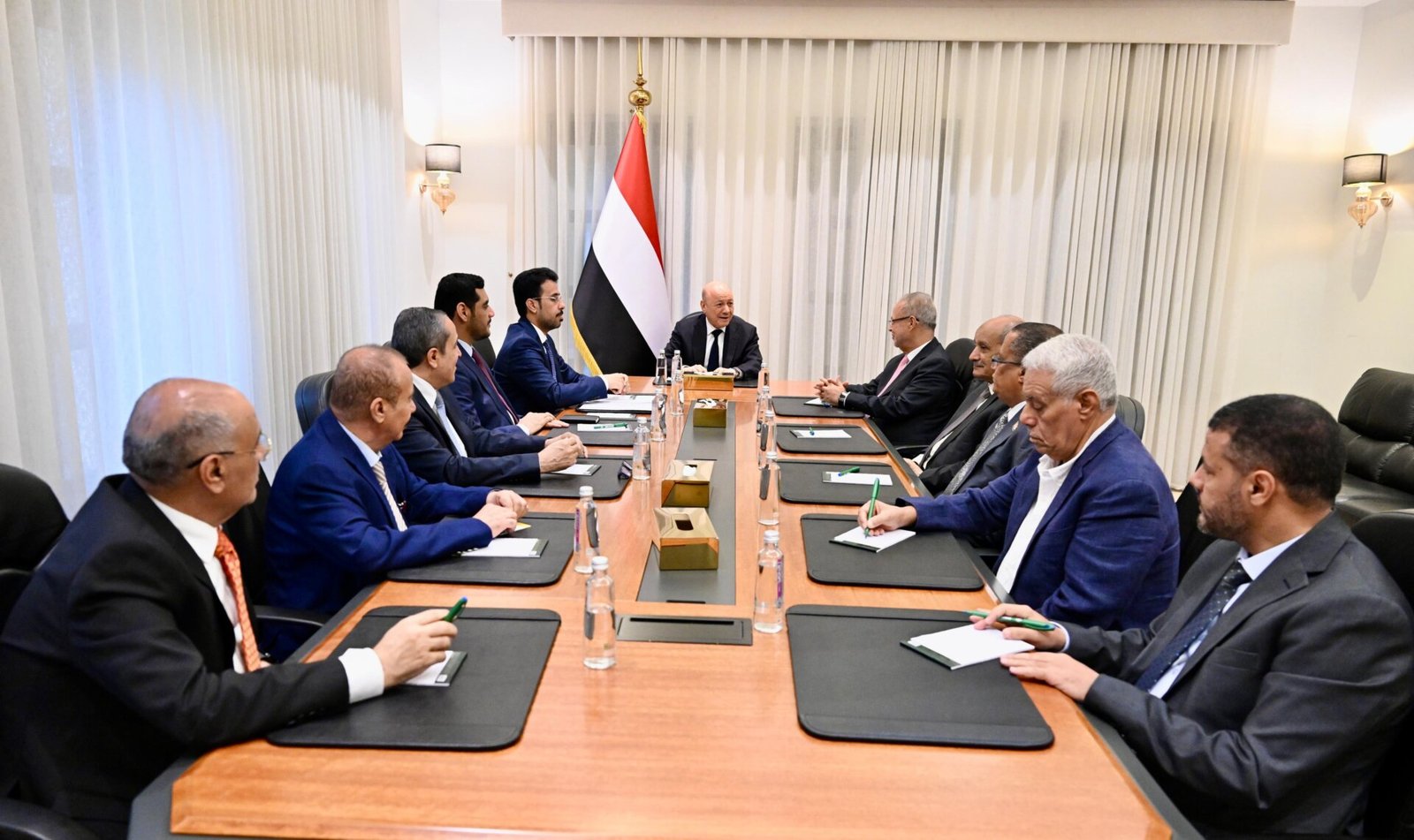
Rashad al-Alimi, Chairman of Yemen’s Presidential Leadership Council, has welcomed the creation of a Saudi-led multinational maritime defence alliance intended to protect international shipping in the Red Sea, the Gulf of Aden and the Bab al-Mandab Strait, describing it as an important step for regional stability. He set out that view during meetings in which he received Mohammed al-Ghaithi, head of the Consultation and Reconciliation Authority, together with representatives of Yemeni political parties.
Saudi Arabia announced the alliance at the end of July after an international meeting attended by representatives of 43 countries and the European Union. Fourteen states, among them Turkey, Pakistan, Egypt, Sudan and Djibouti, endorsed the initiative as founding members in a joint statement. The kingdom was designated the alliance’s founding and leading state and will host its permanent headquarters. Organisers said the coalition’s purpose is to strengthen maritime security, safeguard freedom of navigation and protect international trade and energy supply routes.
Al-Alimi praised what he described as Saudi Arabia’s substantial contribution under King Salman bin Abdulaziz and Crown Prince Mohammed bin Salman, pointing to support for Yemeni state institutions, for the national economy and for humanitarian relief. He has made similar arguments before, telling Saudi officials that the kingdom has accumulated experience in Yemen that the Presidential Leadership Council relies upon.
The announcement follows a sharp deterioration in security along the region’s shipping lanes. Yemen’s Houthi movement declared a maritime blockade on Saudi Arabia on 20 July and subsequently claimed attacks on Saudi-linked vessels, including two tankers named as the Encelia and the Layla, and on Aramco facilities in the coastal cities of Jizan and Yanbu. Saudi Arabia has conducted strikes on Houthi-held Hodeidah, according to the group’s own media.
The waterways in question carry a substantial share of global seaborne trade. The Bab al-Mandab Strait, roughly 30 kilometres wide at its narrowest point between Yemen and Djibouti, is the southern gateway to the Red Sea and the Suez Canal. Disruption there forces vessels to reroute around the Cape of Good Hope, adding time and cost to voyages between Asia and Europe. Shipping volumes through the corridor have already fallen well below pre-crisis levels as a result of successive rounds of attacks.
For the internationally recognised Yemeni government, the alliance carries a particular significance. Al-Alimi has consistently argued that maritime insecurity in the Red Sea cannot be separated from the internal conflict in Yemen, and that the durable remedy is to strengthen the government’s authority across the whole of the national territory. In earlier statements he has said that supporting the government to restore state authority is the decisive route to securing the Red Sea and Bab al-Mandab, and has described the Houthi movement as an instrument of Iranian policy aimed at destabilising regional security.
That framing places the government’s case in a wider international context. By presenting the security of the strait as a global rather than a Yemeni concern, al-Alimi has sought to convert international interest in freedom of navigation into political and financial backing for the council he chairs. The formation of a multinational alliance with a Saudi headquarters advances that argument, since it institutionalises the involvement of outside states in a problem the Yemeni government has struggled to address on its own.
The Presidential Leadership Council was formed in April 2022, when former president Abd Rabbu Mansour Hadi transferred his powers to an eight-member body chaired by al-Alimi. The council brings together figures from several of the anti-Houthi factions, and managing the differences among them has been one of its central difficulties. Meetings with party representatives and with the Consultation and Reconciliation Authority, such as the one at which al-Alimi discussed the alliance, form part of the effort to maintain a common position among those groups.
Yemen’s economic position remains severe. The country has faced currency depreciation, disrupted oil exports and a prolonged humanitarian emergency affecting a large share of the population. Saudi financial support, including deposits to the central bank and fuel grants, has been one of the principal means by which the government has met its obligations. Al-Alimi’s public acknowledgement of that support reflects both its practical importance and the political relationship it underpins.
Questions remain about how the alliance will function. The joint statement set out objectives and the leadership structure but left operational details, including rules of engagement, force contributions and the relationship with existing naval missions in the area, to be worked out. Several international task forces already operate in the Red Sea and Gulf of Aden, and coordination among them has at times been imperfect. Whether the new body adds capability or duplicates existing arrangements will depend on decisions still to be taken.
There is also the question of whether a naval coalition can address a threat launched largely from land. Anti-ship missiles and drones fired from Yemeni territory can be intercepted at sea, but the launch sites lie ashore, which is precisely the point al-Alimi has pressed in arguing that maritime security depends on conditions inside Yemen. For the Yemeni government, the alliance is therefore welcome as recognition of the problem, while the harder argument about how to resolve it continues.
About the Author