Ali Mojawwar says Red Sea security depends on restoring Yemen’s state institutions
 Yemen Herald News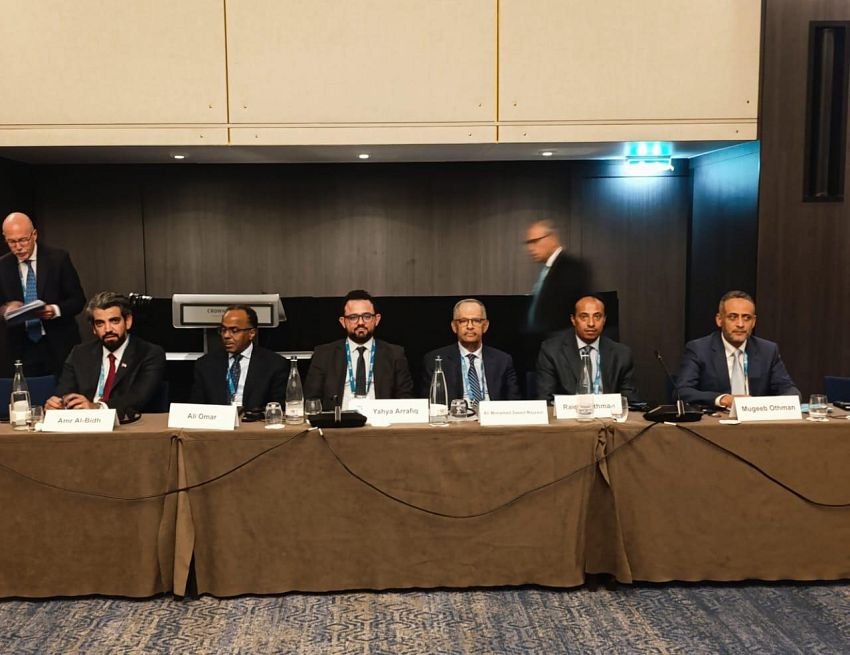
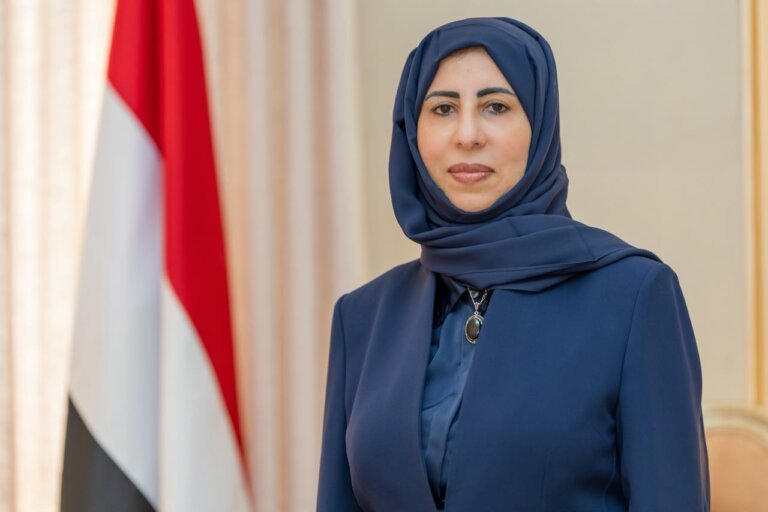
GENEVA, Switzerland — Yemen’s permanent representative to the United Nations in Geneva said Red Sea security depends on restoring Yemen’s state institutions and full sovereignty.
Ali Mojawwar made the remarks at the GAPS MENA high-level security dialogue in Geneva. The state news agency Saba carried them on 30 September.
Mojawwar said treating the Yemen crisis as a temporary maritime disturbance had failed to produce lasting stability.
That approach had allowed the Houthis to expand their military capabilities and to threaten international shipping and global supply chains, he said.
He named Mokha Port, the Bab al-Mandab Strait and Mayyun Island as sites of Houthi military activity.
The Houthis seized Mokha and took Mayyun over the weekend of 11 and 12 September, Al Jazeera reported, completing their hold on Yemen’s Red Sea coastline.
Mayyun, also called Perim, sits inside the strait. Houthi positions on the island lie about 20 kilometres from the African shore.
Houthi politburo member Hazem al-Assad has said freedom of navigation and trade through the Red Sea and Bab al-Mandab are safe and orderly. The group rejects accounts that cast its coastal deployments as a threat to shipping.
Mojawwar also alleged weapons coordination between the Houthis and al-Shabaab in Somalia.
The UN Panel of Experts on Yemen reported in October 2025 that confidential sources had described Houthi training of al-Shabaab members in drone technology and in the manufacture of improvised explosive devices. The panel said al-Shabaab had until then used drones mainly for surveillance.
Hussein Sheikh-Ali, a former Somali national security adviser, wrote for the Saldhig Institute in February that the relationship had moved beyond logistical and intelligence coordination into political, media and direct military collaboration.
Military-grade drones or missile systems reaching al-Shabaab would be a “gamechanger” in Somalia, he wrote.
Bab al-Mandab carries roughly 12 per cent of global trade, including 11 per cent of seaborne oil and 8 per cent of liquefied natural gas.
The strait separates Yemen from Djibouti and Eritrea and links the Red Sea to the Gulf of Aden.
Alexandru Cristian Hudisteanu, a maritime security analyst, told Al Jazeera that Bab al-Mandab is narrower than the Strait of Hormuz, which makes vessels passing through it simpler to target.
Shipping volumes through the Red Sea fell by between 50 and 55 per cent from 2023 to 2025, according to IMF PortWatch data.
Egypt lost about 7 billion dollars in Suez Canal receipts across 2023 and 2024, close to 60 per cent of the waterway’s revenue.
Mojawwar described international naval patrols and interception operations as temporary measures.
He called instead for Yemen’s coast guard and navy to be equipped to secure the country’s coastline and ports and to counter smuggling.
The European Union’s Operation Atalanta continues maritime security patrols off the Horn of Africa.
The European Union runs a second mission, Operation Aspides, set up in February 2024 to protect merchant shipping in the Red Sea, the Gulf and the north-western Indian Ocean.
Aspides is running as a three-ship rotational taskforce.
Kaja Kallas, the European Union’s high representative for foreign affairs, said on 21 September that the mission needed more than 10 vessels.
“We need more vessels because literally there are commercial ships that are waiting in the queue to receive the escort that we do not have enough frigates,” Kallas said.
She said the requirement set when Aspides began was at least 10 ships, and that the figure was now higher.
Houthi attacks on shipping resumed in July, after the group announced a maritime embargo.
Mojawwar asked for urgent humanitarian assistance for civilians and displaced people affected by Houthi attacks on the western coast and in Taiz and Marib.
The International Organization for Migration said more than 2,000 Yemenis crossed into Djibouti in the 24 hours to 13 September.
The UN humanitarian plan published in March lists more than 22 million Yemenis in need of assistance.
It records 18.3 million people as acutely food insecure and more than 2.2 million children under five as acutely malnourished, of whom 516,157 are severely malnourished.
The plan counts 5.2 million displaced people and seeks 2.16 billion dollars to reach 12 million of them.
Hans Grundberg, the UN special envoy for Yemen, told the Security Council on 10 September that the country faced “a new and more dangerous phase of war.”
He tied that to the collapse of a four-year truce after the Houthi capture of Mokha.
The council was told that more than 11,400 households had been displaced since 3 September. Yemen’s ambassador to the UN put the figure at 6,145 families, or about 44,000 people.
Grundberg urged the Houthis to halt their attacks and said the political settlement should be preserved.
He warned that the consequences of the escalation would reach beyond Yemen’s borders.
Saudi Arabia’s ambassador told the same session that Houthi strikes on 8 September had wounded 73 civilians in the kingdom. Bahrain’s ambassador, speaking for the Gulf Cooperation Council, called for stronger enforcement of sanctions.
The account of the Geneva session rests on Saba, which is the only agency to have reported the ambassador’s remarks. Yemen Herald found no independent record of the proceedings and could not confirm the remarks against a second source.
Saba did not name the other participants at the session.
About the Author