Ceasefire arrangements ignoring Iran’s actions are warned against by President al-Alimi.
 Yemen Herald News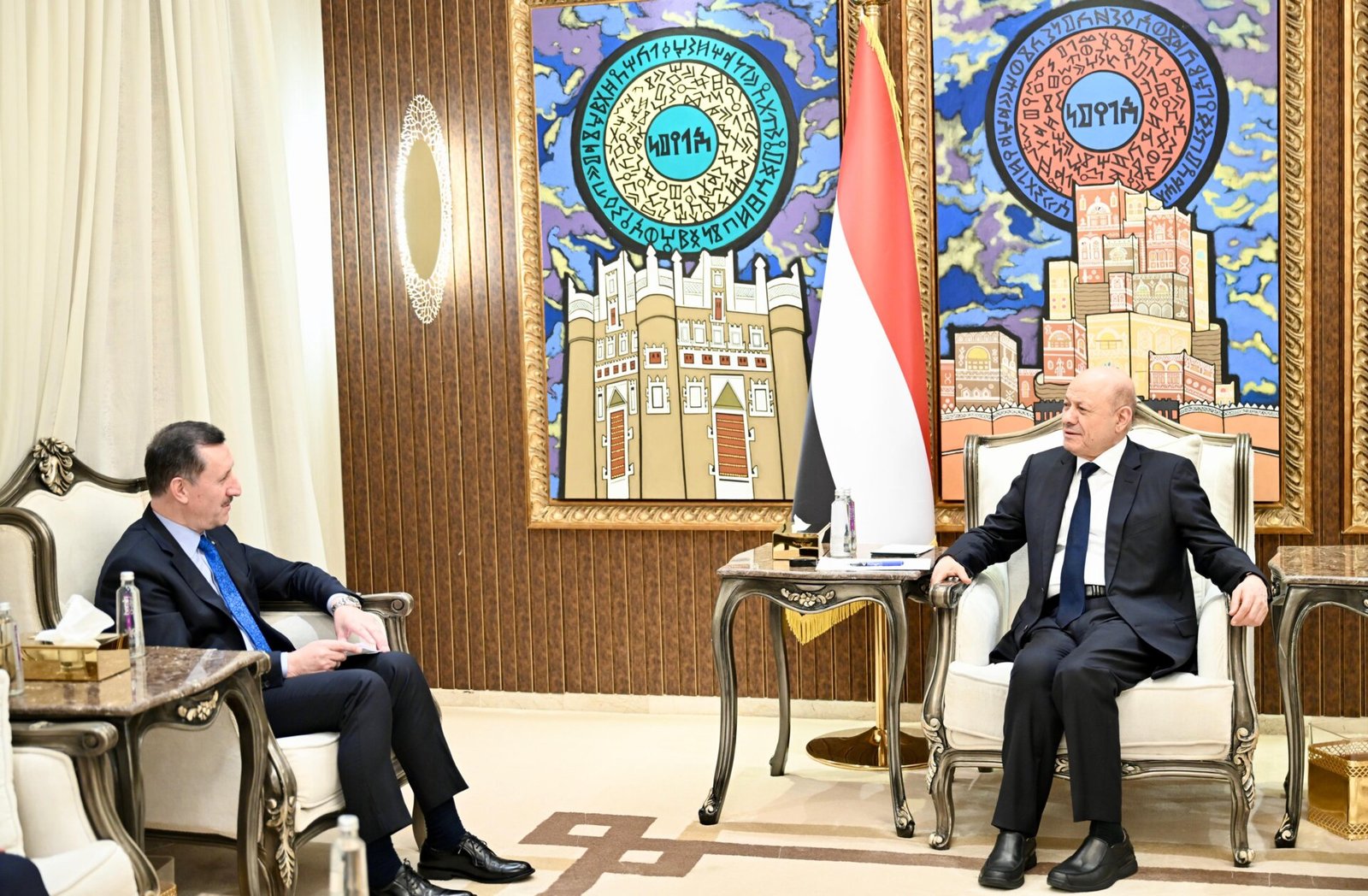
The Presidential Leadership Council, established in April 2022, has been the framework through which Yemen’s government operates in efforts to restore order and governance in the country’s liberated areas. The council, which includes a variety of representatives from different Yemeni factions, aims to unify military and political strategies against the Houthi threats and restore stability to the country. However, the ongoing conflict has led to worsening public services and rampant economic instability, leading to a dire situation for millions of Yemenis.
The geopolitical landscape surrounding Yemen is notably complicated, with critical shipping routes such as the Red Sea and Bab al-Mandab Strait playing significant roles in international trade and security. Additionally, Iran’s support for Houthi militias not only threatens Yemen’s sovereignty but also poses risks to regional stability as these proxy forces can complicate diplomatic relations between neighboring countries and beyond. The implications of Iran’s actions extend into broader regional issues, including its nuclear ambitions and support of various non-state actors in the Middle East.
Recent discussions led by President Rashad Mohammed al-Alimi with Turkish Chargé d’Affaires Emrullah Erşener have highlighted the importance of addressing the role of Iranian influence in the region as part of any ceasefire arrangements. Al-Alimi expressed concerns that without a comprehensive approach towards militias backed by Iran, peace efforts may remain fragile and ineffective. During this diplomatic exchange, both leaders emphasized their nations’ mutual desire for security and stability, while also delving into the historical ties between Yemen and Turkey.
The meeting was marked by Turkey’s continued humanitarian support for Yemen, underscoring the relief and developmental assistance provided by the Turkish government and charitable organizations. Al-Alimi acknowledged the significant role Turkey plays in offering educational, healthcare, and employment opportunities for Yemeni refugees, reaffirming the strong bilateral relations between the two nations and the cultural connections that bind them. This discussion came amidst the backdrop of ongoing challenges for Yemen, affected by the continuous unrest instigated by Houthi factions and the overarching goal of unified governance.
An essential part of their dialogue was the need for joint ministerial cooperation, which aims to enhance the foundation for economic and infrastructural development in Yemen. Both leaders recognized the importance of collaboration in key sectors such as education, health, and energy to pave the way for more significant progress towards recovery from the ongoing humanitarian crisis. With the hopes of addressing these pressing needs, Al-Alimi highlighted the necessary reforms being undertaken by the Yemeni government to improve public service delivery and unify decision-making in security matters.
Numerous stakeholders are involved in the Yemeni conflict, each with distinct agendas and interests that complicate efforts for peace. The primary actors include the Yemeni government led by President al-Alimi and the Houthis, who control significant territory in northern Yemen, including the capital, Sana’a. The internationally recognized government relies heavily on support from its regional allies, particularly Saudi Arabia and the United Arab Emirates, which have been instrumental in military interventions and humanitarian assistance to bolster the government’s standing.
Iran’s role as a backer of the Houthis movement illustrates the interplay of regional powers in the conflict, where Tehran’s influence extends its geopolitical ambitions into the Arabian Peninsula. The Iranian regime’s support for militias in Yemen not only challenges the Yemeni government but also constrains regional stability as it stirs concerns among neighboring countries. Additionally, the humanitarian organizations and various NGOs operating within Yemen aim to alleviate the suffering of millions, often working under perilous conditions to provide necessary aid to those affected by the ongoing crisis.
Turkey has increasingly positioned itself as a significant player in the humanitarian landscape of Yemen. Building on historical relations, Turkey’s involvement has expanded from cultural exchanges and diplomacy to direct support for malnourished populations, education for refugees, and infrastructure development. With diplomatic dialogues such as the one held recently by President al-Alimi and Turkish officials, Turkey seeks to enhance bilateral cooperation in diverse fields, emphasizing its commitment to support Yemen in its quest for stability.
The ongoing conflict in Yemen holds significant ramifications for regional security and stability throughout the Middle East. The war has created a battleground for proxy influences, with the Iranian-backed Houthis directly challenging Saudi Arabia and its allies. The strife not only threatens Yemen’s sovereignty but also raises alarms over threats to vital maritime routes, particularly in the Red Sea, where a significant percentage of global oil and commerce transits. As long as the conflict persists, the potential for further destabilization of regional relations remains high.
Countries bordering Yemen, including Saudi Arabia and Oman, face increased security challenges due to the proliferation of armed groups and heightened territorial conflicts. The spillover effects from ongoing violence in Yemen can lead to cross-border attacks, refugee crises, and economic strain on neighboring nations, requiring increased military and humanitarian responses. There is also the risk that the conflict could incite other regional powers, inviting a broader involvement which could further complicate diplomatic relations and lead to heightened military confrontations.
The international community views the Yemeni crisis with growing concern, especially given the humanitarian toll and the rising number of civilians who find themselves caught in the crossfire. Numerous international organizations have called for urgent responses to address basic humanitarian needs while also advocating for a political resolution to the conflict. These discussions are often hindered by the complex nature of alliances and differing prioritizations among global powers, which further complicates the prospect for sustained peace and recovery.
The remarks made by President al-Alimi regarding the need to stabilize ceasefire negotiations highlight the critical intersection between local conflicts and global geopolitical dynamics. The Yemeni crisis cannot be divorced from the larger narrative of Iranian influence in the region, where militias serve as tools of Tehran’s wider ambitions. Al-Alimi’s assertion that true peace must incorporate respect for state sovereignty poses fundamental questions about the future of regional alliances and existing support for non-state actors.
While Turkey and Yemen continue to strengthen bilateral ties, experts point out that the efficacy of international support must align with comprehensive political reform and efforts to restore governance within Yemen. The humanitarian aid landscape has seen Turkey play a pivotal role, yet sustaining these efforts requires a unified front among the international community to address the root causes of the conflict. Without an end to the underlying dynamics of power struggles fueled by foreign influences, peace efforts may remain superficial and temporal.
The ongoing need for governmental reforms underscores the urgency of rebuilding Yemeni institutions capable of delivering public services and enforcing political stability. President al-Alimi’s government must engage effectively with various factions and communities to foster trust and cooperation among its diverse population. Furthermore, coordinated action with regional allies, particularly Saudi Arabia, is essential to mitigate the threats posed by Houthi militias and prevent future escalations of violence.
The path toward a sustainable resolution in Yemen remains fraught with challenges, but diplomatic dialogues, such as those facilitated by President al-Alimi and Turkey, provide a glimmer of hope for renewed cooperation. The Yemeni government needs to capitalize on international partnerships and push for a comprehensive ceasefire that includes addressing Iranian-backed militias’ activities and influence in the region.
Moving forward, Al-Alimi and his administration will need to maintain momentum in reforming governance while engaging with all relevant stakeholders, including opposition figures and local communities. Establishing legitimacy among its citizens is crucial for the government to regain control and initiate any meaningful recovery process. Building on the support from Turkey and other allies can help lay the groundwork for future reconstruction efforts and ensure access to vital resources.
The fate of Yemen ultimately hinges on the willingness of its leaders and regional powers to prioritize dialogue over conflict, as well as addressing the humanitarian crisis with urgency. The international community must continue to play an active role in facilitating discussions and supporting efforts to foster peace. The complexity of Yemen’s civil war will not diminish quickly, but sustained attention and collaboration can lead toward the hopeful vision of a more stable and secure Yemen.
About the Author